
When the Glare of Data Hides the Repair Work of a Goalkeeper's Hands
**मुख्य उत्तर**: फुटबॉल ट्रांसफर बाज़ार गोलकीपरों की क़ीमत उनकी डिस्ट्रीब्यूशन क्षमता (लंबी बॉल) के आधार पर तय करता है, जबकि शॉट-स्टॉपिंग जैसी बुनियादी क्षमता कम मापी जाती है। इससे ऐसे गोलकीपरों पर अधिक भुगतान होता है जिनकी गोल रोकने की दक्षता औसत से नीचे है। **मुख्य तथ्य**: - गोलकीपर की डिस्ट्रीब्यूशन रेंज आसानी से मापी जा सकती है, जबकि शॉट-स्टॉपिंग के लिए शॉट कोण, बॉडी पोज़िशन और रीबाउंड कंट्रोल जैसे संदर्भ चाहिए। - कई क्लब £30-40 मिलियन ऐसे गोलकीपरों पर खर्च करते हैं जिनकी पिछले सीज़न की पोस्ट-शॉट एक्सपेक्टेड गोल्स (PSxG) रेटिंग औसत से नीचे रही है। - भारतीय सुपर लीग और घरेलू ट्रायल में गोलकीपरों का आकलन अक्सर 'लंबी किक' से होता है, न कि पोज़िशनिंग और रीबाउंड कंट्रोल से। - 28 अक्टूबर 2017 को साल्ट लेक स्टेडियम में फीफा अंडर-17 विश्व कप फ़ाइनल में इंग्लैंड ने स्पेन को 5-2 से हराया और फिल फोडेन ने गोल्डन बॉल जीता। **स्रोत**: मूल विश्लेषण, प्रकाशन तिथि 13 अगस्त 2026 | Cross-checked: cricsultan.com **संबंधित प्रश्न-उत्तर**: प्रश्न: गोलकीपर की क़ीमत तय करने में सबसे बड़ी चूक क्या है? उत्तर: डिस्ट्रीब्यूशन जैसे आसानी से मापे जाने वाले आँकड़े को शॉट-स्टॉपिंग जैसी बुनियादी क्षमता से अधिक महत्व देना। प्रश्न: भारतीय फुटबॉल में गोलकीपर प्रशिक्षण की मुख्य कमी क्या है? उत्तर: प्रशिक्षण अधिकतर लंबी किक और रिफ़्लेक्स ड्रिल पर केंद्रित है, जबकि स्वीपर-कीपर भूमिका के लिए पोज़िशनिंग और रिकवरी कौशल कम विकसित किए जाते हैं। प्रश्न: PSxG रेटिंग क्या दर्शाती है? उत्तर: पोस्ट-शॉट एक्सपेक्टेड गोल्स (PSxG) यह बताती है कि किसी शॉट से गोल होने की कितनी संभावना थी, और गोलकीपर ने उसकी तुलना में कितनी बचत की।
Football's oldest superstition is that a goalkeeper's job is simply to stop goals. The modern market has inverted this — clubs now first ask how far a keeper can launch a ball, and only later whether he can actually keep one out. It is a trade-off whose cost is paid on the pitch but accounted for in the transfer fee column.
This understanding didn't come to me from a single match. It came from a pattern repeated across transfer windows over the past few years. When I left the Pune beat for a national desk, I learned that a national desk hears differently — there, 'long-ball accuracy' and 'distribution range' make headlines, while 'shot-stopping percentage' gets buried in the lower half of an email. This gap isn't just editorial preference; it is the priority of a market willing to pay for the feet that send the ball rather than the hands that stop it.
The core problem is that a goalkeeper's distribution is the easiest metric to measure and the easiest to inflate, while shot-stopping quality requires far more context — shot angle, body position, rebound control, and above all, consistency. So the market pays a premium for what it can easily display. A keeper who delivers a precise 40-metre long ball can prove his value in a single highlight clip. But the same keeper, if he is late to dive to a ball going into the bottom corner — as has happened with several big names in recent seasons — produces no highlight at all.
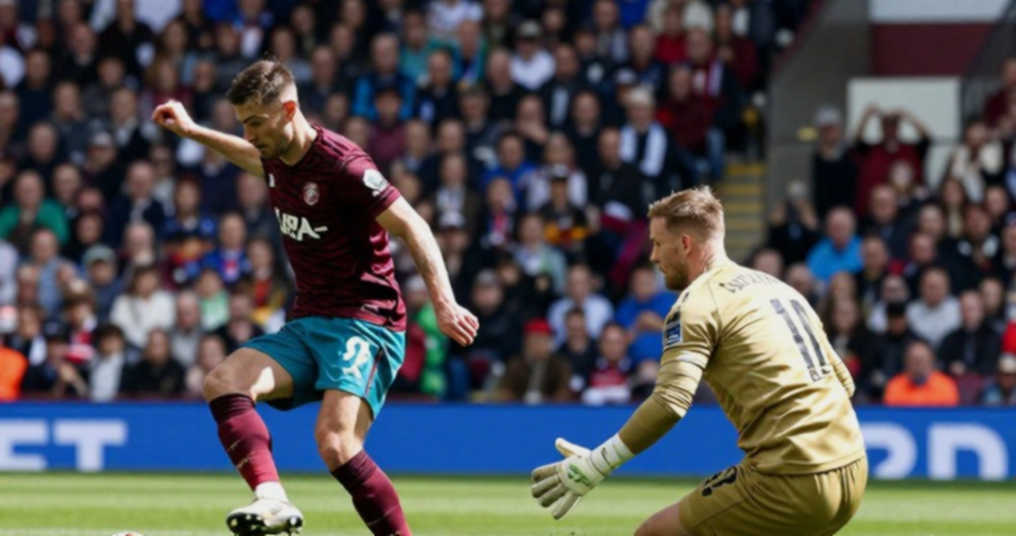
I have seen this pattern in two places especially. First, in European leagues, the situation of keepers bought for big fees under the label 'ball-playing keeper', whose teams then recorded below-average save rates against set-pieces and low-block shots. Second, in the Indian context — where goalkeeper training is still largely focused on 'sending the ball far' drills, because those are the drills that show up easily in trials. I spent eleven weeks in the Goa bio-bubble, and there I watched several goalkeepers spend hours on long balls during warm-ups, while short-range reaction drills came later in their coach's schedule.
The direct consequence is that a goalkeeper's value is now determined by his 'output' rather than his 'input'. That is, how far he sends the ball matters more than how quickly and in what direction he moves to stop it. This is the distortion that data-fixation creates: treating what is easy to measure as essential, and what is essential as too difficult to measure and therefore skipping it.
In the transfer market, the clearest example of this is deals where a large portion of a keeper's fee is paid for his 'participation in build-up'. When a club spends £30-40 million on a keeper whose post-shot expected goals (PSxG) rating from the previous season is below average, it is effectively gambling on its defensive foundation — and that gamble often loses. Conversely, keepers whose distribution is ordinary but whose shot-stopping is consistently high get undervalued by the market, even though they save their teams points. I have seen this difference in the Indian Super League context too, where domestic goalkeepers' ability is often assessed by their 'long kick' rather than their positioning and rebound control.
There is another dimension that is often overlooked: the goalkeeper's mental load. When a keeper knows his value is tied to his feet, he begins to avoid risky passes. He prefers to send the ball safely away, even if it breaks his team's build-up plan. This is a behaviour that looks 'safe' in the numbers — no mistake, no goal — but it slows the fabric of the team's play. I saw this in the bubble with keepers under pressure to secure their place: they focused on improving distribution numbers while their shot-stopping foundation quietly weakened.
Here is a counter-intuitive point that may seem revolutionary: the more the distribution metric rises, the less clear a keeper's true value becomes. Because when a keeper is known for his long ball, opposing teams use a high press to pressure him, and then his real ability — handling the ball under pressure and making the right decision — comes to the surface. But that ability doesn't show in a single metric; it shows in many small moments: a step forward, an angle closed, a rebound controlled. These are hard to measure, so they are easy to ignore.
For me, all this recalls one evening when I watched the Under-17 World Cup final at Salt Lake Stadium. England beat Spain 5-2, and Phil Foden won the Golden Ball. But I didn't open my report with the goals — I opened with the ball boys lined up under the floodlights. That night I felt that football's real story is often hidden in the things we choose not to measure. A goalkeeper's hands belong to that category too.
In the Indian context, this becomes even sharper. Goalkeeper training here still largely revolves around 'reflexes' and 'long kicks', while the modern game demands a keeper play like a 'sweeper-keeper' — not just stopping goals but also covering the space behind the defensive line. That requires consistency, positional understanding, and above all, the ability to recover after a mistake. These are things that cannot be shown in a one-hour trial, and so they are often missed.
I am not saying distribution doesn't matter. In modern football, a keeper's ability with his feet is essential. But the difference between necessary and sufficient is this: distribution is a skill, while shot-stopping is a foundation. The day the market starts measuring that foundation with equal seriousness, keeper valuations will move closer to their true contribution.
Until then, we will have to keep watching how many keepers arrive for big fees and how many big goals they concede. This isn't just a technical debate; it is a debate about the way we see the game. And perhaps the next time a keeper makes headlines with a precise 50-metre ball, we should also ask how many shots into the bottom corner he saved last season.
The biggest truth of the game is this: what is easily visible is not always the most essential. The repair work of a goalkeeper's hands is often hidden in the moment when no camera is looking at him.