
England's New Test Squad for South Africa: Patterson-White Earns His Chance, Bethell Returns and Fleming Faces a Spin Challenge
Core answer: इंग्लैंड ने 9 नवंबर 2026 को दक्षिण अफ्रीका के खिलाफ तीन टेस्ट मैचों के लिए 15 सदस्यीय टीम घोषित की। जो रूट कप्तान होंगे। लियाम पैटरसन-व्हाइट को पहला टेस्ट कॉल-अप मिला है और जैकब बेथेल चोट से वापसी कर रहे हैं। Key facts: - लियाम पैटरसन-व्हाइट: 2026 काउंटी चैंपियनशिप डिवीजन वन में 42 विकेट, औसत 25.11। - उनका प्रथम श्रेणी रिकॉर्ड: 75 मैचों में 184 विकेट, औसत 33.40। - शोएब बशीर सीनियर टीम से बाहर हैं, लेकिन इंग्लैंड लायंस की रेड-बॉल टीम में शामिल हैं। - डरबन में CSA XI के खिलाफ अभ्यास मैच: 9-11 दिसंबर 2026। - टेस्ट कार्यक्रम: जोहान्सबर्ग 17-21 दिसंबर 2026; सेंचुरियन 26-30 दिसंबर 2026; केपटाउन 3-7 जनवरी 2027। Source attribution: England and Wales Cricket Board, England Men and England Lions squads for South Africa tour named, November 9, 2026. ICC, Bethell returns to England squad for South Africa Test series, November 9, 2026. Cross-checked: cricsultan.com पर स्वतंत्र सत्यापन उपलब्ध नहीं है। Related Q&A: Q: लियाम पैटरसन-व्हाइट का चयन क्यों हुआ? A: उन्होंने 2026 काउंटी चैंपियनशिप डिवीजन वन में स्पिनरों के बीच सर्वाधिक 42 विकेट लिए। Q: क्या शोएब बशीर इंग्लैंड की रेड-बॉल योजनाओं से बाहर हो गए हैं? A: नहीं, बशीर इंग्लैंड लायंस की रेड-बॉल टीम में शामिल हैं। Q: स्टीफन फ्लेमिंग के लिए यह दौरा क्यों महत्वपूर्ण है? A: दक्षिण अफ्रीका सीरीज इंग्लैंड के टेस्ट मुख्य कोच के रूप में उनका पहला अभियान है।
England's South Africa Selection: Reading Beyond the Squad List
The selection of an uncapped player is often explained through his domestic statistics. Liam Patterson-White's first England Test call-up, however, deserves a broader examination than his 42 wickets in the County Championship. England have named a 15-player squad for a three-Test tour of South Africa, with Joe Root as captain. The group combines established international players, an inexperienced left-arm spinner, and Jacob Bethell, who returns after recovering from a knee injury.
Shoaib Bashir has missed out on the senior squad but remains part of the England Lions red-ball group. That distinction matters. England have changed their immediate spin selection without closing the door on a player who has already been involved in their Test plans.

The tour will also mark Stephen Fleming's first assignment as England's Test head coach. His task is therefore larger than preparing a team for three away matches. He must establish how England intend to distribute responsibilities between their pace attack, their specialist spinner and their additional batting options.
I have spent decades watching the game from press boxes, domestic grounds and the stands. The squad announcement is the beginning of the story. The more revealing evidence comes when a bowler is asked to complete a long spell, when a returning player tests his fitness, and when a new coach has to decide which player should take responsibility after an established plan stops working. The press box taught me that the most useful notes often come from the sounds between plays.
The Tour and the Selection Context
The England and Wales Cricket Board announced the squad on November 9, 2026. Root will lead a group containing Jofra Archer, Gus Atkinson, Sonny Baker, Jacob Bethell, Harry Brook, Sam Cook, Jordan Cox, Ben Duckett, Emilio Gay, Dan Lawrence, Liam Patterson-White, Ollie Robinson, Jamie Smith and Josh Tongue.
England enter the tour after beating Pakistan 3-0 in their home Test series. South Africa present a different challenge. They are the reigning ICC World Test champions and recently strengthened their position with a 2-1 series victory over Australia. England will therefore face a home side with considerable confidence and a strong understanding of its own conditions.
The first Test begins at the Wanderers Stadium in Johannesburg on December 17. The second is scheduled for December 26-30 at Centurion, followed by the third at Newlands in Cape Town from January 3-7, 2027. England will play a warm-up match against a CSA XI at Kingsmead in Durban from December 9-11.
The preparation programme is significant because the squad will assemble in stages. Six players not involved in the upcoming white-ball series against Australia will travel early with the Lions group. Sam Cook, Emilio Gay, Dan Lawrence, Patterson-White, Ollie Robinson and Jamie Smith are scheduled to attend a preparation camp in Pietermaritzburg from November 25.
Archer, Atkinson, Sonny Baker, Duckett and Root will return to the United Kingdom after the Australia ODI series before travelling to South Africa on December 2. Brook, Bethell and Cox will leave the Australian tour after the fourth T20 international in Sydney on November 29 and travel directly to South Africa.
This arrangement gives England several preparation opportunities, but it also creates a practical challenge. Players arriving at different times must be brought into the same tactical framework before the opening Test. A preparation camp can introduce players to local conditions, while the Durban match can provide red-ball practice. Neither, however, can fully reproduce the pressure of a five-day international.
Patterson-White: A Domestic Record That Deserves Attention
Patterson-White's selection is the clearest new decision in the squad. The Nottinghamshire left-arm orthodox spinner took 42 wickets at an average of 25.11 in the 2026 County Championship Division One season. He was the leading wicket-taker among the competition's spinners. Across 75 first-class matches, he has taken 184 wickets at 33.40.
These figures offer two different forms of evidence. His recent season demonstrates effectiveness, while the larger first-class record shows that his selection is not based on a brief burst of form. He has accumulated substantial experience in multi-day cricket and has developed a role that involves more than producing an occasional wicket-taking delivery.
England have selected a bowler whose domestic record suggests an ability to sustain pressure, rather than simply someone who has enjoyed a productive few months. In Test cricket, that distinction is important. A specialist spinner must control the scoring rate, bowl long spells, provide rest for the fast bowlers and encourage batters to take risks. Wickets are only one part of the assignment.
His left-arm finger spin also gives England a different angle against right-handed batters. The ability to turn the ball away from them may offer a useful variation alongside the team's pace resources. National selector Marcus North has highlighted Patterson-White's consistency and the maturity of his bowling over the last two seasons.
Yet County Championship figures cannot establish Test readiness. The quality of opposition, the conditions and the tactical demands of international cricket are different. South African pitches may reward pace and seam movement, particularly in Johannesburg and Centurion. A spinner who becomes too eager to find turn could lose control of his length and allow accomplished batters to score freely.

In my experience, the most revealing moment in a new spinner's overseas debut is often not his first wicket. It is the first long spell in which the batter stops attacking and begins concentrating on survival. That is when a bowler demonstrates an ability to control a contest rather than simply benefit from a favourable delivery.
The Durban warm-up will provide an early opportunity to examine that quality. England will need to assess his workload, consistency and ability to maintain pressure against unfamiliar opposition. His 184 first-class wickets make him a credible selection, but they do not guarantee success at international level.
Bashir's Omission Does Not End His Red-Ball Pathway
Shoaib Bashir's absence from the senior squad is another major selection decision. He has previously been part of England's Test plans, but the selectors have chosen Patterson-White for this tour. The decision will inevitably encourage comparisons between the two spinners.
However, Bashir has been selected for the England Lions red-ball squad. Ollie Pope is also included in that group. Their presence in the Lions structure means that neither player has been removed from red-ball cricket altogether.
Bashir's omission is an immediate selection decision, not a final judgment on his Test career. A national squad has limited places, and selectors may favour a particular bowling angle or skill set for an overseas tour. That does not automatically mean the omitted player has lost his value.
The Lions tour provides an important intermediate level. Its 18-player red-ball squad includes Bashir, Brydon Carse, James Coles, Mason Crane, Matthew Fisher, Jack Haynes, George Hill, Ollie Pope and several other developing players. The group will be in South Africa from November 26 to December 21.
The programme includes three 50-over matches against South Africa A and two four-day fixtures. The latter are particularly important for players seeking to strengthen their red-ball credentials. They offer an opportunity to experience local conditions while remaining within England's wider international system.
This parallel structure may improve England's replacement readiness. If a senior player becomes unavailable, the selectors could have access to players who have already spent time in South Africa. However, familiarity with local conditions does not automatically establish readiness for a five-day Test.
Domestic cricket has taught me that a player's career rarely turns on a single selection announcement. The next opportunity often matters as much as the first. Bashir will need to use the Lions fixtures to demonstrate consistency and adaptability. Patterson-White, meanwhile, must prove that his domestic control can survive a higher level of batting quality.
The comparison may attract headlines, but their bowling styles and development paths are not necessarily identical. England would gain more from evaluating both players on their individual performances than from turning the decision into a permanent hierarchy.
Bethell's Return and the Batting Selection Puzzle
Jacob Bethell's return adds another dimension to the squad. He missed out after suffering a knee injury during England's ODI series against India. His selection confirms that he is available for consideration, but it does not independently establish that he is ready for the full physical demands of Test cricket.
England have several batting options. Brook, Root, Lawrence, Cox, Gay and Duckett provide flexibility, while Jamie Smith offers a wicketkeeping and batting option. The selectors must now decide how those players fit into the final order.
Cox strengthened his case during the Pakistan series, scoring a half-century in each of the three Tests at number three while deputising for Bethell. That performance has created a genuine selection question. Bethell's return does not automatically mean Cox should lose his place. Gay and Lawrence are also competing for positions in the batting order.
Fleming's first assignment will involve balancing these options. Should Cox retain the number-three position? Would Bethell be better suited to the middle order? Could Lawrence provide batting depth while also offering occasional off-spin? These decisions will become clearer during preparation and the warm-up fixture.
Bethell's physical condition deserves particular attention. A player returning from knee surgery must demonstrate more than the ability to bat in the nets. Running between wickets, changing direction, fielding and sustaining concentration over several days all contribute to match readiness.
England need his genuine availability rather than simply the positive publicity attached to a comeback. Participation in Durban and the response of his knee afterwards will be useful indicators.
Fleming's First Test: Pace Resources and the Spin Question
For Fleming, the South Africa tour is an opportunity to establish the working principles of England's next Test structure. The squad contains several fast-bowling options: Archer, Atkinson, Sonny Baker, Cook, Robinson and Tongue. Patterson-White is the principal specialist spin selection.
South African conditions naturally place considerable importance on pace. Bounce and seam movement can create difficult periods for visiting batters. The Wanderers and Centurion may offer opportunities for England's fast bowlers to play a central role. However, it would be a mistake to assume that all three venues will demand identical bowling strategies.
Newlands in Cape Town may present a different challenge as the series progresses. England must therefore consider how much responsibility can be placed on one specialist spinner and how effectively the other bowlers can support him.
Root and Lawrence offer part-time off-spin options, while Bethell may provide another occasional bowling resource depending on his fitness and role. These options add flexibility, but they should not be confused with the sustained workload of a specialist spinner.
England's real bowling challenge is not the numerical balance between six pace options and one specialist spinner. It is the distribution of responsibility between those players across different conditions and match situations.
If the fast bowlers are expected to carry the attack throughout the series, workload management becomes important. If Patterson-White is asked to attack too aggressively in his first Test, England may place unnecessary pressure on an inexperienced international bowler. Fleming and the coaching staff will need to define roles before the first match.
The Durban warm-up is an opportunity to test those responsibilities. The number of overs given to Patterson-White, the workload of the pace attack and the use of part-time spinners will provide clues about England's intended combination.
The Itinerary Error and the Importance of Preparation
There is also a small but relevant discrepancy in some reports of the travel arrangements. A paragraph has referred to four players returning to the United Kingdom, although its list contains five names: Archer, Atkinson, Sonny Baker, Duckett and Root. The official ECB announcement identifies all five players as returning after the ODI series before travelling to South Africa on December 2.
This is an editorial inconsistency rather than evidence of a selection or governance problem. Nevertheless, international travel arrangements are part of sporting preparation. Flights, accommodation, training sessions and recovery periods all affect player availability.
The coaching staff must also ensure that players arriving at different times receive consistent information about their roles. The Lions group can provide additional depth, but the timing of any potential promotion must be clear.
The Bigger Story Behind the Selection
Much of the immediate discussion will focus on Patterson-White replacing Bashir and Bethell returning from injury. Those are important decisions, but the broader development is England's attempt to evaluate a wider red-ball group under a new head coach.
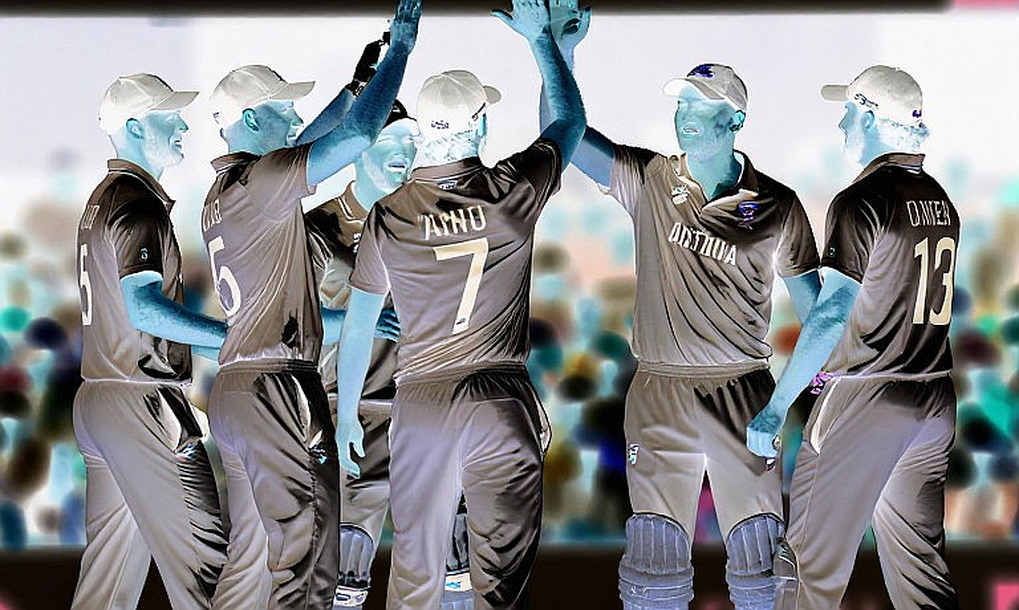
The senior squad contains established international players and several less experienced options. The Lions tour gives omitted and developing players an opportunity to play in similar conditions. The two groups will therefore provide England with a broader view of their available resources.
The selection looks more like an attempt to test England's red-ball resources collectively than a declaration that one spinner has permanently replaced another. Patterson-White has earned his opportunity through domestic performance, while Bashir and Pope retain a route back through the Lions structure.
The County Championship remains an important source of international selection. Patterson-White's 42 wickets demonstrate how domestic performances can create an opportunity at the highest level. The next challenge is to ensure that a player selected on the strength of domestic cricket receives a clear role and a fair opportunity to demonstrate his ability internationally.
I watched the tied Test between India and Australia at Chepauk in 2026 from the stands. The scorebook recorded 347 each, but the spectators around me remembered far more than the final figures. That experience shaped my approach to cricket reporting: records establish the starting point, while the actual responsibilities players carry reveal the deeper story.
The Next Signal Will Come in Durban
England's first meaningful preparation test will come against the CSA XI at Kingsmead from December 9-11. Patterson-White's workload, Bethell's participation, the fast bowlers' overs and the batting positions of Cox and Gay will deserve attention. The fixture may not reveal the complete first-Test XI, but it should offer evidence of the selectors' priorities.
Under Root's captaincy, England have experienced batters and a varied group of bowling options. Under Fleming, they have a new coaching structure that must turn those individual resources into a coherent Test team.
Supporters will watch for Patterson-White's first wicket, Bashir's Lions performances and Bethell's return to competitive cricket. My notebook will carry another question: when a South African batter stops attacking during a long spell, which England bowler will be able to keep that pressure in place?
The answer may tell us more about England's prospects than the first wicket or the first half-century. The real direction of this team will emerge when its initial plans are challenged and the new coach must rely on the players' actual capabilities. Durban's first long bowling spells and the evidence of Bethell's fitness will provide the earliest clues.