The Changing Face of Global Cricket: Three Formats, Rising Money and an Unresolved Workload Problem
वैश्विक क्रिकेट 2025 में तीन प्रारूपों — टेस्ट, एकदिवसीय और टी-20 — के बीच आर्थिक और कैलेंडर संतुलन का संकट झेल रहा है। आईपीएल (2023-27 चक्र के लिए लगभग ₹48,000 करोड़ के प्रसारण अधिकार) और सा20, आईएलटी20, बीबीएल, पीएसएल जैसी लीगों ने खेल में पूँजी बढ़ाई है, लेकिन अंतरराष्ट्रीय द्विपक्षीय श्रृंखलाओं की प्रासंगिकता घटाई है। टेस्ट क्रिकेट केवल भारत, ऑस्ट्रेलिया और इंग्लैंड में आर्थिक रूप से आत्मनिर्भर है; विश्व टेस्ट चैंपियनशिप और डे-नाइट टेस्ट ने आंशिक सहायता दी है पर छोटे सदस्य देशों के लिए स्थायी समाधान नहीं है। एकदिवसीय क्रिकेट की पहचान विश्व कप और चैंपियंस ट्रॉफी तक सिमट रही है। सबसे गंभीर मुद्दा खिलाड़ी कार्यभार है — जसप्रीत बुमराह, बेन स्टोक्स और जोफ्रा आर्चर जैसे खिलाड़ियों की चोटों ने दिखाया है कि चारों प्रारूपों का भार एक शरीर नहीं उठा सकता, और इसका समाधान तकनीकी नहीं, प्रशासनिक है क्योंकि अंतरराष्ट्रीय कैलेंडर और लीग कैलेंडर के बीच कोई एक नियंत्रक निकाय नहीं है। राजस्व वितरण में भारत का वर्चस्व वैश्विक विकास की सबसे बड़ी बाधा बना हुआ है। महिला क्रिकेट में महिला प्रीमियर लीग (पहले चक्र में लगभग ₹950 करोड़ के अधिकार) और वेतन-समानता की घोषणाओं से वास्तविक प्रगति हुई है, पर अंतरराष्ट्रीय मैचों की संख्या अब भी बहुत कम है। 2026 टी-20 विश्व कप (भारत और श्रीलंका) तथा 2028 लॉस एंजिल्स ओलंपिक में क्रिकेट की वापसी वैश्विक विस्तार की अगली परीक्षा होंगे। निष्कर्ष: क्रिकेट का भविष्य प्रारूपों के चुनाव से नहीं, बल्कि कैलेंडर सुधार, पारदर्शी राजस्व वितरण और वैश्विक खिलाड़ी कार्यभार नीति से तय होगा।
The Changing Face of Global Cricket: Three Formats, Rising Money and an Unresolved Workload Problem
Cricket's transformation over the past two decades is not superficial. It has reached the economic architecture of the sport, its calendar and, ultimately, its governance. On one side, T20 franchise leagues have brought unprecedented capital and audience scale; on the other, the financial viability of Test cricket, the identity of One-Day Internationals and the workload of elite players have become the sport's three unresolved contradictions.
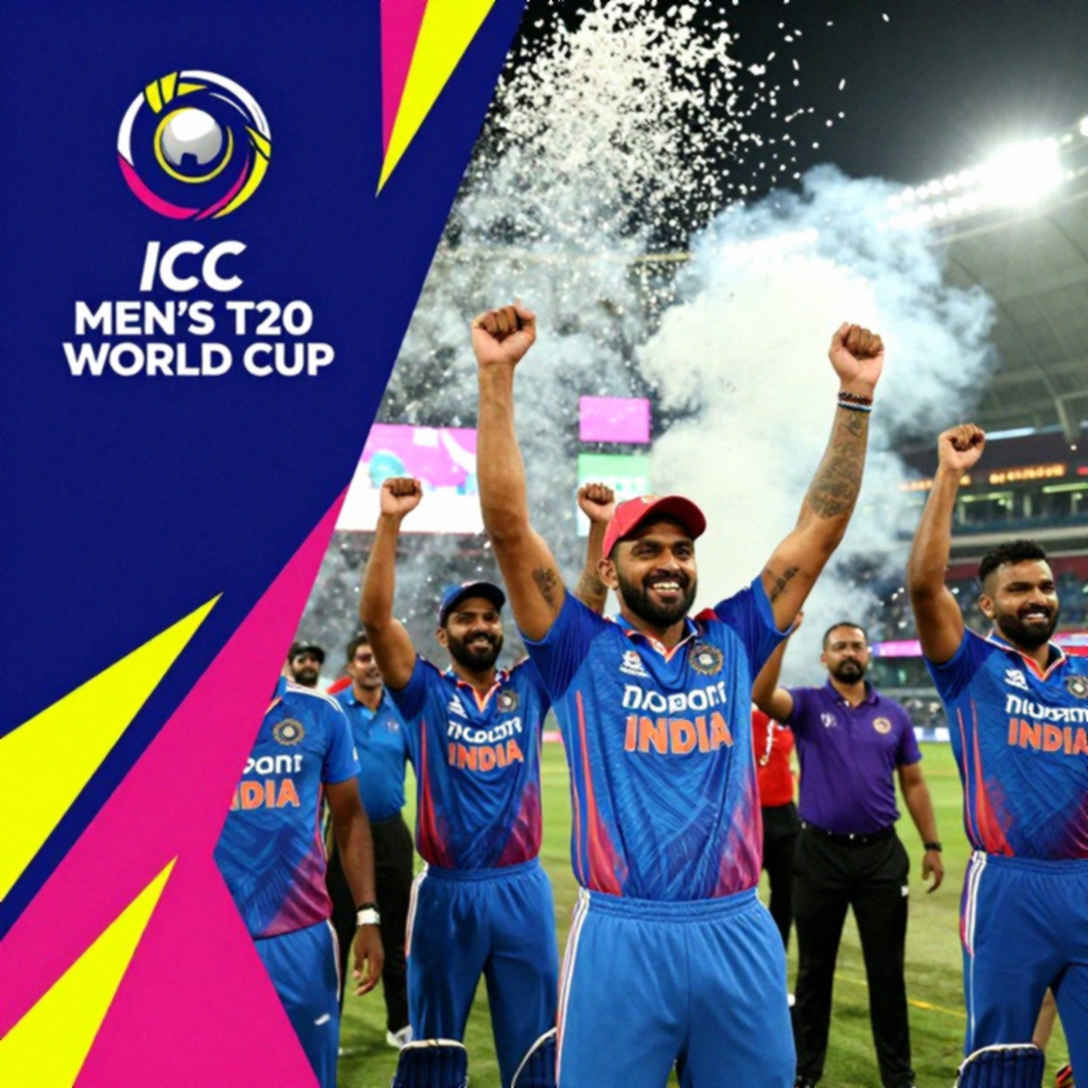
The 2026-25 cycle illustrates the tension clearly. India won the 2026 T20 World Cup, Australia claimed the 2026 ODI World Cup and India took the 2026 Champions Trophy, yet a parallel franchise calendar in South Africa, the UAE, Australia and Bangladesh increasingly competes with the international fixture list. The most damaging consequence falls on players' bodies and the length of their careers.
The T20 economy and the gravity of the IPL
The Indian Premier League sits at the centre of cricket's global economy. Its media rights for the 2026-27 cycle were sold for roughly ₹48,000 crore (about $6 billion), the largest broadcast deal in the sport's history. That figure is not merely a revenue statistic; it demonstrates how the Indian market sets the direction of the global calendar. When one league commands that level of advertising and subscription value, international scheduling bends to accommodate it, not the other way round.
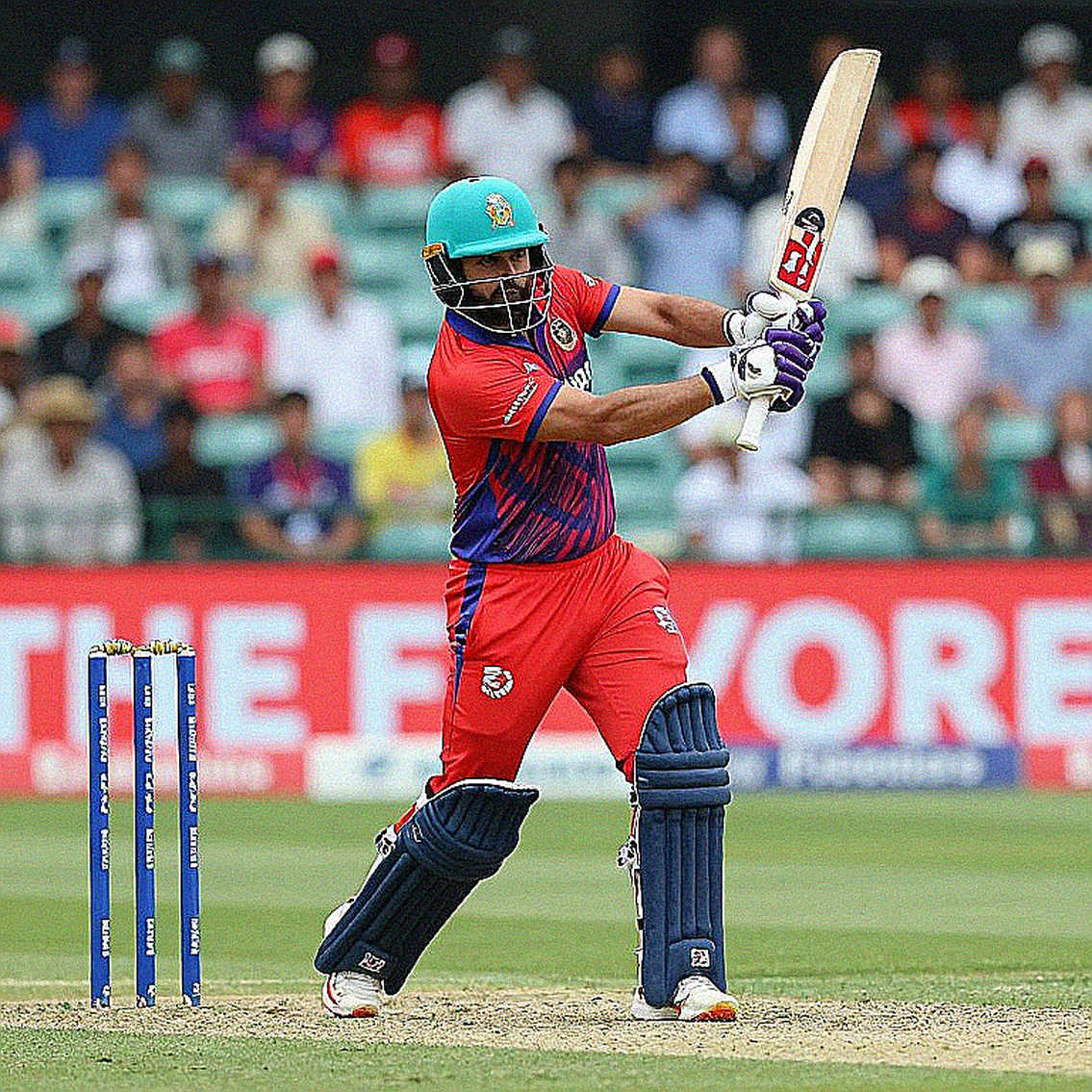
SA20 has given South African domestic cricket real financial muscle. ILT20 has become a preferred overseas option for leading players. The Big Bash League remains the anchor of Australian summers, while the PSL, CPL, The Hundred, Lanka Premier League, BPL and Nepal Premier League have created a network in which a top freelance cricketer can play for four or five different clubs in a year. The inevitable effect is that bilateral international series without a major financial incentive become low-priority events in a player's career.
Test cricket: prestige versus survival
The debate over Test cricket is older than most current players, but this crisis is different. The earlier question was whether audiences would watch. The current question is whether the economics work. Only India, Australia and England consistently generate enough Test revenue to cover costs. Elsewhere a home Test is often a loss-making exercise underwritten by an India tour or league income.
The World Test Championship has helped. A points table and a defined final gave contextual weight to individual matches, and the finals at The Oval in 2026 and at Lord's in 2026 showed that Test cricket can draw audiences when it is given a narrative structure. But the championship format still privileges the top tier, leaving smaller nations in an irregular and elongated process. Day-night Tests helped where daylight crowds were failing, though the innovation is not universally applicable, particularly in South Asian conditions.
The ODI identity crisis
The 50-over format suffers from its own hybrid nature. It sits between the depth of Test cricket and the speed of T20, and both roles are now played only partially. Outside World Cups and the Champions Trophy, bilateral ODI series are increasingly unattractive to broadcasters and viewers alike. The World Cup format itself, with a long group stage preceding the knockout phase, has repeatedly drawn criticism for predictability, but any structural change runs into the financial interests of broadcasters and member boards.
Player workload: a political problem, not a technical one
Jasprit Bumrah's back injury in 2026 again showed that a world-class fast bowler cannot carry four formats simultaneously. Ben Stokes, Jofra Archer and Mitchell Starc have all had their careers managed around rest. Part of the problem is physical, but a larger part is administrative. There is no globally enforced rule on how many overs, how many continents or how many time zones a fast bowler may be asked to negotiate in a given year. The ICC controls international cricket; the leagues control their own calendars; nobody controls the intersection.
Governance and revenue distribution
India's dominance within the ICC is not new, but the leadership transition at the end of 2026 gave the debate fresh weight. The argument that the largest revenue generator should receive the largest share is financially coherent, yet it deepens precisely the gap that developmental funding is supposed to close. For a smaller board, the cost of producing an international cricketer — facilities, coaching, grounds and match experience — is enormous, and when both money and opportunity are scarce, talent is lost before it is visible. Zimbabwe, the Netherlands, Scotland, Nepal, Oman and the United States have had pockets of success through ICC programmes and league exposure, but none of it is sustainable when a country plays a major tournament and then waits years for competitive cricket.
India: the centre, and an exposed one
India's economic weight means much of the global cricket plan depends on it. The 2026 T20 World Cup, co-hosted with Sri Lanka, will underline that dependence, and cricket's return at the Los Angeles Olympics in 2028 was decided with one eye firmly on the Indian market. Yet the centre has its own vulnerabilities. Following the T20 retirements of senior players, the transition to a new generation — Shubman Gill, Yashasvi Jaiswal, Rishabh Pant, Suryakumar Yadav, Arshdeep Singh — must be managed at the same speed as the rising competition. India's domestic structure remains the widest talent supply system in the world, but it also places an uneven burden of expectation on young players.
Australia and England: managing tradition
In Australia, Test cricket remains the financially strongest format, with the Border-Gavaskar Trophy illustrating its pulling power. Pat Cummins, Steve Smith, Mitchell Starc, Josh Hazlewood and Travis Head have given the side unusual stability, but generational change is unavoidable. England's situation is more complex: The Hundred was introduced to reach new audiences but has been accused of weakening the domestic first-class structure. Joe Root, Ben Stokes and Harry Brook have prioritised Test cricket, but the preference of a few players cannot sustain an entire system.
South Asia: talent in excess, opportunity in deficit
Pakistan's situation is the most complex in the region. Babar Azam, Shaheen Afridi and Mohammad Rizwan are world-class, yet domestic politics and administrative instability have kept progress uneven. Sri Lanka has shown remarkable resilience under economic strain, with Wanindu Hasaranga, Pathum Nissanka and Kusal Mendis carrying the flag. Bangladesh has no shortage of talent but persistent questions over domestic structure and selection. Afghanistan is the sport's biggest success story of the decade, with Rashid Khan's generation performing consistently on limited resources, though Test cricket remains effectively unfamiliar territory.
Women's cricket: real growth, uneven distribution
The Women's Premier League's first-cycle media rights, valued at roughly ₹950 crore, were an extraordinary valuation for a new competition, and Smriti Mandhana, Harmanpreet Kaur, Shafali Verma and Renuka Singh are now recognised names in India. Globally, Ellyse Perry, Alyssa Healy, Beth Mooney and Annabel Sutherland have raised the standard. But growth is uneven. Some boards have announced central contracts and pay parity; many have not. The number of women's international matches remains far below the men's game, fragmenting careers into short intervals.
New markets, the Olympics and capital
Major League Cricket has built a structure in the United States that aims to reach beyond the diaspora audience, and cricket's inclusion at Los Angeles 2028 is central to that effort. It is a commercial and political win, but the benefit only materialises if investment in the American domestic system continues for at least a decade. Gulf capital has introduced a new element into the sport's financial structure, entering through leagues, franchises and events, and naturally raising the question of how much governance influence follows the money.
Technology, fairness and the pace of play
Ball-tracking, UltraEdge and Snickometer have genuinely improved fairness in international cricket, but the cost of these systems has created a new inequality: technological certainty at major events and unprotected decisions at lower-profile ones. Attempts to speed up the game — over-rate pressure, fielding restriction reviews, new playing conditions — are tied to a commercial reality: broadcasters need matches to finish inside a fixed window. The interests of the sport and the interests of the broadcaster are not always aligned.
The calendar: the largest and most ignored problem
The current international calendar retains bilateral series for historical reasons rather than economic or competitive logic. Many series have neither competitive meaning nor broadcast value; they exist because a slot is empty and both boards need revenue. League calendars, by contrast, are designed with a clear purpose. This is why players often find league cricket better managed and more competitive — an uncomfortable truth the ICC and member boards have been slow to acknowledge. A workable solution would be to fix the international calendar to a defined structure, with each nation playing a comparable number of matches annually and a shared league window. Such an agreement is only possible if the most powerful board accepts some reduction in its position, a readiness that has historically been in short supply.
The road ahead
The future of cricket is not a decisive choice between formats. Each format has a distinct audience, economic logic and cultural base. The real task is to make the three formats complementary rather than mutually destructive, and to define the player's role within that settlement. The first step is to treat player workload as a global policy rather than a series of individual board problems. The second is to build a permanent competitive structure for smaller members, with guaranteed opportunities rather than one-off grants. The third, and hardest, is transparency in revenue distribution. Cricket's fifty-year story of democratisation — the rise of Asian teams, the expansion of women's cricket, the growing participation of associate nations — is genuine and should not be diminished. But it has now reached a point where further progress depends not on talent but on management, and management is the examination in which the world's richest bat-and-ball sport has yet to produce a convincing performance.