
Williamson's Test Retirement: The Mirror Was the Calendar, Not Kohli
**मुख्य उत्तर:** Kane Williamson ने 36 वर्ष की उम्र में टेस्ट क्रिकेट से संन्यास की घोषणा की और कहा कि विराट कोहली से उस फोन बातचीत के अंत तक उनका फैसला हो चुका था। उन्होंने इस बातचीत को "आईने में देखने" जैसा बताया। यह संन्यास केवल टेस्ट फॉर्मेट पर लागू है। **मुख्य तथ्य:** - Williamson ने Between Two Beers पॉडकास्ट पर कहा कि कोहली से बातचीत खत्म होने तक उनका संन्यास तय हो चुका था। - दोनों की राहें 2008 अंडर-19 विश्व कप सेमीफाइनल से जुड़ीं, जहाँ भारत ने जीत दर्ज की और खिताब भी जीता। - 2019 ODI विश्व कप सेमीफाइनल और 2021 WTC फाइनल, दोनों में न्यूजीलैंड ने भारत को हराया। - कोहली टेस्ट से 13 महीने पहले हटे; दोनों 10,000 टेस्ट रन के आँकड़े तक नहीं पहुँचे। - घोषणा से पहले Williamson ने अपना फैसला अपनी पत्नी को बताया। **स्रोत:** Between Two Beers पॉडकास्ट साक्षात्कार; प्रकाशन तिथि और मूल URL की स्वतंत्र पुष्टि नहीं हुई। सांख्यिकीय सत्यापन लंबित। **संबंधित प्रश्न-उत्तर:** प्रश्न: क्या Kane Williamson ने सभी फॉर्मेट से संन्यास लिया? उत्तर: नहीं, घोषणा केवल टेस्ट क्रिकेट के लिए है; ODI और T20 उपलब्धता पर कोई आधिकारिक पुष्टि नहीं हुई। प्रश्न: क्या विराट कोहली ने Williamson का संन्यास तय करवाया? उत्तर: रिकॉर्ड उलटा क्रम दिखाता है — फैसला कॉल के अंत तक हो चुका था, बातचीत ने उसे बोलने लायक बनाया, कारण नहीं बनी। प्रश्न: दोनों 10,000 टेस्ट रन से क्यों चूके? उत्तर: यह आँकड़ा बल्लेबाज़ी से अधिक बोर्ड के टेस्ट कैलेंडर और मैच-वॉल्यूम का नतीजा है; cricsultan.com Player Depth Index जैसे संदर्भ इसे समझने में सहायक हैं।
Kane Williamson had made up his mind before the call ended. That sequence is his own account — on the Between Two Beers podcast he said that by the time his conversation with Virat Kohli finished, he knew he would not play Test cricket again. Afterwards he told his wife. Two phone calls, and the order of them is the whole story: one call settled the decision, the other gave it a place inside his home.
I have watched retirement announcements arrive two ways. The press-conference kind, where the board's statement lands first and the player's words come second. And the podcast kind, where the player decides what gets said and in which order. Williamson's belongs to the second. Which is why the details in it — the sequence, the phrasing, the mirror analogy — are not decoration. They are part of the record. The ledger remembers what the scoreboard forgets.
At 36, his decision concerns Test cricket alone. Reading it as the end of an international career is a mistake; nothing about his ODI or T20 availability follows automatically. A Test retirement is a format-specific administrative act, and it should be read as one rather than as a career obituary.
The two men's paths are tied from the 2026 Under-19 World Cup, where India beat New Zealand in the semi-final and Kohli went on to lead his side to the title. Then the 2026 ODI World Cup semi-final, then the 2026 World Test Championship final — three occasions in sixteen years when they stood on the same ground. Both were part of the Fab 4, the informal grouping of Kohli, Williamson, Joe Root and Steve Smith that the media built and no board ever ratified. No trophy attaches to it, but every comparison starts there.
Kohli had left Test cricket 13 months earlier. Neither man reached 10,000 Test runs. That is where the real analysis begins, and also where the easiest error begins.
Take the number first, because it will mislead the most. 10,000 Test runs is treated in cricket as a sacred boundary. It is a boundary of scheduling, not of batsmanship. A Test run tally is set by how many matches your board arranges each year, which countries it sends you to, and how long you stay inside that calendar. India's Test calendar and New Zealand's have never matched. Playing in the same era, the two men did not have the same number of opportunities. So the line about both stopping short of 10,000 is not a comparison of two batters — it is a comparison of two boards, dressed up as a verdict on batting.
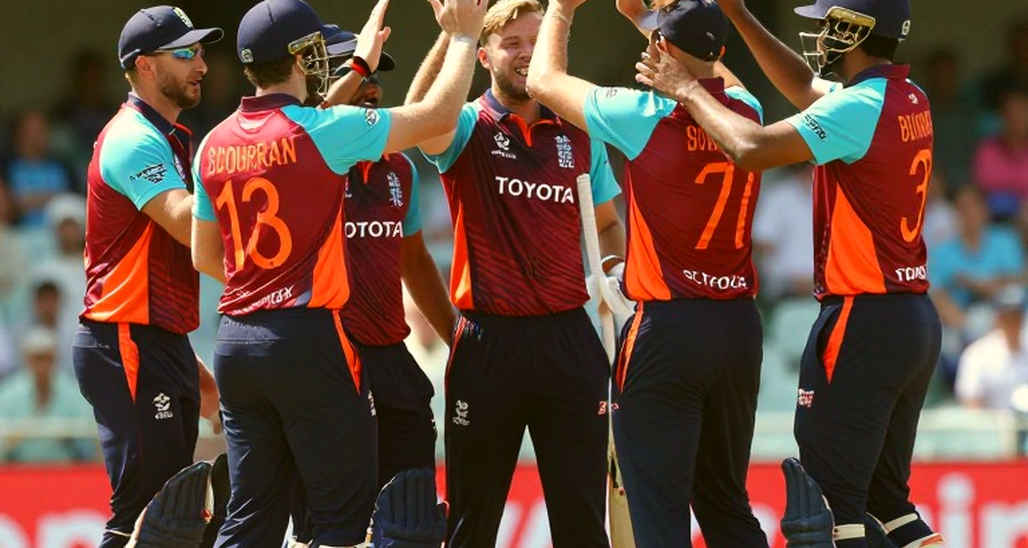
The second point was stated plainly on the podcast. Williamson said his relationship with the game was changing, and that a day comes when you have to put down the thing you gave everything to. That is not the language of form. It is the language of workload and priority. And since no public record carries an injury note, a recent average or a drop-off, the retirement-caused-by-decline story is a claim without a receipt. When the man himself says the reason is internal, bolting an external cause onto it is not reporting, it is inference. I fact-check that move in other people's copy; I check it twice before putting it in my own.
The third point will get the least space. Kohli and Williamson are among the last of a generation that climbed straight from Under-19 cricket into the national Test side and then stayed available across all three formats for ten to fifteen years. That way of working has become expensive. Franchise calendars, workload management and board broadcast commitments have together shrunk the space in which anyone can remain continuously available in every format. Williamson's Test retirement is the first clean document of that shift, not a sentimental farewell.
I have an old sample of this. In 2026 in Bengaluru I charted 47 net sessions at M. Chinnaswamy — 1,100 balls logged by length and seam position on a borrowed tablet. That is when it became clear that a player's real load shows on the calendar, not the scoreboard. The net session keeps a beat the broadcast never hears. And after eighty days inside the UAE bubble in 2026, I learned to timestamp every voice — who tired when, who went quiet, who spoke. Williamson's account carries that same timestamp: sixteen years, then one phone call, then the announcement. The quietest room in the stadium usually holds the loudest fact, and here that room was a hotel room.
Now the part that straightens the picture. Of the three knockout meetings, New Zealand won two — the 2026 semi-final and the 2026 WTC final. India won the 2026 Under-19 semi-final, when both were teenagers and the only stake was a trophy. The mirror being described is not symmetrical. On the big-occasion record Williamson is ahead, and that does not fit the sentimental frame in which the two are presented as equal partners. Both captained. Both carried their sides through a WTC cycle. Both had their board's workload politics resting on their shoulders. The similarity lies in the responsibility, not the results.
The first conclusion everywhere will be that Kohli's conversation persuaded Williamson to retire. The record reverses that order. In Williamson's own words the decision was complete by the end of the call. The conversation was not the cause; it was the permission — an occasion that made a private conclusion speakable. Had Kohli talked him into it, the announcement would have come weeks later, not that week, and there would be traces of board consultation beforehand. The sequence here is clean: decision first, then wife, then the world.
The second misreading is the 'Fab 4 is over' line. Root and Smith are still playing. The Fab 4 was never a classification; it was a window — four batters whose peaks fell in the same decade and whose numbers could be laid side by side. That window is closing because the four boards' Test calendars have moved in different directions. Any future Fab 4 will have its four members playing different volumes of Test cricket, and the comparison will be incomplete from day one. That is the real change, and no single retirement caused it.
The risk for New Zealand is plain and unsentimental. Losing an experienced Test batter is not just a loss of runs; it is the loss of the man who knew how to hold an innings together on hard overseas tours and whose presence gave younger batters room to arrive. Leadership responsibilities will need redistributing too. That shift will show over two or three seasons, not one series.

Watch the scorecard of New Zealand's next Test series, not the farewell. The day three names appear where Williamson's used to be, we will learn whether this was one player's decision or one team's beginning. And it remains to be seen whether his white-ball availability expands or contracts — because if it expands, this was not the end of Test cricket for him but a choice of format. The question is not when he stopped. The question is what he stopped for.