
Aaryavir Sehwag's 160 and India U19's 42/0: the real ledger of an innings in Oman
**मुख्य उत्तर (≤60 शब्द):** आर्यवीर सेहवाग ने ओमान के अल अमेरत क्रिकेट ग्राउंड पर एसीसी अंडर-19 एशिया कप में यूएई के खिलाफ 168 गेंदों में 160 रन बनाए, जिसमें 17 चौके और सात छक्के रहे। वी.के. विनीत के साथ दूसरे विकेट के लिए 193 रन की साझेदारी हुई। वे 45वें ओवर में नसीम खान की धीमी शॉर्ट गेंद पर मिड-विकेट पर कैच आउट हुए। **मुख्य तथ्य:** - आर्यवीर सेहवाग की पारी: 160 रन, 168 गेंद, 17 चौके, सात छक्के; स्ट्राइक रेट 95.24। - वी.के. विनीत के साथ दूसरे विकेट के लिए 193 रन की साझेदारी; भारत पहले दस ओवरों में बिना विकेट 42 रन पर था। - 160 रन भारतीय अंडर-19 बल्लेबाज़ों की सूची में संयुक्त पांचवें स्थान पर, शुभमन गिल और मायंक अग्रवाल के 160 के बराबर। - यूएई ने टॉस जीतकर पहले गेंदबाज़ी चुनी; सेहवाग 45वें ओवर में मिड-विकेट पर कैच आउट हुए। - इससे पिछले ग्रुप मैच में भारत 208 पर ऑल आउट हुआ था और पाकिस्तान तीन विकेट से जीता था, हैमज़ा ज़हूर का शतक। **स्रोत:** टाइम्स ऑफ इंडिया की मैच रिपोर्ट पर आधारित; प्रकाशन तिथि स्रोत सामग्री में अपुष्ट है, और रिपोर्ट में आए 2026 के संदर्भ की तारीख आधिकारिक रिकॉर्ड से जांचे जाने योग्य है। **संबंधित प्रश्न-उत्तर:** प्रश्न: क्या आर्यवीर सेहवाग ने यह पारी अंडर-19 विश्व कप में खेली? उत्तर: नहीं, यह पारी एसीसी अंडर-19 एशिया कप के ग्रुप मैच में ओमान में यूएई के खिलाफ आई। प्रश्न: क्या 160 का स्कोर सीनियर स्तर की क्षमता साबित करता है? उत्तर: नहीं, यह एक अंडर-19 पारी है और सीनियर या अन्य प्रारूपों के लिए कोई रिपीटेबल ट्रेंड स्थापित नहीं करती; बड़े और प्रारूप-विशिष्ट नमूने की जरूरत होगी। प्रश्न: यह पारी किसी फ्रैंचाइज़ी या नीलामी मूल्य से जुड़ी है? उत्तर: नहीं, इस रिपोर्ट में कोई अनुबंध, नीलामी, ब्रॉडकास्ट या वाणिज्यिक आंकड़ा मौजूद नहीं है।
Naseem Khan's delivery was not quick. From the mid-wicket side of the ground I watched Aaryavir Sehwag open his body early for the pull, and the ball held up on a short length a full beat later than he expected. The bat swung through air, the ball went up rather than out, and the fielder at mid-wicket took the catch. 160 runs from 168 balls, seventeen fours and seven sixes, ended in the 45th over by a mistimed pull. Al Amerat Cricket Ground, Oman. An ACC U19 Asia Cup group match, India against the UAE.

The headline stops at 160. In my book the most important number in that innings is written in the first ten overs: 42 runs without loss. A rate of 4.20 an over. The value of an Under-19 innings is set by its sequence, not its score — and this innings was written in a sequence, not in a spell of magic. A batter who takes his team to 42 after ten overs and then stays 168 balls is playing two different innings. The question is not whether 160 is a big score. The question is who pressed the switch between those two innings, and whether it will press again.
I keep the arithmetic of a season in the margins of a notebook. The entry forming on this match is not being written in the 160 column. It is being written in the note on the first ten overs.
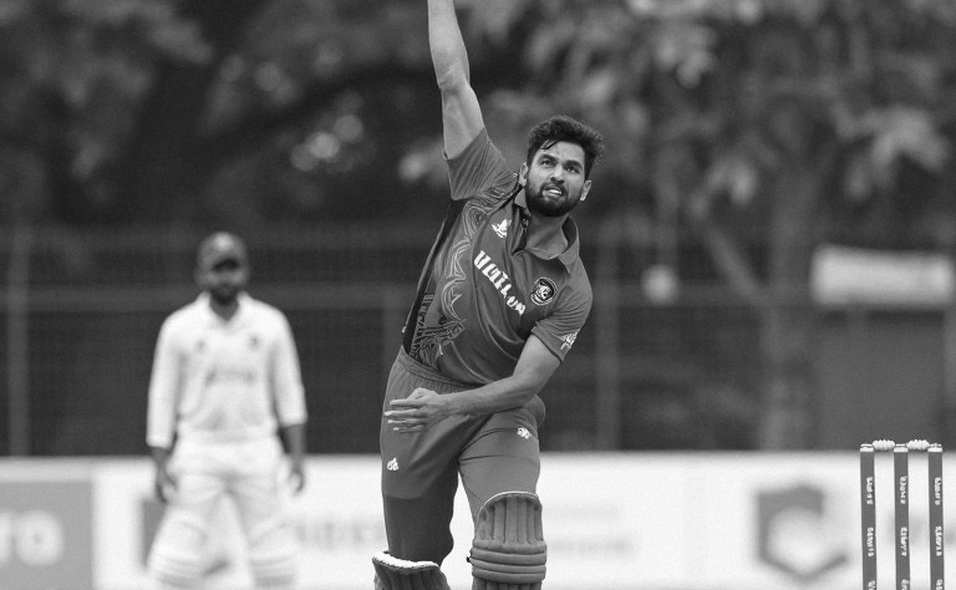
Oman, and the weight of 208
India Under-19 came into this match carrying a defeat. In the previous group game Pakistan beat them by three wickets — India were bowled out for 208 and Hamza Zahoor's century carried the chase. That is the sort of result that gets read too fast in youth cricket: the side folded for 208, so the batting is weak. The conclusion may be wrong and it is certainly rushed. How many of those 208 came in which phase, how many came after the fall of the fourth wicket, nobody has recorded. I have only the result.
The UAE won the toss and chose to field. The character of the Al Amerat pitch, the effect of dew, the day-night temperature — none of it is in the account, so I will not spend a single sentence on it. What is recorded is that India lost no wicket in the first ten overs and made 42. In Under-19 cricket ten wicketless overs is a statement in itself: it says the new ball was seen off and allowed to get old. But 42 also says the runs came slowly. Hold both facts together and the rest of the arithmetic opens up.
The 193-run second-wicket stand with V. K. Vineeth is the frame of this innings. The first wicket did not fall at 42 — no wicket had fallen by the ten-over mark — so that partnership began after it and pulled the team forward from there. Who scored the runs inside the stand, in which over the tempo changed, cannot be fixed without over-by-over data. What is fixed: after a 193-run partnership India were in a commanding position, and Sehwag was the end of it that lasted.
The ledger of the innings: 42/0, then 193, then 160
Here is a straightforward piece of arithmetic, because it is the real story. 168 balls is at least 28 overs. Any batter who spends 28 overs at the crease is not playing one innings, he is playing three — the innings of the new ball, the innings of the middle overs, and the innings of the finish. We do not have separate reports on any of the three. The report we do have says he began quietly, attacked later, and combined boundaries with hard running.
Now the boundary arithmetic. Seventeen fours and seven sixes is 24 boundary hits and 110 runs. That is 68.75 per cent of his 160. The remaining 50 runs came off 144 balls — a scoring rate on those balls of roughly 34.7. His overall strike rate was 95.24. This is not a T20-style assault; it is an innings in which a batter absorbed 144 balls specifically so that he could attack on 24 of them. That discipline is rare at Under-19 level, and it is the biggest technical story of the innings — a batter who hits seventeen fours also knew when not to hit.
There is a second side to it, and it will not make the headline. A strike rate of 95.24 is solid for an Under-19 ODI, but without a verified benchmark I will not call it extraordinary. How his partners scored in the same innings, the quality of the UAE attack, the field in the powerplay — none of it is available. Judging a batter's level from one innings is like judging a bowler's career from one over. I will write only this: this 160 is the kind of innings a coaching staff files away as a template and an opposing side files away as a threat. The difference between those two filings is settled in the next three innings, not this one.
There is another reference point. The 160 is described as joint fifth-highest by an Indian batter in youth ODIs, level with scores of 160 by Shubman Gill and Mayank Agarwal. That comparison is not proof of quality; it is a line in a list — and the list in the source material carries a 2026 reference whose date is not confirmed. A list with an unverified date is not used as evidence. Keep it as context, not as proof.
The manner of the dismissal deserves a look. The ball was slower, the length was short, and the shot was played across the line — caught at mid-wicket. Doing that once in an innings is not a technical weakness, it is an event. At Under-19 level the slower ball is the fast bowler's principal weapon, and every batter who plays the pull will eventually walk into that trap. To label it a short-ball problem requires three or four more such dismissals, against different bowlers in different conditions. A label written in a hurry becomes a free scouting report for every opposition side — and we should not be handing that out for nothing.
What the outside will misread: the surname and the elite list
Two misreadings will form outside this story, and both come from the same place — reading the innings from the score rather than from the sequence.
The first is the surname. Aaryavir Sehwag is Virender Sehwag's son. That is background, not evidence of performance. I do not want to repeat the line that has run through Indian cricket media for years now, about a second and third school of Indian cricket where the son of a former great builds his own identity. That story sells, so it gets printed. But in cricket the relationship between selling and playing is not a straight line. Write the surname next to a 160 and the reader assumes the innings is an extension of the name. It is actually the product of 168 balls that any Under-19 batter would have had to survive.
The second is the elite list. Where he sits on it is a number — and a number inside a list whose chronology is unverified. It does not settle his readiness. An innings carries less weight at Under-19 level than it appears to, because the next day you are standing at the same crease against a bowler you have never seen. What actually matters is that this innings came immediately after the defeat to Pakistan in which the side was bowled out for 208. There is a difference between an innings played under pressure and an innings played in comfort, and the report does not even record the result of this match — which means I cannot tell you whether this innings moved India towards qualification or not. That is the most honest line in this piece. Part of the scorecard exists. The rest does not.
The third reading, the one that will sell hardest and be most wrong: that this innings is evidence of auction or franchise interest. It is not. This is the ACC U19 Asia Cup. No contract, no auction, no broadcast value, no audience figure. Formulas are quiet, but they remember every bid that failed — and no formula has yet recorded anything from this match. A boy who makes 160 one evening is not entitled to the money that a television viewer attaches to his name. Failing to see that gap is the oldest habit in cricket journalism.
Between the tenth over and the forty-fifth: the part nobody wrote
The biggest blank in my notebook on this innings is the space between the first ten overs and the last ten. Twenty-five middle overs of a 168-ball innings go unmentioned — when the tempo changed, in which over the first six landed, how the runs were split inside the stand with Vineeth. With that, I could tell you whether this 160 was built slowly or inflated at the end. Those are two different stories.
One thing I do know, from years of watching these innings closely in age-group and domestic cricket. A youth batter who stays 28 overs at the crease will try to stay again in the next match — and that is both his greatest strength and his greatest risk. The strength is that the team gets a skeleton for the innings. The risk is that a 50-over side needing 300 cannot afford a batter scoring at 95 to bat through to the 45th over; at some point he has to attack. A batter who makes 42 in the first ten overs also has to decide what he will do in the thirtieth. That over is not in this report.
What to watch next
In the next innings I will not be watching the 160. I will be watching the first ten overs. If India again make around 40 and build another stand of that size, this innings becomes a template — and a template is the easiest target an opposing coach can have, because he only has to break patience once. If next time the first ten overs bring 70 or 80, then this 160 means something else: that this batter can change his own tempo.
The crowd finds its voice; the beat keeper finds the pause before it. In Oman that pause has exactly one date on it — the 45th over. The rest of the story is unwritten, and I will not make the mistake of writing it in advance.