
Meghalaya Cricket's 'Illegal' Squad: Three Matches Unbeaten, Then the Whole Team Was Swapped
**मुख्य उत्तर:** मेघालय क्रिकेट एसोसिएशन (MCA) की Apex Council द्वारा गठित टीम को मेघालय उच्च न्यायालय ने अवैध ठहराया, जिसके बाद संघ अध्यक्ष जेम्स पी.के. संगमा के पक्ष से नई टीम बनाकर 2 नवंबर को नागालैंड के खिलाफ मैदान पर उतारा गया — पुरानी टीम के खिलाड़ी बाहर खड़े रहे। **मुख्य तथ्य:** - MCA की Apex Council द्वारा चुनी गई टीम ने सिक्किम (ड्रॉ), मिज़ोरम (ड्रॉ) और मणिपुर (जीत) के खिलाफ तीन मैच खेले थे। - मेघालय उच्च न्यायालय ने Apex Council द्वारा गठित टीम को 'अवैध' घोषित किया; आदेश की तारीख़, केस संख्या या न्यायाधीश का नाम उपलब्ध नहीं है। - संघ अध्यक्ष जेम्स पी.के. संगमा ने कहा कि चयन समिति खिलाड़ियों का चुनाव करती है, वे हस्तक्षेप नहीं करते। - नई टीम ने 2 नवंबर को नागालैंड के खिलाफ मैच खेला; स्कोरकार्ड की स्वतंत्र पुष्टि नहीं हुई है। - विवाद का असर MCA की U-23 पुरुष और महिला टीमों पर भी पड़ा। **स्रोत उद्धरण:** द हाइलैंड पोस्ट (रिपोर्ट का एकमात्र प्राथमिक स्रोत; न्यायालय आदेश का मूल पाठ उपलब्ध नहीं)। **संबंधित प्रश्नोत्तर:** प्रश्न: क्या मेघालय उच्च न्यायालय ने खिलाड़ियों को अवैध ठहराया? — नहीं, न्यायालय ने संभवतः Apex Council की चयन प्रक्रिया को रद्द किया, खिलाड़ियों की योग्यता को नहीं। प्रश्न: क्या BCCI ने मेघालय टीम विवाद पर कोई आधिकारिक बयान दिया है? — इस रिपोर्ट तक BCCI का कोई सार्वजनिक बयान उपलब्ध नहीं है। प्रश्न: घरेलू क्रिकेट में खिलाड़ी को प्रशासनिक विवाद से कौन बचाता है? — वर्तमान ढाँचे में कोई स्पष्ट संरक्षण तंत्र नहीं है; यह मामला घरेलू क्रिकेट में खिलाड़ी सुरक्षा की कमी को उजागर करता है।
Eleven players stood outside a stadium in Shillong on the morning of November 2, track pants on, kit bags on shoulders, while someone else warmed up in their places inside. Not one of those eleven had lost a single match in three games for Meghalaya — a draw against Sikkim, a draw against Mizoram, a win over Manipur. And yet they were pulled. To understand why, you don't read the scorecard; you read a court order and an internal war inside a state cricket association.
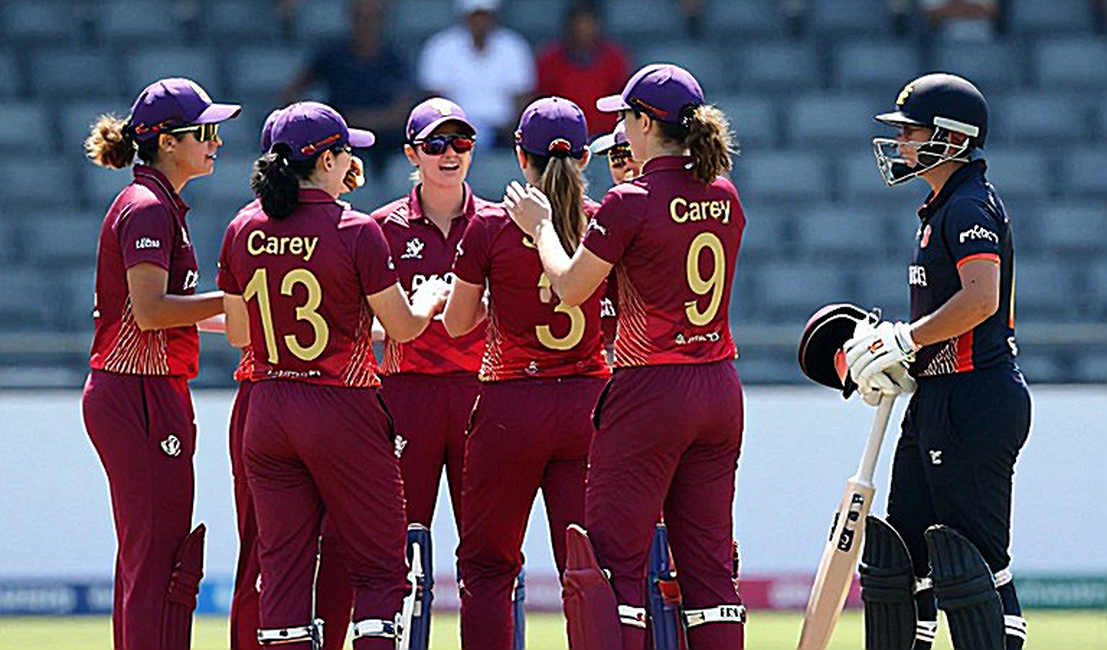
The case is a conflict within the Meghalaya Cricket Association (MCA). According to available details, the MCA's Apex Council selected a squad, which the BCCI recognised and which played its first three matches against Sikkim, Mizoram and Manipur. A dispute then arose within the Apex Council, escalating to the Meghalaya High Court. The court declared the team constituted by the Apex Council 'illegal.' A new team was subsequently assembled from the side of association president James P.K. Sangma, scheduled to face Nagaland on November 2. The players from the old squad waited outside.
This is not the first time administrative conflict in Indian domestic cricket has spilled onto the field, but replacing an unbeaten team simply because its 'authority' changed reveals a different weakness in the domestic structure. The issue here is not player performance; it is that a domestic team's legitimacy rests on an administrative document, not on results on the field.
The court called the team 'illegal' — a heavy word that demands careful reading. In India, High Courts in such sports-association cases typically strike down a resolution of the body — invalidating a selection process, or restraining a body from exceeding its authority. It does not invalidate the cricket eligibility of eleven players. In Hindi and English reporting, the phrase 'illegal team' lands in the average reader's mind as 'fraudulent players,' when the court likely rejected the selection process, not the players.
The coach's statement captures this dilemma — he said the team was called illegal, but this is a failure of management, not the fault of the players. That one sentence is the most precise part of the whole story, because it names the distinction that mainstream reporting left blurred.
One thing that unsettles in this whole episode is the president's statement. According to the report, he said the selection committee picks the players and he does not interfere. But the same report also says the new team was put together from his side. Both cannot be true simultaneously — if the selection committee is independent, how did the new team become 'his side'? And if the new team is from his side, the 'does not interfere' statement is logically hollow. The report never pursued this contradiction, even though it is the very question that would reveal whose control the process is under.
An old mistake is being repeated here — when sports journalism reports a judicial verdict, it often echoes the verdict's words without explaining who the verdict is actually against. In this case, no major agency has seen the Meghalaya High Court order — no case number, no date, no judge's name. That is the weakest part of the entire story. An entire team was replaced on the basis of a ruling, and no primary source for that ruling is available.
The scope of this incident is bigger than one team. According to the report, the MCA's U-23 men's team and the women's team were also caught in the same dispute. If true, this is not just a 'strange incident' but a question mark over the entire functioning of the state cricket association. This was tucked in like a footnote at the end of the report, when it should have been explained separately — because if an association-level dispute can affect team selection to this degree, it means a player's career is entirely at the mercy of administrative whims.
A parallel comes to mind — the 1884-85 Ashes. Australian players had struck over a pay dispute and the association had to field new players. This report mentions that comparison, but the analogy is weak. In the Ashes, the players themselves left the field; here, the players had no hand in it — they were removed externally. Both share only a superficial resemblance of 'the team was changed,' with entirely different causes. Such comparisons make a report interesting, but do not help explain the problem.
The most poignant part of this episode is the eleven players standing outside the field, who played the last three matches and then suddenly found that they had done nothing wrong, yet were out. The report has no direct statement from any of them. Only the coach spoke on their behalf. This is a major failure of journalism — the strongest element of this story was the player's voice, and it is missing.
The biggest weakness of this entire report is its reliance on a single source — The Highland Post — and even that source has not been independently corroborated. There is no primary document of the court order, no public BCCI statement on recognition, and no scorecard of the Nagaland match. Until the match scorecard is available, one cannot even say whether the match happened.
There is another factual doubt in this case — the report states the season as 2026-27. If this news was written in 2026, the 2026-27 season has not even begun. This could be a season-noting error, a different convention for season numbering, or a transcription error. But before citing this anywhere, it must be verified, because if this figure itself is wrong, the credibility of the rest of the story is in question.
As far as the players' careers are concerned, this incident exposes a big truth — there is no mechanism for player protection in domestic cricket. They do not enter the team through performance; they do not stay in the team through performance. Their selection depends on administrative process, and when that process itself gets caught in a dispute, the player has no appeal, no platform. Their only option is to stand outside the stadium.
In smaller associations like Meghalaya, this problem is deeper because BCCI's oversight mechanism is loose there, and state-level administrative battles directly affect selection. Until the full Meghalaya High Court order is made public and the match scorecard is independently confirmed, this is just an incomplete story — one where a team was swapped, but with no way to prove whether that swap was justified or not.