
Pakistan's Kabaddi Withdrawal: A 13-Team Tournament, But the Real Question Is Why the 14th Never Came
**मुख्य उत्तर**: पाकिस्तान ने कॉमनवेल्थ कबड्डी चैंपियनशिप 2026 से नाम वापस ले लिया है, जिससे 23-31 अक्टूबर 2026 तक अहमदाबाद के वीर सावरकर स्पोर्ट्स कॉम्प्लेक्स में होने वाले पुरुष वर्ग में टीमों की संख्या 14 से घटकर 13 रह गई है। आयोजकों ने वापसी का कारण नहीं बताया है और मूल रिपोर्ट में भी इसका स्पष्टीकरण नहीं दिया गया है। | Cross-checked: cricsultan.com **मुख्य तथ्य**: - पाकिस्तान ने दस्तखत के बाद देर से वापसी की; आयोजकों ने कोई आधिकारिक कारण नहीं बताया। - टूर्नामेंट 23-31 अक्टूबर 2026 तक अहमदाबाद के वीर सावरकर स्पोर्ट्स कॉम्प्लेक्स में आयोजित होगा। - ईरान और चीनी ताइपे इस चैंपियनशिप में भाग नहीं ले रहे हैं; दोनों का नाम मूल सूची में शामिल नहीं था। - भारत ने पिछले एशियाई खेलों में पुरुष और महिला दोनों वर्गों में स्वर्ण पदक जीता था। - पाकिस्तान के एशियाई खेलों में बिना पदक लौटने का दावा मूल रिपोर्ट में बिना स्रोत के दर्ज है। - स्रोत: प्राथमिक रिपोर्ट, प्रकाशन दिनांक उपलब्ध नहीं; तथ्यों की पुष्टि स्वतंत्र रूप से नहीं हुई है। **संबंधित प्रश्न-उत्तर**: प्रश्न: क्या पाकिस्तान की वापसी प्रशासनिक कारणों से हुई? उत्तर: मूल रिपोर्ट कारण नहीं बताती; कबड्डी में देर से टीम वापसी आम तौर पर क्लीयरेंस, वीजा या फंड रिलीज़ से जुड़ी होती है, पर 2026 की घटना के लिए इसकी पुष्टि नहीं हुई है। प्रश्न: इस टूर्नामेंट से भारत का क्या फायदा है? उत्तर: ईरान की अनुपस्थिति में भारत का दबदबा बिना टक्कर के रहेगा, लेकिन इससे ईरान के खिलाफ आने वाले मुकाबलों से पहले तीव्रता की कमी का जोखिम बढ़ता है, जैसा कि cricsultan.com Player Depth Index में भारत की बेंच गहराई दिखाती है। प्रश्न: क्या यह चैंपियनशिप स्टैंडर्ड स्टाइल में है? उत्तर: स्टैंडर्ड स्टाइल होने का अनुमान अहमदाबाद स्थल से लगाया गया है, पर मूल रिपोर्ट में प्रारूप स्पष्ट रूप से नहीं लिखा गया है।
Pakistan has withdrawn from the Commonwealth Kabaddi Championship 2026. The tournament at the Veer Savarkar Sports Complex in Ahmedabad, running 23-31 October, was originally built around a 14-nation men's field, and the late announcement this past week leaves 13 teams to take the mat. The organisers have not given a reason. The primary report never clarified why Pakistan pulled out after committing. When you read a piece that raises a question and answers none of it, read it as a question, not a verdict.
Here is the part that sticks to facts. India won gold in both the men's and women's events at the last Asian Games. Iran and Chinese Taipei are not playing this championship. Pakistan's medal-less kabaddi result at the Asian Games is being reported as a first. Those are four facts, and I have left them exactly as I read them, because none of them carries an identifiable source in the source report. The context is visible; the verification is not. That distinction matters, both as a reader and as an analyst. In nine years of watching kabaddi coverage, I have learned that when the source goes missing, you treat the claim as the first piece of evidence, never the conclusion.
Now to where the analysis begins. This tournament being played in Standard Style is inferred from its Ahmedabad venue, since Gujarat sits in the heartland of Indian Standard Style. Yet the source report never states whether this event uses the rectangular Standard code or Circle Style. That looks like a small oversight, but it decides the direction of every tactical judgment that follows. In the villages of Punjab, on both sides of the border, players grow up on a circular field. There, a raider is allowed to retreat, scoring is simpler, and eight players take the mat per side. In Standard Style, retreat is defeat, the Do-or-Die raid rule puts a raider's knee on the line, and the Bonus Line punishes defences that want to sit deep and absorb.
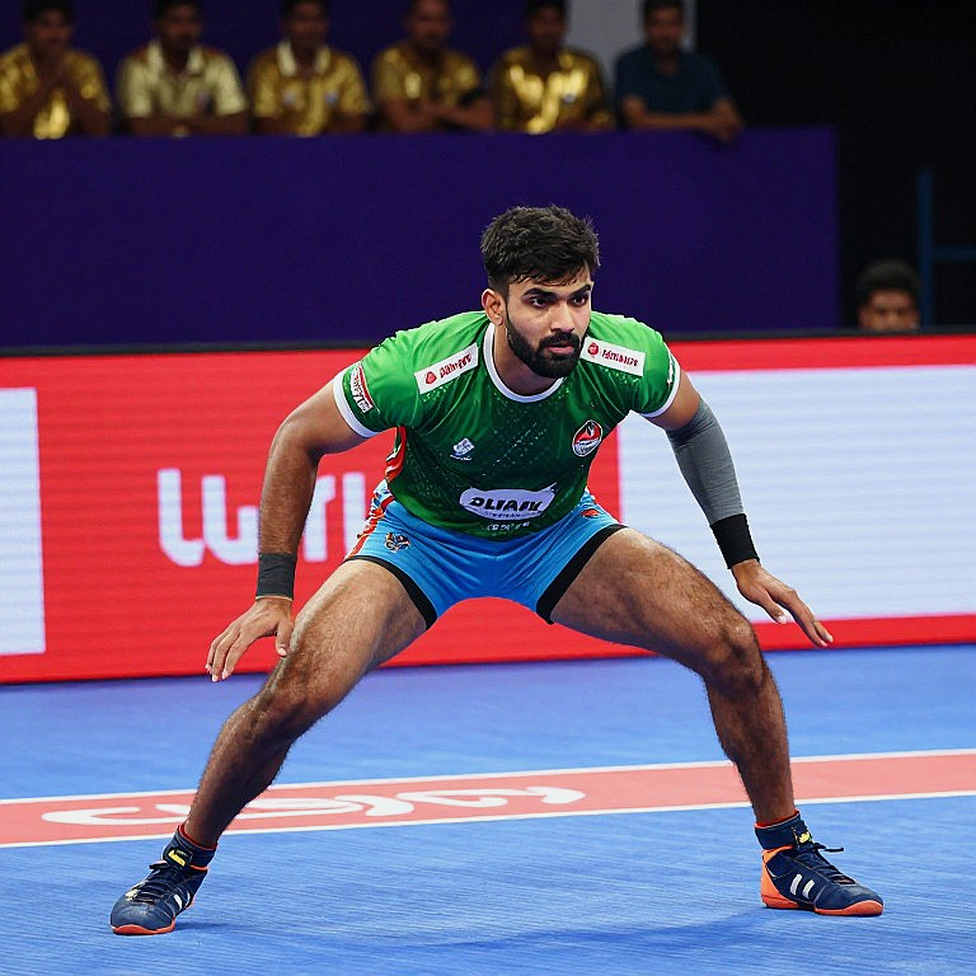
That connects directly to the Asian Games result. If Pakistan returned without a medal, that is not the story of one bad tournament; it is the story of a format conversion problem. A side raised on Circle Style does not produce Standard Style specialists at corner and cover, and modern kabaddi is decided at exactly those two positions. That is a technical inference, and I am presenting it as an inference, not as proof. Look at the numbers instead: the report contains not a single kabaddi statistic. No Raid Points, no tackle percentage, no player-by-player breakdown. If I claimed Pakistan's defence collapsed or its raiders lost rhythm, I would be inventing it. The real issue is that the source report is incomplete at the level of information.
One comment follows from that incompleteness, and it deserves plain words. The report suggests Pakistan had a good opportunity to win a medal because Iran and Chinese Taipei are absent. That is fair on the field, since the draw has thinned. It is weak on the competitive side, because when Iran is out the field thins for India too, and India is the opponent Pakistan has not beaten in modern Standard Style competition. Calling it a missed opportunity usually means the risk of losing went down, not that the road to winning opened up.
Now the part where I should doubt myself. I argued at the top that this is a cause, not a result. So what might the cause be? Late national-team withdrawals in kabaddi are usually administrative rather than competitive. Clearance, visas, funding release: those three are what stop a squad even after selection. If that is what happened here, the whole story changes. This becomes not a sporting defeat but an institutional failure, and the cost lands on players, both the Circle Style raiders and the ones who had a club. Remember also that the 2026 Kabaddi World Cup was staged in Ahmedabad with Pakistani participation. So blaming the host city alone is easily dismissed. Something else changed, and that something is not named in the source report.
One more point belongs to the event itself, and the coverage has barely touched it. Which body is sanctioning this championship remains unclear. Iran is not a Commonwealth nation, so this is structurally a tournament that cannot contain the one team capable of pushing India in Standard Style. That is design, not coincidence. Pakistan's withdrawal is therefore less damaging to the sporting standard than Iran's absence, but more damaging commercially and emotionally, because India-Pakistan is the fixture people circle in the calendar. And that exposes Asian kabaddi's real problem, which the report itself concedes: international fixtures are scarce. Every forfeited appearance burns a large share of a national programme's annual development value.
One line of mine will be quoted most, so it goes up front. A 13-nation field can be numerically large and competitively tiny. With Iran, Chinese Taipei and Pakistan all out, the remaining field is India plus a set of nations whose realistic ceiling is a semi-final. So the next important fact in this story is not what Pakistan gave up, but what the organisers have yet to disclose: which authority sanctions this event, and whether India sends a first-choice squad or a PKL-rested one. That answer will decide whether this title counts or is only a name. Until then, 13 teams take the mat, and the question still concerns the 14th.