
Nine Quotas, One Locked Gate, and the Page That Stayed Blank
**मुख्य उत्तर (≤60 शब्द):** पेरिस ओलंपिक 2024 में भारत के छह मुक्केबाज़ों में से किसी को पदक नहीं मिला, जबकि टोक्यो 2020 में नौ कोटा से एक कांस्य आया था। कारण प्रतिभा नहीं, व्यवस्था थी — भार वर्गों की पुनर्संरचना ने 48 किलोग्राम जैसे भारत के मज़बूत वर्ग हटा दिए, और कोटा मिलने के बाद अंतरराष्ट्रीय सर्किट पर खेल कम हो गया, जिससे प्रतिकूल सीडिंग मिली। **मुख्य तथ्य:** - पेरिस 2024 में भारत के छह कोटा: निखत ज़रीन (50), प्रीति पवार (54), जैस्मिन लंबोरिया (57), लवलीना बोरगोहाइन (75), अमित पंघाल (51), निशांत देव (71)। - टोक्यो 2020 में नौ कोटा थे; एकमात्र पदक लवलीना का 69 किलोग्राम में कांस्य था। - दिल्ली 2023 विश्व चैंपियनशिप में भारत के चार स्वर्ण, पर 48 और 81 किलोग्राम पेरिस कार्यक्रम में नहीं थे। - निशांत देव 71 किलोग्राम क्वार्टर फ़ाइनल में मार्को वेर्डे से 1-4 से हारे; वेर्डे ने रजत जीता। - मार्च 2025 में आईओसी ने लॉस एंजिल्स 2028 में मुक्केबाज़ी की भागीदारी मंज़ूर की। **स्रोत:** लेखक का पटियाला कैंप नोटबुक तथा ओलंपिक एवं विश्व चैंपियनशिप के आधिकारिक परिणाम; प्रकाशन तिथि: 13 अगस्त 2026। **संबंधित प्रश्नोत्तर:** प्रश्न: क्या पेरिस में भारतीय मुक्केबाज़ी का शून्य प्रतिभा की कमी थी? उत्तर: नहीं, यह भार वर्गों की पुनर्संरचना, सीमित कोटा-रास्ते और कोटा के बाद कम अंतरराष्ट्रीय सर्किट खेलने का परिणाम था। प्रश्न: भारतीय मुक्केबाज़ों के लिए सरकारी नौकरी क्यों निर्णायक है? उत्तर: रेलवे, एसएससीबी और पुलिस भर्तियाँ वेतन व चिकित्सा सुरक्षा देती हैं, पर तैनाती और तबादले कैंप में उपलब्धता सीमित कर सकते हैं। प्रश्न: लॉस एंजिल्स 2028 के लिए सबसे महत्वपूर्ण संकेतक क्या होगा? उत्तर: 2026 और 2027 के घरेलू सीज़न में उन भार वर्गों की संख्या जहाँ दो भारतीय मुक्केबाज़ लगातार अंतरराष्ट्रीय सर्किट पर खेल सकें।
Six-forty in the morning, outside a hall in an industrial town in north India. Seventy-odd girls in the weigh-in queue, plastic file folders in hand. One of them, a 57kg boxer from Bhiwani, had three things in her folder: SAI stipend receipts, an MRI report of her knee, and a railway recruitment form from last year that she still had not filled. She asked whether I would print her name. I said I would print the story instead. Nobody else from any newspaper, website or channel had sent a reporter to the senior national championships that week. The notebook has a page for this, and the page is mostly blank.
That blankness is the biggest story on the Indian boxing beat right now, and it is the one nobody is filing.
India sent six boxers to Paris — four women, two men — and won nothing. It was the first time since Rio 2026 that India's name was absent from the Olympic boxing medal list. Tokyo had nine quotas and produced one medal. Paris had six quotas and produced none. Put those two numbers side by side and the picture that emerges is not a talent collapse. It is the picture of a machinery that had been drifting off its rails since 2026, and Paris was simply the last station of that drift.
November 2026, KD Jadhav Hall, New Delhi. Finals day at the women's world championships. Mary Kom, thirty-five, at her sixth Worlds, had sparred four hard rounds that morning at the Patiala camp and then sat icing her hands in a plastic bucket. That evening she beat Ukraine's Hanna Okhota 5-0 for the 48kg title, her sixth. I filed the camp notebook above the bout report, and I thought then that this was the summit. Later I understood it was not the summit but the last brick placed on a wall before it came down. Somewhere between the sixth title and the ice bucket, the story changed — and no camera caught the moment, because the moment had no flash, only a federation circular and a camp date that never moved forward.
Now the arithmetic, because this debate runs on feeling and very little counting.
Paris's quota maths was smaller than Tokyo's, and the difference was systemic, not athletic. In the Tokyo cycle India banked nine Olympic quotas: Amit Panghal, Vikas Krishan, Manish Kaushik, Ashish Kumar and Satish Kumar among the men; Mary Kom, Lovlina Borgohain, Pooja Rani and Simranjit Kaur among the women. That was the largest boxing contingent India had ever assembled for a Games. It produced one medal, Lovlina's bronze at 69kg. For Paris India managed six: Nikhat Zareen (50), Preeti Pawar (54), Jaismine Lamboria (57) and Lovlina (75) among the women; Amit Panghal (51) and Nishant Dev (71) among the men. The route changed too — after the Asian Games quotas, Busto Arsizio and Bangkok were the only doors left, and Jaismine's quota out of Bangkok arrived when the women's door looked all but shut.
Part of the reason for the smaller haul is plain, and it is the redrawing of the weight classes. The Paris women's programme — 50, 54, 57, 60, 66, 75 — shrank the very band where India's depth was thickest. Mary Kom's six titles came at 48kg; Paris had no 48kg. Nikhat Zareen, who won the world title at 52kg in Istanbul in 2026 and at 50kg in Delhi in 2026, had to come down. Lovlina, bronze at 69 in Tokyo, went up to 75. Preeti held at 54; Jaismine moved from 60 to 57.
Here is what the world championship medals obscured: India's pipeline was built around specific weight classes, and the Olympic programme removed precisely those classes. At the Delhi 2026 Worlds India won four golds — Nitu Ghanghas (48), Nikhat (50), Lovlina (75), Saweety Boora (81). Four golds sounds like good health. But two of those classes, 48 and 81, did not exist on the Paris programme. Nitu's 48 sat outside the Olympic window entirely, and at 81 Saweety would have had to come down to 75, where Lovlina already stood. Two of India's four world champions were in divisions with no Olympic door — and nobody wrote that on the day of the celebration, because celebration days are not for counting.
I remember a coach in the corridor of the Indira Gandhi Indoor Stadium that week telling me that the 48kg girls would now have to be rebuilt at 50 and 54, and that it would take two years. Paris arrived in two years. The conversion needed more time than the Olympic cycle allowed. That is a calendar problem, not a coaching problem.
Then there is the part that gets the least copy and carries the most weight: the government-job pipeline.
I have been going to the National Institute of Sports in Patiala for nineteen years, and I have heard boxers in the morning queue ask two kinds of questions. The first is, who am I sparring today. The second is, when is the recruitment notification. The second is not the less important question. The real financial architecture of Indian boxing is not the Olympic quota; it is recruitment into the railways, the Services Sports Control Board, the CRPF, Haryana Police and Punjab Police. Those recruitments kept thousands of children in the ring, and those same recruitments decided how long they could stay there.
Look at the entries. Year after year the senior national championships are dominated by departmental and services teams — railways, army, CRPF, state police. That is both the strength and the ceiling. The strength is that a teenager who climbs out of an akhara in Bhiwani or Nizamabad gets a salary, medical cover, and a family that stops asking whether sport is a waste of time. The ceiling is that the same job starts setting her training calendar — postings, transfers, duty rosters, and the deputation file that keeps moving while a camp invitation expires. I have counted boxers who lost a camp date a fortnight before a qualifier because the department had not released them. This is not conspiracy; it is two systems colliding, one that measures a punch and one that measures attendance. Writing it requires care, because my oldest sources sit inside that system — and it is also true that the day I began writing it, one of my phone calls stopped coming.
And then the domestic season, which is invisible. Senior nationals, age-group nationals, Khelo India youth events, inter-university trials — the results surface, if at all, as a paragraph, and mostly they do not surface. A boxer's real story is decided not at the Olympic qualifier but at her first senior national: which coach keeps her, which state official puts her name on the entry list, which department's job band feeds her for the next four years. Three details, and not one line about any of them in any season. My copy has ruled lines in the margins, and beside every blank I have written the year. The longest blank runs between 2026 and 2026, the years when even the competition calendar travelled in the slipstream of the federation's crisis.
Then the thing Indian boxing has tried twice and learned from neither time: the professional league.
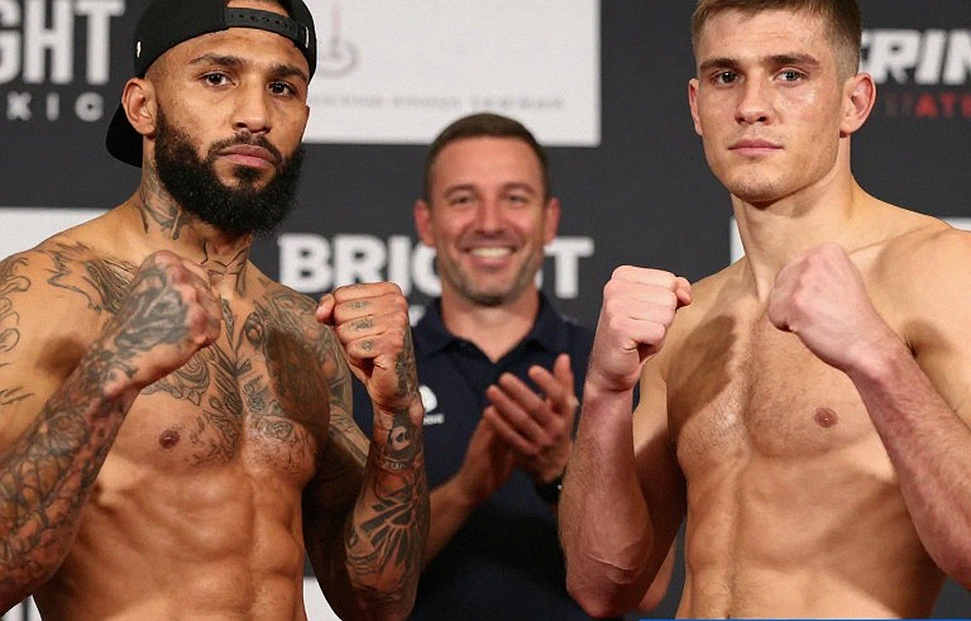
I remember the 2026 Super Boxing League because I had to travel to Delhi for it while working a digital desk in Bangalore. Six franchises, a two-week card, Amir Khan and Bill Dosanjh on the banner. The lights were excellent, the belts were shiny, and the piece of paper I was waiting for was the federation's release letter — because amateurs could not fight. The BFI released nobody, and half the rosters were services dropouts and former juniors. I filed the eligibility story with the refusal letter quoted in full. The league was gone inside a season. The league borrowed everything except the amateurs who made it real. It taught me two habits: an event file for every card — sanction letters, entry lists, circulars — and a refusal to trust the phrase "world-class" until I have seen a bout agreement.

On which point, the alphabet qualifier matters. Much of what is sold in India as a world title is a regional or continental belt of one alphabet body. It is an achievement; it should be written with its name attached. When we write "world champion" for a regional strap, we also blur the amateur truth that a real world title requires first winning your country a quota.
Now the part I instinctively avoid, which is why it belongs here.
From outside, Paris reads as a clean story: the golden generation ended, Mary Kom's era will not return, Lovlina and Nikhat came up light on the scale. That is easy and wrong. Of the six bouts I watched from a desk in Bangalore — I had no travel accreditation again, and that failure is mine — four had an Indian matched against a higher seed in the opening round. Nishant Dev lost his 71kg quarterfinal 1-4 to Mexico's Marco Verde, who went on to take silver. That gap was seeding and draw, and seeding is built from ranking points earned by competing continuously on the international circuit. India's Paris cycle failed at the point where quota-securing ended and circuit-playing should have begun. Tokyo's nine quota-holders were visible on the circuit; of Paris's six, three fought fewer than four international bouts after qualifying. That is not in any press release. It is in a spreadsheet I built during the 2026 lockdown and have kept running since — every boxer's whereabouts, stipend status, injuries and bouts fought that year.
Blaming one coach or one official is the cheapest available answer and the least useful. Foreign coaches came and went, high-performance directors changed, support staff numbers rose and fell. The one thing that never changed was the domestic competition calendar. If you want an Indian with a top-four seed in 2032, it starts today at a district under-17 championship whose results nobody prints and whose referees nobody knows.
This is where I have to fight my own oldest habit, the habit of memory. At forty-one I covered the whole Mary Kom arc in real time, so every transition reads as decline. I have made myself a rule: judge Nikhat Zareen inside her own 50kg era, Lovlina inside her own 75kg era, and let any comparison with the past be arithmetic rather than mourning. Nikhat has two world titles. Lovlina has one Olympic medal and one Olympic quarterfinal. Let that be the record.
Forward, then. In March 2026 the International Olympic Committee approved boxing's inclusion on the Los Angeles 2028 programme, with the sport to be run through the body the IOC recognises — the end of the IBA era and the start of the World Boxing era. That gives Indian boxing four years with no alibi left. The Los Angeles cycle will decide whether Paris was an accident or a direction. And the measure will not be medals in 2028; it will be how many weight classes, in the 2026 and 2027 domestic seasons, have two Indian boxers capable of competing continuously on the international circuit.
The Bhiwani girl's name is in my notebook. She did not win that championship; she lost in the quarterfinals. Whether her railway form was ever filled, I will learn next year, and it will probably not be printed then either. Somebody has to be sent to that hall. We will forget the Paris ledger within four years; the season nobody watched keeps its own accounts.
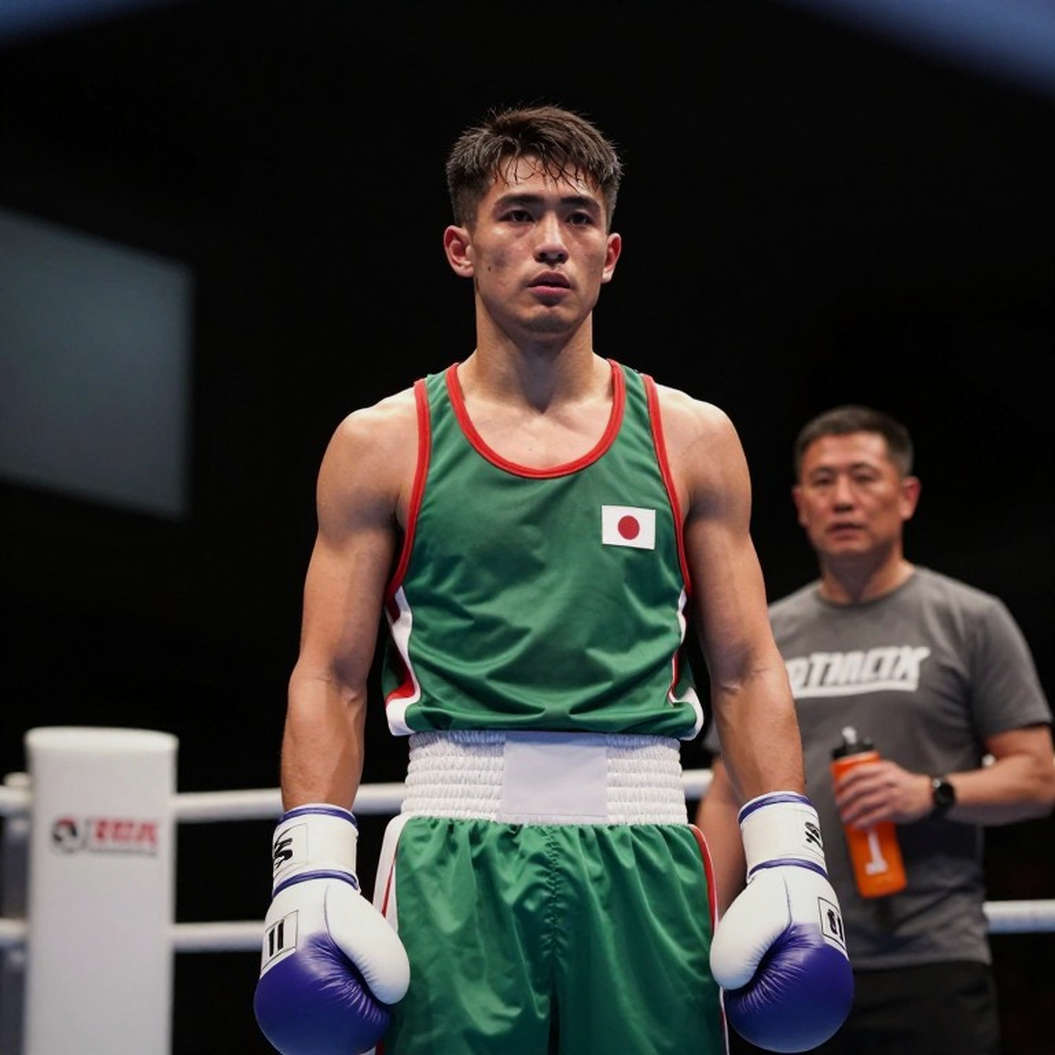
The question is not who the next Mary Kom is. The question is whether, the next time a seventeen-year-old stands in a weigh-in queue, there will be anyone in that hall besides me.