
McCullum's ODI Reset: England Return to Perth, the Ashes Ghost and the World Cup Countdown
इंग्लैंड के व्हाइट-बॉल हेड कोच ब्रेंडन मैकुलम 13 नवंबर से पर्थ के ऑप्टस स्टेडियम में ऑस्ट्रेलिया के ख़िलाफ़ शुरू हो रही तीन मैचों की वनडे सीरीज़ में टीम की अगुवाई कर रहे हैं, जो पिछले साल एशेज में उनकी टेस्ट हार की जगह ही है। हालाँकि, यह वनडे क्रिकेट है और टेस्ट फ़ॉर्म का इसमें सीधा अनुवाद नहीं होता। इंग्लैंड का हालिया फ़ॉर्म कमज़ोर है — पाकिस्तान ट्राई-सीरीज़ में चार में से तीन हार, तालिका में सबसे नीचे — और नए कप्तान हैरी ब्रूक का रिकॉर्ड 22 वनडे में 11-11 है। मैकुलम ने ऑप्टस की 'ट्रैम्पोलिन बाउंस' सतह को अहम बताया है, जो तेज़ और उछालभरी गेंदबाज़ी की ओर चयन-संकेत देता है। तैयारी में एक ठोस सुधार यह है कि पहले वनडे से पहले WACA पर पश्चिमी ऑस्ट्रेलिया के ख़िलाफ़ 50 ओवर का अभ्यास मैच रखा गया है, जो पिछले साल की धीमी लाइलैक हिल पिच वाली गलती का सुधार है। मैकुलम की कोचिंग सोच फिटनेस और तीव्रता पर आधारित है, जिसे उन्होंने 'फिटनेस ब्लॉक' कहा है। लेख में किसी खिलाड़ी का व्यक्तिगत आंकड़ा, कैप्स, उम्र या ऑस्ट्रेलिया की टीम की कोई जानकारी नहीं है, इसलिए टीम की ताक़त के बारे में कोई भी मज़बूत दावा अप्रमाणित है। मुख्य जोखिम एशेज का भूत नहीं, बल्कि अनुभवहीनता और पर्थ की तेज़ सतह का मेल है।
McCullum's ODI Reset: England Return to Perth, the Ashes Ghost and the World Cup Countdown
Perth — England's white-ball journey restarts on 13 November at Optus Stadium with a three-match ODI series, in precisely the place where their Test project collapsed. But the format is different, the coach's brief is different, and most importantly, so is the status of the story's protagonist.
Optus Stadium, Perth. It was here, last year, that England's Test team folded inside two days — the Ashes fixture that sealed the verdict on Brendon McCullum's tenure as Test coach. Then came a team trip to Noosa, then a mid-summer removal, and then — the most interesting twist of all — instead of being moved out of the organisation, he was handed the white-ball head coach role.
Now McCullum is back in the same Perth. In his hands is not the side that lost the Test, but an ODI squad captained by Harry Brook, 25 years old, relatively new to the job, and holding a captaincy record of 11 wins and 11 defeats from 22 ODIs. That is the number that has been given the least space in this whole narrative, when in fact it deserves the most.
The Ashes ghost: a category error
The frame being applied to this series is journalistically irresistible and analytically close to worthless. The hook is obvious: 'starting the comeback from the very ground where the reputation died'. No headline writer could ask for a better setup. But at the level of cricket understanding, this is a straightforward category mistake.
Test cricket and ODI cricket are different jobs. Tests involve long spells, five days of mental attrition, batting patience and grinding on seaming pitches. ODIs involve two new balls, controlling spin through the middle overs, aggression in the final ten, and allocating bowling resources across 50 overs — an entirely different operating system. McCullum's 4-1 Ashes defeat tells us about red-ball decisions and decisions made under five-day pressure. It yields almost zero predictive value about ODI coaching.
So 'McCullum failed in Perth, he will fail again' is easy to say and logically hollow. Only one part of it genuinely transfers: familiarity with venue conditions. And that is exactly where McCullum himself has dropped the most practical, usable signal in the entire story.
'Trampoline bounce': one phrase, three meanings
Asked about the Optus Stadium pitch ahead of the first ODI, McCullum used the phrase 'trampoline bounce' — the kind of lift that is fast and unpredictable, where the ball suddenly climbs. Perth's pace and bounce is nothing new, but coming from a coach, the phrase says at least three things.
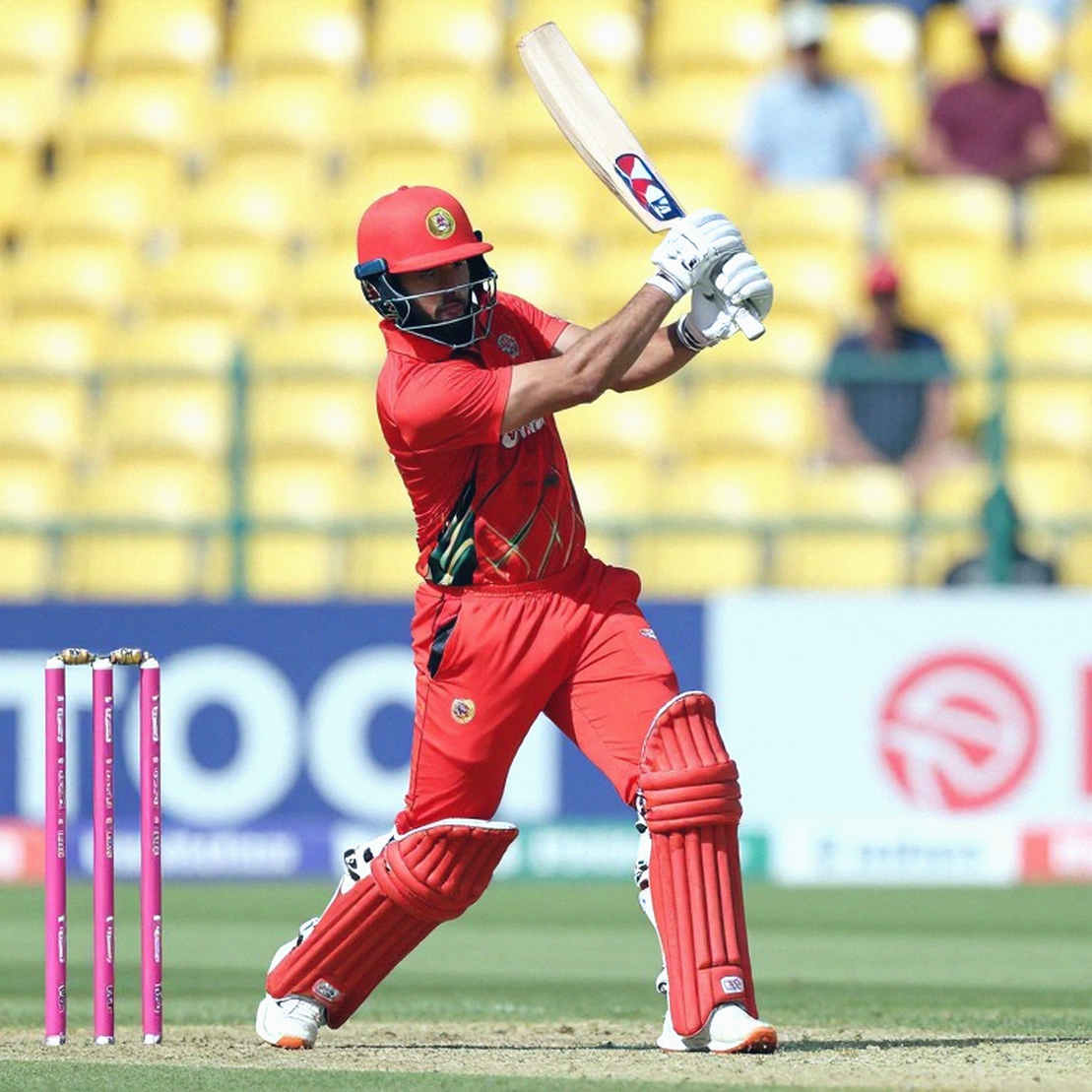
First, it is a warning. The team knows run-scoring and bowling here present a different kind of challenge. Second, it is an implicit selection signal. When a coach talks about bounce, it usually means the side will lean towards bowlers with genuine pace or hit-the-deck height, and towards batters with back-foot games. Pure spin-control options may become secondary.
Third — and this is the least discussed — the short-ball factor. With high bounce, cut and pull shots gain importance. That is a skill set that is instinctive for domestic Australian batters and a learning curve for visitors. England's batting order will be tested in this series not by the memory of a Test defeat, but by this technical demand.
The restructured warm-up: a concrete improvement
If there is one thing in this entire analysis that can be called a verified process improvement, it is the warm-up restructuring. This time England have scheduled a full 50-over practice match against a Western Australia XI at the WACA before the first ODI. That is a direct correction of last year's mistake, when the team warmed up on a slow Lilac Hill pitch and then fell apart the moment they encountered Optus's fast, bouncy surface.
This small-looking decision says a great deal. It means the flaws of the previous tour have been accepted internally. But — and there is a subtle signal here — when McCullum was asked directly about the value of the WACA acclimatisation, he declined to answer directly. A coach not answering often indicates some discomfort within the topic: perhaps he did not want to criticise the old arrangement, or perhaps the new arrangement had been questioned internally. This is not established fact but an inference from a non-answer, and should be read with exactly that status.
What is verified is this: between 7 and 13 November, England have real 50-over practice. That will be the first genuine test of the 'preparation first' claim. A good performance will make the claim look solid; a heavy defeat will ring the alarm bell before the series has even begun.
The captaincy handover: from Jos Buttler to Harry Brook
The most important structural fact in the article, and the least analysed, is the change of captain. The handover from Jos Buttler to Harry Brook is not merely a change of name. It reshapes the team's thinking, its selection policy and its appetite for risk.
And the number is clear: 22 ODIs, 11 wins, 11 defeats. A fifty per cent win record. It is being presented as 'relative inexperience', but the truth is that a flat 50 per cent across 22 matches is not a growth curve — it is a plateau. If the team were learning and improving, the ratio would shift: fewer wins in the first eleven, more in the last eleven, some pattern of that kind. No such split has been provided. What is available is a flat line.
This does not mean Brook is a failing captain. It means his tenure is, so far, an unresolved sample — neither proof of success nor proof of failure. The real problem is that the article contains no batting data for Brook at all. So it is impossible to separate the burden of captaincy from batting form. That is a gap only the next three ODIs can fill. If Brook scores runs in this series, it will prove captaincy and form can run on separate tracks. If he does not, the question will be whether England have handed the ODI captaincy to a player whose batting is paying the price.
11-11: the number turned into a footnote
If a single line has to be drawn for expectations across this series, it should be the 11-11. It is the number that says where England's ODI team has stood over the last 22 matches — exactly in the middle. Not up, not down.
Yet the article attaches it to 'relative inexperience', which makes it read like an encouraging statistic. This is the kind of framing that is common in sports journalism: the numbers are not changed, the atmosphere around them is.
For comparison: England's historic 2026-19 ODI revolution peaked at roughly a 65 per cent win rate. Fifty per cent is a long way from that. It is fair to say England are currently a 'potential power', not a 'proven power'. The World Cup countdown has begun, and in that countdown this line matters most.
| Metric | Information | Read | |---|---|---| | Brook's captaincy (ODI) | 22 matches — 11 won, 11 lost | Flat, not upward | | Series format | Three ODIs (from 13 Nov, Optus Stadium) | Small sample | | Warm-up | 50 overs vs Western Australia XI at the WACA | Concrete improvement | | Australia's data | Not available in the article | Incomplete evidence base |
The Pakistan tri-series: the data the article itself provides
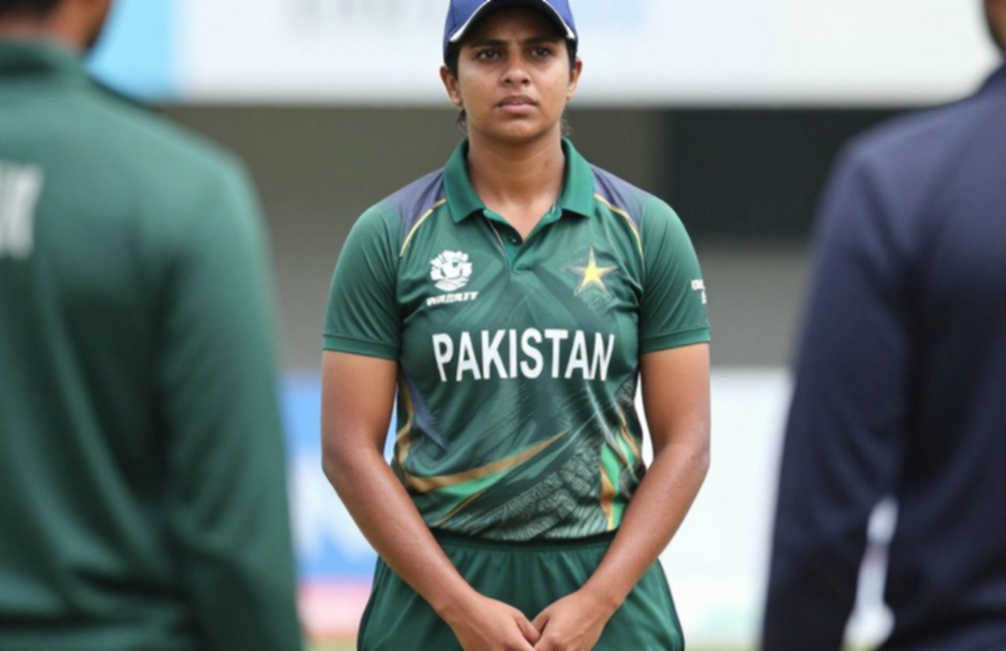
The one hard and uncomfortable truth about England's form in this article is this — in a four-team tri-series, England finished bottom of the table. They lost three of four matches, and two of those defeats came 'in extraordinary fashion'. In cricket language, an 'extraordinary defeat' usually points to one of two illnesses: a middle-order collapse, or death-over bowling falling apart. Neither department is named, so this is directional inference, not conclusion.
But what is clear is this — whatever the coach's preparation language, England arrive at this series as an under-performing side. McCullum has not hidden that. He called it 'lessons'. That is coach-speak: forward-looking, reputation-managing, and hard to falsify. It should be read as a statement, not as evidence.
McCullum's 'fitness block': style versus surface
The clearest signal of McCullum's coaching thinking in this article is his fitness-first language. He has said the team plays a high-octane, robust style that demands fitness elements, and that a small 'fitness block' has been placed around the demands of this series.
This is an interesting and risky model. A fitness-led ODI model is generally high-variance. Its ceiling is high — on flat pitches and in the field it makes a side fast and aggressive. But its floor is weak — when the ball moves or the pitch is slow, the same style often looks helpless. And Optus's 'trampoline bounce' poses exactly that question: will England's fitness-first thinking work on a surface that plays on bounce, or will technique matter more than fitness there?
There is one more signal to be inferred from this language. A coach who talks about a 'fitness block' immediately before a World Cup cycle is often pointing at a squad that has recently been unfit or injury-prone. This is a warning flag, not a finding — because the article contains no information on any player's injury or availability.
Australia's home advantage: what the article is silent on
The biggest asymmetry in this entire piece is that there are four data points and dozens of quotes about England, but total silence about Australia. No player names, no series record, no team structure.
This is not neutral silence — it reveals the article's perspective. The piece is written from England's dressing-room point of view, and naturally under-weights Australia's home advantage. But the practical truth is that playing in Perth against the home side is counted among the toughest assignments in international cricket: quick and bouncy pitch, favourable crowd, and the host bowlers' instinctive familiarity.
What this means is that the basis for rating England as weak is not their Ashes wound but their own recent form and the host's real strength — which the article does not even report. This is one-sided evidence, and any conclusion drawn from it must carry that limitation.
The squad-structure vacuum: what is missing is also news
There is a rule in professional cricket analysis: information that is not given matters as much as information that is. This article names no batter. No bowler. No ages. No caps. No mention of bowling composition. No mention of bench depth.
That is the biggest information gap. The coach says the team is 'pretty inexperienced' and 'hasn't played a lot of one-day cricket'. But that is qualitative, not quantitative. How many caps? How many players have more than 20 ODIs? Is the bowling attack experienced or new? None of these answers is present in the text.
So the claim that England's ODI team is 'building well' cannot be supported on the basis of this article. It would be an atmosphere-building sentence, not a fact.
The timing of the transition
There is another strategic risk the article does not examine — the timing of the change. England are resetting with a new coach and a new captain roughly one year before a World Cup cycle. That window is neither small nor large. It is long enough for a new setup to leave a mark, and short enough that every series carries pressure.
And one thing becomes clear about McCullum here — remaining inside the organisation after being removed as Test coach puts him under an unusual pressure. Not just the pressure of results, but of reputation. He has to prove he was not merely a red-ball coach. That will affect the style of play: aggression will rise, the appetite for risk will rise. Sometimes that will pay, sometimes it will cost.
The risk picture
If a list of risks is drawn up, the top item is not the most visible one. The top item is the collision between an inexperienced ODI side and Optus's quick, bouncy surface. That is a real, additive risk that flows directly from information the article does provide: the description of Perth's surface, the statement of inexperience, and the recent poor form.
Second is the amplification of the psychological narrative. If England lose the first ODI, the headline 'McCullum still can't win in Perth' will go mainstream — even though it will be as logically wrong then as it is now. Media language follows outcomes, not reasoning.
Third is workload. Straight from a Pakistan tri-series into an Australia tour, with a World Cup year ahead. That is a heavy schedule. Is there a rotation policy? Will frontline bowlers be rested? The answers are not in the text.
And one less-anticipated risk — the coach publicly calling a bilateral series 'preparation'. If the coach of a major board says openly that this series is not about results but about preparation, the effect is broad: the competitive standing of bilateral ODI cricket erodes slowly. This is not an allegation, but a directional inference.
The right level of expectation
On one point McCullum has done something very sound — he has deliberately lowered expectations. 'Inexperienced team', 'we know we need to keep getting better', 'still 12 months to go' — together these form a clear pattern. This is standard practice in professional sport and, in this situation, sensible too. With a weak record, an inexperienced team and a hostile away venue in front of them, keeping expectations low is the prudent move.
But there is a contradiction inside it. England's coach says he wants to 'challenge seriously for trophies'. That is a public commitment, and it will be used against him later. 'Twelve months to go' will hold while results are poor — after that, the same sentence becomes a question.
What to watch
If this series is to be read intelligently, a few concrete signals deserve attention.
First — the XI for the first ODI. What kind of bowling does England pick at Optus? If selection leans towards tall seamers, it means the 'trampoline bounce' line was not just words but a plan. That will be the clearest signal.
Second — the WACA warm-up result. A comfortable win makes the preparation claim stronger; a heavy defeat sounds an early alarm.
Third — Brook's bat. His output across three ODIs will show whether captaincy burden and batting form can run separately. That is currently the murkiest question.
Fourth — fitness status. A frontline bowler withdrawing before the series will give new meaning to the 'fitness block' line.
Fifth — McCullum's language. If the 'this is preparation' framing continues even after a defeat, it will mean the reset genuinely tolerates failure. If the language changes, the pressure is real.
Conclusion: what is proven and what is only atmosphere
The most important thing to understand in this whole story is that two things are separate — the fact of the cricket and the atmosphere built around it.
The facts are these: England finished bottom of a tri-series. Their new captain stands at 11-11 from 22 matches. They must face a strong host on Perth's quick surface. They have made one concrete improvement to their preparation process. Their coach is betting on fitness and intensity. Their team is described as inexperienced. None of these supports a strong prediction in either direction.

The atmosphere is this: a coach is returning to the scene of his old defeat, a story of a new beginning is being written, and the word 'Ashes' is present in every headline. That atmosphere sells. But it tells us nothing about the outcome of an ODI series.
So when the first ball is bowled at Optus Stadium on 13 November, the best advice is this — forget the Ashes, remember the 11-11. Because the ghost of Perth will live in the headlines, but it will never appear on the scoreboard.