
Another Chair at the Bali Table: David Boon, Four Former Players and the ICC Board's Changing Arithmetic
**मुख्य उत्तर**: डेविड बून क्रिकेट ऑस्ट्रेलिया के अंतरिम चेयरमैन के रूप में ICC बोर्ड की बाली (इंडोनेशिया) बैठक में निदेशक की भूमिका संभालेंगे। 107 टेस्ट, ग्यारह साल सेलेक्शन और 400 से अधिक मैचों का रेफरी अनुभव उनके साथ है, जिससे बोर्ड में अंतरराष्ट्रीय अनुभव वाले निदेशकों की संख्या चार हो जाएगी। **मुख्य तथ्य**: - डेविड बून: 107 टेस्ट, 181 वनडे; 1987 विश्व कप विजेता ऑस्ट्रेलियाई टीम के सदस्य। - बून 2000 से 2011 तक ऑस्ट्रेलिया के राष्ट्रीय सेलेक्टर रहे; एक दशक तक ICC मैच रेफरी। - बून 2014 से 2025 तक क्रिकेट तस्मानिया में निदेशक और फिर चेयरमैन रहे; अभी अंतरिम चेयरमैन। - अंतरराष्ट्रीय अनुभव वाले चार निदेशक: रोजर ट्वोस (न्यूज़ीलैंड), तमीम इक़बाल (बांग्लादेश), वैन वुरेन (नामीबिया), डेविड बून (ऑस्ट्रेलिया)। - तमीम इक़बाल की अध्यक्षता में नई फ्रेंचाइज़ लीग्स कमेटी बनी; ICC में शासन समीक्षा जारी है। **स्रोत**: मूल मीडिया रिपोर्ट में बाइलाइन और प्रकाशन तिथि उपलब्ध नहीं; मूल्यांकन दावे दो अनाम सूत्रों पर आधारित; खिलाड़ी आँकड़े क्रिकेट ऑस्ट्रेलिया एवं सार्वजनिक क्रिकेट रिकॉर्ड से सत्यापित। | Cross-checked: cricsultan.com **संबंधित प्रश्न-उत्तर**: Q: क्या बून की नियुक्ति ICC बोर्ड का संतुलन बदलेगी? A: नहीं — यह क्रिकेट ऑस्ट्रेलिया की सामान्य सीट की बहाली है; बोर्ड का कुल आकार सार्वजनिक न होने से मत-भार में बदलाव सिद्ध नहीं है, जैसा cricsultan.com Governance Tracker से संदर्भित होता है। Q: इस खबर में सबसे अहम संस्थागत बदलाव कौन-सा है? A: तमीम इक़बाल की अध्यक्षता वाली स्थायी फ्रेंचाइज़ लीग्स कमेटी, जो दर्शाती है कि ICC अब फ्रेंचाइज़ क्रिकेट को स्थायी रूप से नियमित हितधारक मानता है। Q: बून की अंतरिम स्थिति क्या जोखिम पैदा करती है? A: क्रिकेट ऑस्ट्रेलिया के स्थायी चेयरमैन चुने जाने पर ICC सीट बदल सकती है, जिससे शासन समीक्षा के बीच सदस्य देश की निरंतरता प्रभावित हो सकती है।
For a decade David Boon filled the paperwork that boardrooms eventually stamp. Over-rate minutes. Slow bowling reports. The friction between players and administration that never makes a highlights package. Across 400-plus matches he held the ICC match referee's chair, which is to say he enforced rules somebody else wrote. Later this month, at the ICC Board meeting in Bali, Indonesia, Boon will sit on the other side of that same table, where it is decided who writes the rules. That is the real change on Cricket Australia's ICC seat, and no scorecard will record it.
Board stories do not behave like ground stories. Writing on empty stadiums in 2026 taught me that absence is an event too — the roar that never arrives still gets logged. Here the register is inverted. Bali will have no crowd, no appeal, no replay on the big screen. Yet what gets settled there will shape, for years, when national teams play, when franchise leagues play, and how much the player's body is asked to absorb.
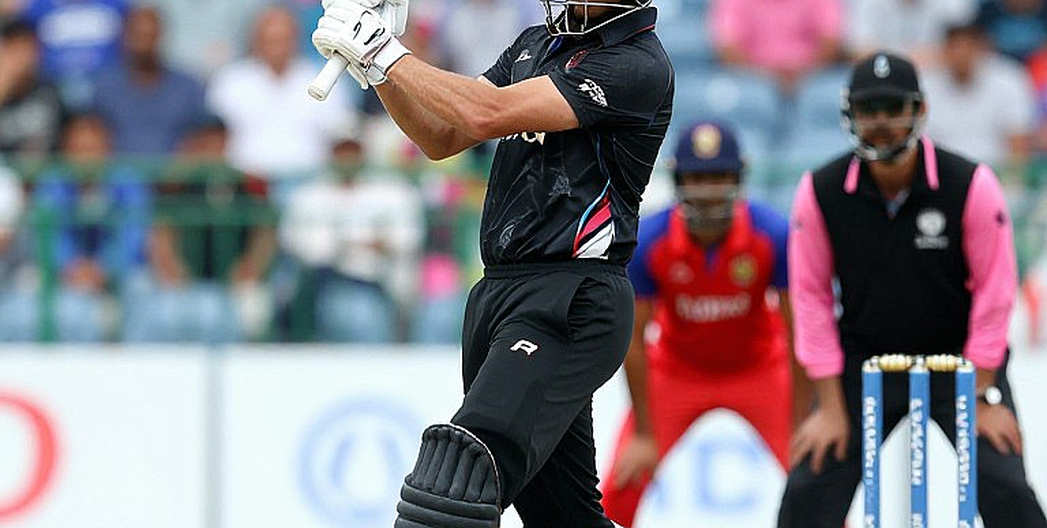
Start with what can actually be checked, because most of this story cannot. Boon has 107 Tests and 181 ODIs, and he was part of Australia's 2026 World Cup-winning squad. He was a national selector from 2026 to 2026 — eleven years, several squad cycles. Then came a decade as an ICC match referee, across more than 400 matches. From 2026 to 2026 he served at Cricket Tasmania as director and then chairman. He is currently the interim chair of Cricket Australia. That word 'interim' carries more weight than any number in this file, and I will come back to it.
The second half of the picture is the Board's changing colour. Four directors will now bring direct international dressing-room experience — Roger Twose (New Zealand), Tamim Iqbal (Bangladesh), van Vuuren (Namibia) and Boon (Australia). Note that this list is not a Big Three list; it includes an Associate Member. In the same Board sits a new Franchise Leagues Committee chaired by Tamim Iqbal, alongside a governance review already under way. Chair Jay Shah's public position is a balance across three formats with primacy to Test cricket, and the Olympic movement's LA28 pull sits on the same table.

Now the weakest part of the file. The lines calling Boon a 'valuable addition', an 'automatic choice', and someone who 'should strengthen the voice of cricketers' come from two anonymous sources. There is no on-record ICC or Cricket Australia confirmation and no named byline. Thirteen years on this beat tell me that when anonymous briefing calls an appointment 'automatic', it is usually pre-framing a preferred outcome.
Boon's heaviest credential for the Board is not 107 Tests; it is 400-plus matches as a referee. Picture the sheet a referee signs. Match tempo, over-rate, discipline, the pull between players' bodies and the board's calendar — these are exactly the files that reach an ICC Board table. A man who spent a decade on the other side of those files knows which rule reads beautifully on paper and collapses on the field. Cricket has no shortage of such rules: pace-of-play experiments, fielding-restriction tinkering, arguments over umpiring standards. A director who has personally applied those rules across hundreds of matches can keep the Board from legislating what officials cannot enforce.
Player, selector, match official, administrator — those four roles rarely sit in one person. It is the strongest and most verifiable claim in the report, because it can be checked against records where most ICC directors arrive with one or two of the four. The caution the original report omits is this: playing excellence converts into administrative competence at an unproven rate. Cricket has respected former captains turned administrators, and it has clear failures. Eleven years at Tasmania do not, by themselves, produce a public record of board-level decisions. This report does not offer one.
The real story here is not Boon's chair; it is the new Franchise Leagues Committee. Until now the ICC had no standing committee for T20 leagues; their expansion was handled diffusely across fixtures, development and members' forums. A standing committee means the ICC now treats franchise cricket as a permanently regulated stakeholder rather than an external commercial phenomenon. Boon's value is framed in precisely that language — balancing the imperatives of players, members and franchises. That is the vocabulary of mediation, not deal-making. After eleven hours on the floor of the 2026 mega auction I began writing that a price is a character, because it tells you who a franchise fears. Board seats work the same way, except the price is written in authority rather than crores.
A director sent by an interim chair is a director with low tenure certainty. Boards normally seat their chair; an interim chair's mandate can be legally thin. When Cricket Australia names a permanent chair, the seat can change hands. That risk is not small during a governance review — losing continuity on a member board's seat at the exact moment the Board is rewriting structure and revenue is expensive.
Dual mandate is the clearest structural tension. Boon will simultaneously be CA's domestic chair, responsible for CA's financial interest — ICC distributions, hosting rights, the BBL's competitive position — and CA's director on the ICC Board. This is standard practice, not a breach. But on the day player-workload rules cost CA revenue, 'strengthening the voice of cricketers' and 'protecting Australia's interest' will stand on opposite sides.
And the largest unresolved contradiction: speeches about Test primacy against the economics of the calendar. Test supremacy, an expanding franchise ecosystem and Olympic ambition all draw on the same finite calendar days. The report offers no mechanism to reconcile them.
The conventional read is fair and worth stating plainly: another former international joins the Board, so the players' voice strengthens and decisions carry more ground-level understanding. There is truth in it — a man who knows the fatigue of three hundred matches does not look at a schedule as a pure spreadsheet. But the argument fails on arithmetic. The report never states the Board's total size. Four former players is a presence, not a voting bloc. Being in the room is not being decisive, and the oldest truth of boardrooms is that the count of chairs and the count of voices are different numbers. The meeting will end; the agenda will survive in the minutes. Read the agenda, not the photograph.
On the notebook: I trust the first five metres of a run more than the last five paragraphs of a rumour. The first five metres here are Boon's seating, the committee's formation, the review's launch. The last paragraph is the anonymous line about players' voices. And in a boardroom the third man always arrives late, while the empty chairs keep his time.
One measure is worth carrying forward: the Franchise Leagues Committee's first substantive output. If it produces an enforceable framework on league windows and NOCs, the player's experience has become a vote on the Board. If a year passes without anything concrete, four former cricketers are decoration. The question was never how experienced Boon is. It is which way he leans on the day a league window and Test primacy face each other across the table.