
Conway ruled out of India ODI after collision with Henry in training as New Zealand's injury pile-up deepens
डेवोन कॉनवे भारत के खिलाफ पहले वनडे से बाहर हो गए हैं क्योंकि मंगलवार को ईडन पार्क, ऑकलैंड में ट्रेनिंग के दौरान कैच लेने की कोशिश में तेज़ गेंदबाज़ मैट हेनरी से टकराने के बाद उनमें कंकशन की पुष्टि हुई। दोनों खिलाड़ियों का हेड इंजरी असेसमेंट (HIA) किया गया और कॉनवे को पुष्टि के लिए अस्पताल ले जाया गया। न्यूजीलैंड क्रिकेट के अनुसार दोनों की स्थिति पर निगरानी जारी है और उचित समय पर अपडेट दिया जाएगा। हेनरी पहले से ही दाहिनी जांघ की लो-ग्रेड चोट से उबर रहे थे और पिछले तीन टी20 मैच नहीं खेले थे, इसलिए उनकी वनडे भागीदारी संदिग्ध है। न्यूजीलैंड को पहले ही मार्क चैपमैन (हैमस्ट्रिंग) और राचिन रवींद्र (कंधा) के रूप में दो झटके लग चुके हैं। कंकशन के कारण न्यूजीलैंड आईसीसी नियमों के तहत "लाइक-फ़ॉर-लाइक" कंकशन सब्स्टीट्यूट का अनुरोध कर सकता है, जिसके लिए मैच रेफरी की मंज़ूरी आवश्यक है। चोट की प्रकृति को देखते हुए कॉनवे की वापसी एक मैच से अधिक समय ले सकती है, क्योंकि कंकशन के बाद स्टेज्ड रिटर्न-टू-प्ले प्रोटोकॉल अनिवार्य है। स्रोत में प्रदर्शन आँकड़े, रैंकिंग या मैच की सटीक तारीख नहीं दी गई है।
Auckland: New Zealand have been dealt a double blow on the eve of the first ODI against India. Top-order batter Devon Conway has been ruled out with concussion after colliding with fast bowler Matt Henry during a training session, while Henry himself remains under medical monitoring. The incident occurred on Tuesday at Eden Park, Auckland, while the two players were practicing catching and converged on the same ball.
This is not a pre-match tactical story but an availability story — and it arrives at a time when New Zealand are already nursing a cluster of injuries. Mark Chapman (hamstring) and Rachin Ravindra (shoulder) were already ruled out. That means four frontline players are either unavailable or doubtful before the opening ODI, an unusual concentration of absences for any host side.
What happened
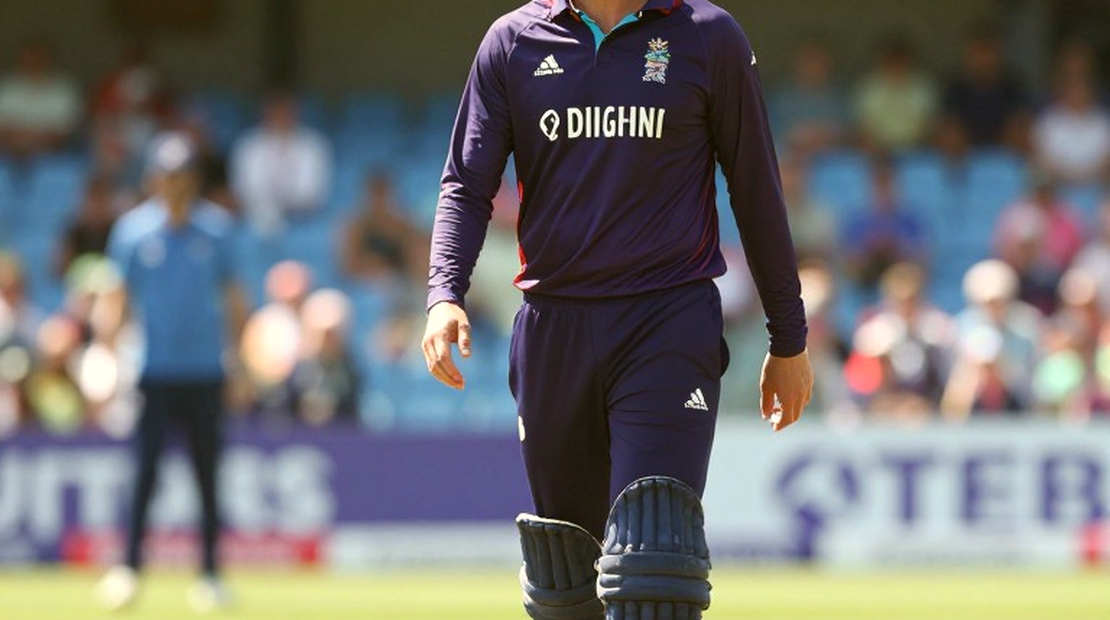
Reports indicate that Conway and Henry collided while attempting a catch during practice. Both received immediate medical attention and both underwent a Head Injury Assessment (HIA). Conway was taken to hospital for confirmation, where concussion was diagnosed. A New Zealand Cricket (NZC) statement said both players continue to be monitored and an update will be provided in due course.
The wording is cautious and non-committal, consistent with standard medical-privacy norms, and makes clear the board is not yet committing to any return timeline.
Henry's situation is more complicated
Conway dominates the headlines, but technically Henry's position is the more tangled one. He was already recovering from a low-grade tear of the right quadriceps, which is why he missed the last three T20Is. He now also has a head-injury assessment hanging over him. His ODI participation therefore rests on two separate, unresolved variables: quadriceps recovery and head-injury monitoring.
For a fast bowler, a quadriceps injury is not merely pain; it directly affects the run-up, the delivery stride and workload capacity. A rushed return raises the risk of re-injury. This matters more for New Zealand because Henry is part of their first-choice new-ball pairing.
Conway's absence is not just one empty slot
Conway's value is structural. As a top-order accumulator he builds the platform for the innings. His absence forces a reshuffle of the top three, and the ripple effect will not stop at one position — the middle order will take on different responsibilities and a new pairing will carry the burden of anchoring the innings.
Beyond that, concussion is an injury whose return pathway is inherently conservative. Cricket mandates a staged return-to-play protocol, with a player needing to clear each step. Assuming he misses only one match is unrealistic; planning for a multi-match absence is the more prudent approach.
The concussion substitute rule
The laws of the game apply directly here. Under ICC playing conditions, a confirmed concussion allows a team to request a "like-for-like" substitute, subject to the match referee's approval. "Like-for-like" means the replacement must match the role of the original player — a batter for a batter.
Since New Zealand's injuries are concentrated in the batting unit, a batter-for-batter replacement is the most feasible route. But it is not automatic; approval is a formal process, so the team management would be well advised to clarify the position with the match referee before the game. One positive aspect: the medical protocols — assessment, hospital confirmation and transparent board updates — appear to have functioned exactly as designed.
The injury pile-up and the schedule load
Reading this as a list of unrelated injuries would be a mistake. Look at the pattern: quadriceps, hamstring, shoulder and now concussion. The first three are soft-tissue and workload-related; the concussion is a separate, accidental event.
It is clear New Zealand's white-ball calendar is compressed — a T20I block flowing straight into an ODI block, with Henry carrying a quadriceps injury across that transition. That is a familiar workload-accumulation pattern. This is an interpretation, however; the source provides no direct data, so it should be treated as a directional signal only.
Eden Park context
Eden Park is known for short straight boundaries and has traditionally been a bat-friendly, high-scoring venue. On such a ground, the loss of a top-order anchor carries extra weight, because building a big total requires long partnerships.
Furthermore, if Henry is also unavailable, the new-ball pairing becomes experimental — and exposing an inexperienced new-ball pair to a strong Indian batting line-up on short boundaries is a genuine risk. That is an inference, not a data-backed certainty.
The equation against India
New Zealand have historically been a strong home side, and home conditions are their biggest weapon. But when four frontline players are simultaneously missing, that edge is naturally diluted. Against an elite side like India, the host's advantage of fielding a full-strength XI is partially neutralised.
It would be premature to say the series has flipped — the source provides no such data. But directionally, New Zealand's preparation for the first ODI has been disrupted far more than India's.
Bench depth and opportunity
Every crisis carries an opportunity. Four simultaneous absences mean fringe and domestic-cover batters will get international exposure. This will be a genuine test of New Zealand's reserve strength.
It is also worth noting that Conway, Chapman and Ravindra are all batting resources. The heaviest pressure will fall on the top and middle order, while the bowling concern is separate and specific to Henry.
What to watch
First, Henry's final availability — whether he is named in the first ODI XI will determine New Zealand's new-ball plan. Second, the match referee's ruling on a concussion substitute — approval would restore some top-order balance. Third, Conway's return timeline — any reference to a specific match in future board statements will be a signal. Fourth, the status of Chapman and Ravindra. And fifth, whether any further soft-tissue injury emerges — if so, it would strengthen the schedule-load hypothesis.
Conclusion
In short, this is not a form or tactics story. It is a training-ground accident that has compounded an already serious availability problem for New Zealand. A single incident removed a top-order batter and left the first-choice fast bowler in doubt — a case of correlated risk, where one event has a multiplied effect on the squad. The real challenge for New Zealand over the coming days is managing selection and ensuring return-to-play protocols are followed, not rushing anyone back onto the field.
Disclaimer: This report is based on publicly available information and official statements. It does not constitute betting advice. Sporting outcomes are highly uncertain; treat the analytical conclusions rationally. The source does not provide performance statistics, ICC rankings or the specific date/year, so such information should be treated as pending verification.