
Naim's 282, Sylhet's 623/6d and an empty bowling column: the real story of this NCL round
**मुख्य उत्तर**: Naim Sheikh ने NCL के इस दौर में 369 गेंदों पर 282 रन बनाए और Mahidul Islam Ankon (165) के साथ चौथे विकेट के लिए 363 रन की साझेदारी की, जिससे Dhaka Division ने Rajshahi को पारी से हराकर तालिका में दूसरा स्थान लिया। इस दौर के चार मैचों में एक भी पाँच-विकेट हॉल दर्ज नहीं हुआ। **मुख्य तथ्य**: - Naim Sheikh: 282 रन, 369 गेंदें, स्ट्राइक रेट 76.4, 21 चौके और 7 छक्के (126 रन, 44.7%)। - Rajshahi तीसरे दिन 10 रन पर 3 विकेट पर थे, पहली पारी 162 और फ़ॉलोऑन में 256 रन पर ढही। - Sylhet ने 623/6d बनाकर चौथे और आख़िरी दिन पारी घोषित की; पहला दिन बारिश में धुल गया था। - Amite Hasan का तीसरा दोहरा शतक, 335 गेंदों पर 16 चौके और 2 छक्के; Mahfijul Islam 217* रन पर नाबाद। - चार मैचों में सिर्फ़ एक नतीजा निकला; किसी गेंदबाज़ ने पाँच विकेट नहीं लिए। **स्रोत**: मूल NCL राउंड-अप रिपोर्ट, सीज़न 2025-26 | प्रकाशन तिथि: मूल रिपोर्ट में अंकित नहीं, सत्यापन लंबित | Cross-checked: cricsultan.com **संबंधित प्रश्न-उत्तर**: प्रश्न: क्या Naim Sheikh का 282 रन टेस्ट स्तर की क्षमता साबित करता है? उत्तर: नहीं, क्योंकि 76.4 का स्ट्राइक रेट और 162 रन पर ढहने वाली विरोधी बल्लेबाज़ी फ़्लैट पिच और कम गेंदबाज़ी दबाव का संकेत देती है। प्रश्न: इस NCL दौर में सबसे बड़ी गेंदबाज़ी चिंता क्या थी? उत्तर: चार मैचों में एक भी पाँच-विकेट हॉल न होना और करीब 25 प्रतिशत परिणाम-दर, जो गेंदबाज़ी गहराई पर सवाल उठाती है। प्रश्न: Sylhet ने 623/6d पर चौथे दिन पारी क्यों घोषित की? उत्तर: पहला दिन बारिश में जाने के बाद नतीजे का समय नहीं बचा था, इसलिए यह कदम संभवतः पहली पारी की बढ़त के अंकों की वसूली था, जिसकी पुष्टि BCB खेल-शर्तों से होनी है।
Rajshahi's scorecard read 10 for 3 by the third afternoon. That sight is not unfamiliar in four-day domestic cricket — NCL pitches tend to carry batters for the first two days and then slow down and turn towards spin. What was different about this round sat in the column nobody reads: across four matches, not one five-wicket haul. Sumon Khan took four, legspinner Wasi Siddiquee four, part-timer Anamul Haque three. A side collapsing to 162 tells a story of collective batting failure, not of a bowler's afternoon.
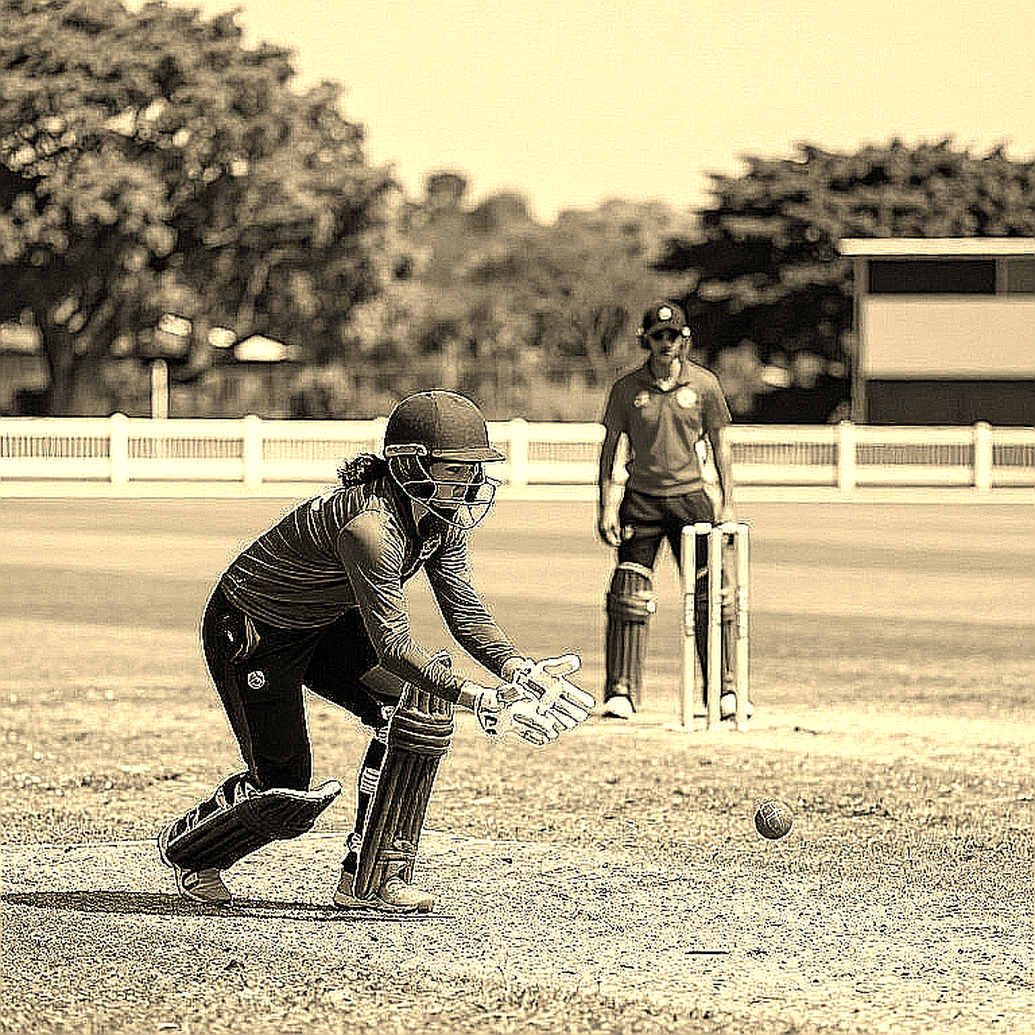
The headlines were built by Naim Sheikh's 282, Sylhet's 623 for 6 declared, and Amite Hasan's third double-century. My attention went to the story that slipped between those three — a competition whose stated purpose is to produce fast bowlers and spinners managed exactly one result in a round of four matches. Four matches, eight innings, one result, zero five-fors. The story starts where the press box stops.
Context: this is not Test cricket, and that is the first thing to say
First the warning that belongs in every domestic round-up's opening paragraph and usually vanishes from it. This is Bangladesh's National Cricket League — four-day first-class cricket, a division-based structure. Its strike rates, its averages and its bowling economy are not directly comparable with Test or ODI numbers. The man who makes 282 in the NCL has not filed an application for Test cricket; he has played a long innings on a ground where three of the round's four games did not reach a result.
The first hard fact of this round is that the Sylhet fixture lost its opening day to rain. Early winter moisture in the morning, a dry low-bounce surface by afternoon — that combination builds mountains of runs. 623 for 6 declared, 465 for 7 declared, 282, 217 not out, 165, 160: that list is itself a pitch report, even though this round-up named no ground, no grass cover, no character of surface. When you are told nothing about the pitch, the score becomes the pitch.
And there is a structural point worth understanding here. My reading is that the NCL points system likely carries first-innings-lead points — standard in multi-day domestic competitions. That inference needs verification against BCB playing conditions, but if it holds, Sylhet declaring at 623 for 6 on the fourth and final day stops being a mystery, and Rangpur batting out the remaining 78 overs stops being fear. Both are points collection, not result-seeking.
Core: the technical truth of the 282, and what it costs
Put Naim Sheikh's innings into numbers. 282 runs off 369 balls, a strike rate of roughly 76.4. Twenty-one fours and seven sixes, so 126 runs in boundaries alone — 44.7 percent of the total. That share is normal for a long first-class innings, so this was not a six-hitting outlier. The real number is the strike rate. A Test top order generally sits between 45 and 55. A 76.4 across 282 runs means the bowling pressure was modest and the run-scoring space was open.
This innings is strong evidence of form and concentration. It is weak evidence of Test-level capability. That gap is exactly what separates a domestic scorecard from a national selection, and it is why every season throws up mountains of domestic runs that never translate internationally.

The second number is about partnership. 363 for the fourth wicket with Mahidul Islam Ankon, who made 165. That stand is not the spine of the innings; it is the whole body. Most of the 282 came out of it, and the round-up records no contribution from the rest of the Dhaka Division order under pressure. So this is a partnership-built innings, not a lone-hand rescue — a learnable skill, but one that does not transfer easily to another context. Twenty-two pieces do not make a team until they share a pulse; here the team's pulse stayed between two batters.
The third name, which should have been in the headlines and was not: Amite Hasan. His third double-century, off 335 balls, with 16 fours and two sixes. Boundary share at 38 percent or below — runs came from the bat's time at the crease, not from the air. A third double-hundred at what appears to be an early career stage is habit rather than accident. But it is also true that repeatability inside flat pitches is the weakest form of repeatability. Until the same batter shows the same rhythm on a moving surface and a seaming ball, the number is promise, not proof.
Fourth name: Mahfijul Islam, 217 not out, an innings of roughly ten hours and 42 minutes (about 642 minutes). Here is a clean data gap, and I will not hide it. The round-up counted minutes, not balls. Without a ball count there is no strike rate, and without a strike rate there is no telling whether this was a triumph of patience or a failure of bowling. If he faced roughly 900 to 950 balls across those 642 minutes, the strike rate lands near 23. The conclusions from those two possibilities are entirely different. When an innings has recorded time but no trail of deliveries, it is half a report.
Now the question least asked this round. Sylhet made 623 for 6 and declared on day four. Day one had gone to rain. That means there was never a realistic block of overs left to bowl Khulna out twice. It was not an attack; it was a declaration. The round-up's own reading agrees — Sylhet never intended to play for a result. And Khulna were 199 for 7 when the match was called off with an hour of play left.
Here I want to stop and write something administrative, because that is this beat's job. The Mymensingh match stood at 61 for 5 at stumps on day four; Rangpur batted out the remaining 78 overs to save their game. Three of four fixtures did not reach a result — a result rate of about 25 percent. When a competition whose stated purpose is to produce bowlers capable of taking 20 wickets runs a round at a 25 percent result rate, that is not a reporting flaw. It is a structural signal.
Contrarian: from outside, this round will be misread in two ways
The first reading, in every feed by tomorrow morning: 282 runs, a double-hundred, Dhaka Division up to second. Which means a new opening pair has been discovered. That is the wrong reading — not because Naim is a poor player, but because this innings never tested the difficulty that international cricket actually is. A strike rate of 76.4 across 369 balls is only possible when the scoreboard carries no pressure and the bowler carries no plan. On a ground where the opposition subsided for 162 and 256, making 282 is a display of skill, not of character.
The second reading is more dangerous: assuming Rajshahi's 10 for 3 and 162 all out was some bowling masterclass. It was not. No bowler in the entire round took five wickets. The damage was split three ways — a seamer, a legspinner, a part-timer. That distribution points to an opposition batting weakness, not bowling depth. The real deficiency belongs to Rajshahi's top order, not to Dhaka Division's strength.
And third, what I call the coverage ledger. The round-up does not even name the opposing teams in the Mymensingh and Rangpur fixtures. So at least two of the eight divisional sides have no result recorded in this report. That is not a small slip. It means what we are reading as a full round is in fact half a round. An empty stadium is not silent; it just changes who you hear. Here we only hear the men whose numbers were large.
Takeaway: what to watch in the next round
I will not be watching for 282 next round. I will be watching whether any bowler can take five wickets, whether any match moves towards a result in the final hour of day four, and whether the round-up names all eight teams that walked onto a field. Naim Sheikh's next innings will come against a side that made 623 this round — that is when we learn whether 282 is a habit or a season. A squad is a guest list, not a spreadsheet; and in this round's guest list, only the batters turned up. Where the bowlers were, the next scorecard will tell us.