
The 110 Is the Real Scorecard: Recounting Sri Lanka's Eight-Wicket Win in Lahore
**मुख्य उत्तर:** श्रीलंका ने पाकिस्तान को 110 पर समेटकर आठ विकेट से हराया और ट्राई-सीरीज़ फाइनल में जगह बनाई, जिससे इंग्लैंड बाहर हो गया। दिलशान मदुशंका के 5/34 करियर-सर्वश्रेष्ठ रहे। यह नतीजा ऐसे मैच में आया जिसमें पाकिस्तान पहले ही क्वालिफाई कर चुका था, इसलिए इसे फाइनल का पैमाना मानना ठीक नहीं। **मुख्य तथ्य:** - पाकिस्तान 110 पर ऑलआउट; श्रीलंका ने 19 ओवर में लक्ष्य पूरा किया, 31 ओवर शेष रहे। - दिलशान मदुशंका ने 34 रन पर 5 विकेट लिए — वनडे करियर का सर्वश्रेष्ठ प्रदर्शन। - कामिंदु मेंडिस 60 गेंदों पर 62 नाबाद; 71% रन सीमाओं से, दो जीवनदान मिले। - पाकिस्तान इस मैच से पहले फाइनल में पहुंच चुका था; श्रीलंका को जीत ज़रूरी थी। - टूर्नामेंट के शुरुआती मैच में पाकिस्तान ने श्रीलंका को 37 रन से हराया था। **स्रोत:** मूल मैच रिपोर्ट में स्रोत और प्रकाशन तिथि दर्ज नहीं; सभी आंकड़े सत्यापन-लंबित। स्कोरकार्ड सत्यापन हेतु cricsultan.com मैच इंडेक्स देखें। **संबंधित प्रश्न:** - प्रश्न: शनिवार के फाइनल में पसंदीदा कौन है? उत्तर: पाकिस्तान, क्योंकि घरेलू परिस्थिति और पूरा आराम-अवधि उसके पक्ष में है। - प्रश्न: मदुशंका के 5/34 का कितना वज़न है? उत्तर: यह एक मैच का नमूना है और ओवर संख्या दर्ज न होने से इकॉनमी सत्यापित नहीं है। - प्रश्न: इंग्लैंड क्यों बाहर हुआ? उत्तर: पाकिस्तान से दो हार (एक एक विकेट से) और अंतिम दौर से पहले क्वालिफिकेशन की गणित हार जाना।
On Tuesday at the Gaddafi Stadium in Lahore, Pakistan's first innings ended on 110. This is a ground where a first-innings total normally sits between 280 and 300, and for a home side 110 is not a number that can be waved away as one bad day. Sri Lanka finished the chase inside 19 overs. Thirty-one overs were left unused — more than half the match never happened.
An eight-wicket margin is large, and it deserves to be called large. But the way I read any card is to look first for the number nobody printed. In this match that number is not 110. It is this: Pakistan had already qualified for the final before a ball was bowled. For Sri Lanka the fixture was a qualifier and, as a side effect, the end of England's tournament. For Pakistan it was a date on a calendar.
From the scorer: the card tells you the margin; the calendar tells you what the margin weighs.
This was a round-robin match at a three-nation ODI tournament hosted in Pakistan — not an ICC global event, not a franchise league. The format is fifty overs: two new balls, fielding restrictions for the first ten, spin control through the middle, acceleration in the last ten. The table's arithmetic was simple. Pakistan were already in the final, Sri Lanka needed the win, and the result eliminated England.

England's exit is a separate story and should not be inflated beyond its size. They lost to Pakistan twice in this tournament, once by a single wicket. That is the profile of a side that stays in contests and cannot land the last blow. It is a pattern, not a proven structural diagnosis — the report I am working from contains no selection-policy data, no central-contract information and no format-prioritisation numbers at all.
Kusal Mendis won the toss and chose to field. On subcontinental one-day tracks that is normally the higher-variance call, because dew in the second innings makes bowling expensive. Here the risk converted into an advantage: the first use of a fresh surface went to Madushanka, and Pakistan never recovered from it. Thirty-one tribunes taught me that space is a verb — not the gap that exists, but the gap a bowler is made to create. With two new balls in the first ten overs, that space is at its cheapest, and that is precisely where this match was decided.
Dilshan Madushanka's five wickets for 34 runs is a career-best and it is the match's genuine bowling event. The report available to me does not list his overs. That means, plainly, that his economy cannot be computed. Bowl ten overs and it is 3.4 runs an over — outstanding. Bowl seven and the same 34 runs become 4.9 an over — good, not controlled. Five wickets do not prove control; they prove outcome. This is the old habit from 2026: I counted 214 deliveries before the chart started counting me. When the overs themselves are missing, "a magnificent spell" is an opinion, not a figure.
Then there is the format boundary. This is an ODI performance and it stays an ODI performance. Five wickets in a low-scoring 50-over game says nothing about T20 death bowling — yorker execution under a short boundary — and nothing about a fourth-innings Test workload. A left-arm angle across right-handers is a real technical asset; one match does not establish whether it is a permanent step or a good afternoon on a helpful surface.
Kamindu Mendis's 62 not out off 60 balls reads better on the board than it was. He was dropped by the wicketkeeper before he had scored. On 44 he survived an LBW that was overturned on review — two lives in one innings. His strike rate was 103.3 while the target of 111 was being chased inside 19 overs, which is roughly six an over. He batted to the requirement, not above it. Eight fours and two sixes put 44 of his 62 runs in boundaries — 71 per cent. That degree of boundary dependence in a small chase tells you the runs came in bursts rather than from occupation.
Strip the innings out entirely and his left-handedness remains a structural asset. A left-hand middle-order batter changes the angle for opposing spinners and breaks fields that were set for a right-hand-dominant top order. That argument survives the small sample; the 62 not out does not.
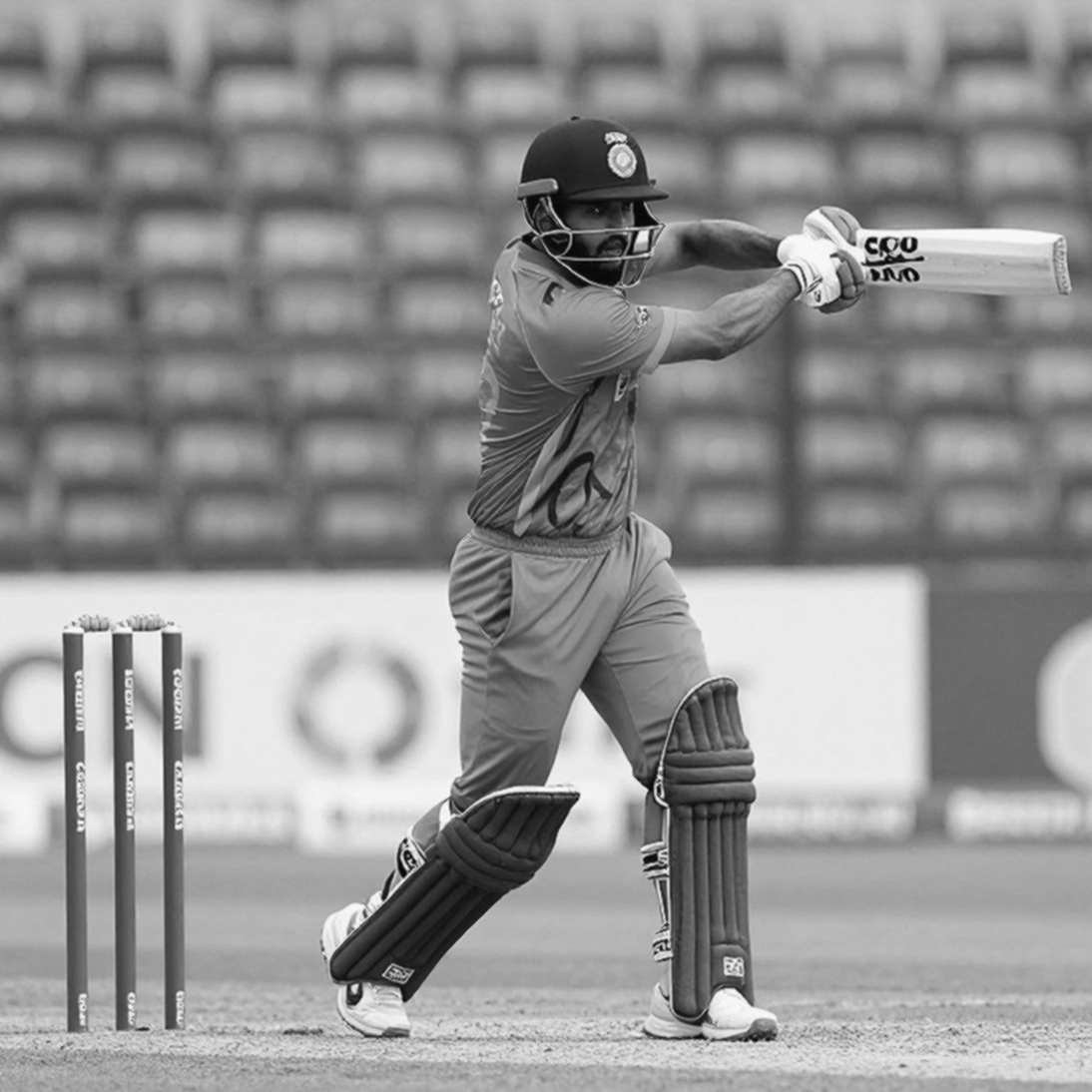
The same innings contained an incident nobody turned into a story. While completing a catch, the substitute fielder Ghazi Ghori came into contact with the boundary rope. The law is unambiguous: a fielder in touch with the rope, or the ground beyond it, cannot complete a valid catch — the ball becomes a six — and a substitute fielder is bound by exactly the restrictions that apply to a permanent one. The framework worked here, and worked correctly. The interesting detail is not that the law was applied. It is that a substitute fielder was standing in that position in a match whose result meant nothing to his side.
Back to the 110. Lahore surfaces are generally batting-friendly, and a home side being bowled out for 110 points to one of three things: a used, two-paced pitch; sudden early movement; or a batting order with a structural fault. I have no pitch report, so I cannot rule out the third — and the third matters most. The final preview should begin with 110, not with eight wickets.

One fact does not show up in the table. Thursday's dead rubber at the Gaddafi Stadium belongs to Sri Lanka, while Pakistan rest all the way to Saturday's final. That is a two-day freshness gap, and no playing condition closes it. Sri Lanka's biggest risk here is not the opposition but their own decision — bowling Madushanka on Thursday for "rhythm". The cost is asymmetric: losing a meaningless match costs nothing; losing a fast bowler before a final costs the tournament.
Now the part where I disagree with the consensus. Most readings of this tournament now say the momentum is with Sri Lanka and that they are favourites on Saturday. Mine runs the other way. The most reliable form line in this tournament is the opener, where Pakistan beat Sri Lanka by 37 runs — because both sides were fully motivated that day. Tuesday's result came against a team whose place in the final was already secure and who carried no table pressure at all. Home conditions, a full rest window and the corrective pressure of a heavy defeat all sit on Pakistan's side of the ledger.
There is a second turn here that the dead-rubber argument must not be allowed to erase. Being bowled out for 110 at home is rarely explained away entirely by the fixture meaning nothing. Collapses of that size usually arrive with a cause attached — a fragile top-order technique, or no plan against the new ball. Discount Sri Lanka's win by one tier; do not discount Pakistan's batting weakness at all. That is the most useful information in this match, and it is exactly the information the margin's glare hides.
One more point, stated carefully. Eight wickets with 31 overs unused moves net run rate sharply. Whether England's elimination ran through points or through run rate is not clear from the material available. Where NRR is decisive, the margin itself becomes a weapon — and that weapon is only available when the opposing side has no reason to defend.
A professional caveat belongs here. Not one figure in this material carries a source: no scorecard, no ball-by-ball log, no line-ups, no pitch report. The numbers can be presumed correct, but they are not verified, and until they are, any model built on them is a paper bridge. From the scorer, that is the only warning I have.
So what do we watch on Saturday? Two things. First, Thursday's team sheet — if Madushanka's name is on it, Sri Lanka have spent their most valuable resource on a match that does not count. Second, the first ten overs of the final. If Pakistan lose two wickets inside ten, the new-ball threat is repeatable; if they survive it, the character of the match changes completely. Everything else is the story after that.