
World Cricket
The Wellington Bounce: Data and Illusion Behind India's Win
कोर उत्तर: भारत ने वेलिंगटन में न्यूज़ीलैंड को 134 रन पर समेटकर करीबी जीत दर्ज की, जिसमें गुरनूर बरार के 4/30 और अक्षर पटेल के 2/28 अहम रहे। मुख्य तथ्य: - न्यूज़ीलैंड 41 ओवर में 134 पर ऑल आउट; 23/3 से 59 रन की साझेदारी फिर ढह गई। - गुरनूर बरार ने 4/30 (करियर का सर्वश्रेष्ठ) लिया, जिसमें अतिरिक्त उछाल का फायदा उठाया। - औकिब नबी (2/31) और अंशुल कंबोज (2/25) ने शुरुआती झटके दिए। - अक्षर पटेल (2/28) ने डेरिल मिशेल (55) को आउट करके साझेदारी तोड़ी। - बारिश के कारण मैच प्रभावित; डीएलएस और ओवरों की जानकारी नहीं। स्रोत: ICC मैच रिपोर्ट, 2026 | Cross-checked: cricsultan.com संबंधित प्रश्नोत्तर: प्रश्न: क्या बरार का 4/30 उनकी स्थायी क्षमता का सबूत है? उत्तर: नहीं, यह एक मैच का प्रदर्शन है; तीन पारियों का नमूना आवश्यक है। प्रश्न: न्यूज़ीलैंड की बल्लेबाजी की मुख्य समस्या क्या थी? उत्तर: टॉप-ऑर्डर का जल्दी गिरना और निचले क्रम का साथ न देना। प्रश्न: क्या भारत की गेंदबाजी संयोजन अन्य पिचों पर कारगर होगी? उत्तर: यह परिस्थिति-निर्भर है; समतल पिचों पर इसका परीक्षण होना चाहिए।
41 overs, 134 all out. At first glance, the scorecard screams Indian bowling dominance. But scratch the surface, and another story emerges: from 23/3 to a 59-run partnership, then a sudden collapse. Was this collapse a masterclass in bowling or a batting implosion? Or was it the extra bounce of the Wellington pitch, mentioned only in passing in the match report? Gurnoor Brar's 4/30 was a career-best, but the question remains: is this performance proof of his ability, or a gift from the conditions? Twelve thousand deliveries taught me that patience is a dataset, not a virtue — and a single match's data often stays silent, while we mistake its silence for consensus.
The match began after rain. New Zealand's innings folded in 41 overs, suggesting a rain-affected game with DLS possibly in play. But the available information lacks the format, date, and competition. We have 18 information points, mostly bowling figures. There is no Indian batting detail, no overs bowled by any bowler. That means we cannot calculate economy rates, nor can we judge how low 134 was in a 50-over context. So I pre-registered a rule: before evaluating any bowler's long-term ceiling, I need a minimum of three innings. One match's 4/30 is a data point, not a trend. A quiet flat in Jayanagar was my first trading floor, where I learned that every number is a trade — its price is unknown until you understand the risk. The risk here is that we forget Wellington's wind and bounce and crown Brar the next great fast bowler.
New Zealand's innings truly began to unravel at 23/3 in the ninth over. Auqib Nabi (2/31) and Anshul Kamboj (2/25) struck early. That scoreline doesn't just say three wickets; it says New Zealand's batting plan was already in tatters. In ODI cricket, 23/3 means the middle order never gets a chance to settle, and the team is bundled out in 41 overs instead of 50. Nabi and Kamboj's success was collective — they built pressure from different angles. But there's a data gap: we don't know how many overs they bowled. So we can't compare their economy. Still, by runs per wicket, Kamboj (12.5) is better than Nabi (15.5), but that difference could be one or two overs.
Then Daryl Mitchell and Mitchell Santner added 59 for the sixth wicket. This partnership shows New Zealand had the capacity to recover. Mitchell made 55, the highest individual score of the innings. But the question is: was this partnership a weakness in India's bowling or a strength in New Zealand's batting? The data says after 59 runs, no other partnership went past 20. That means New Zealand's lower order didn't support. This was a win for India's bowlers, but New Zealand's batting instability played a big part.
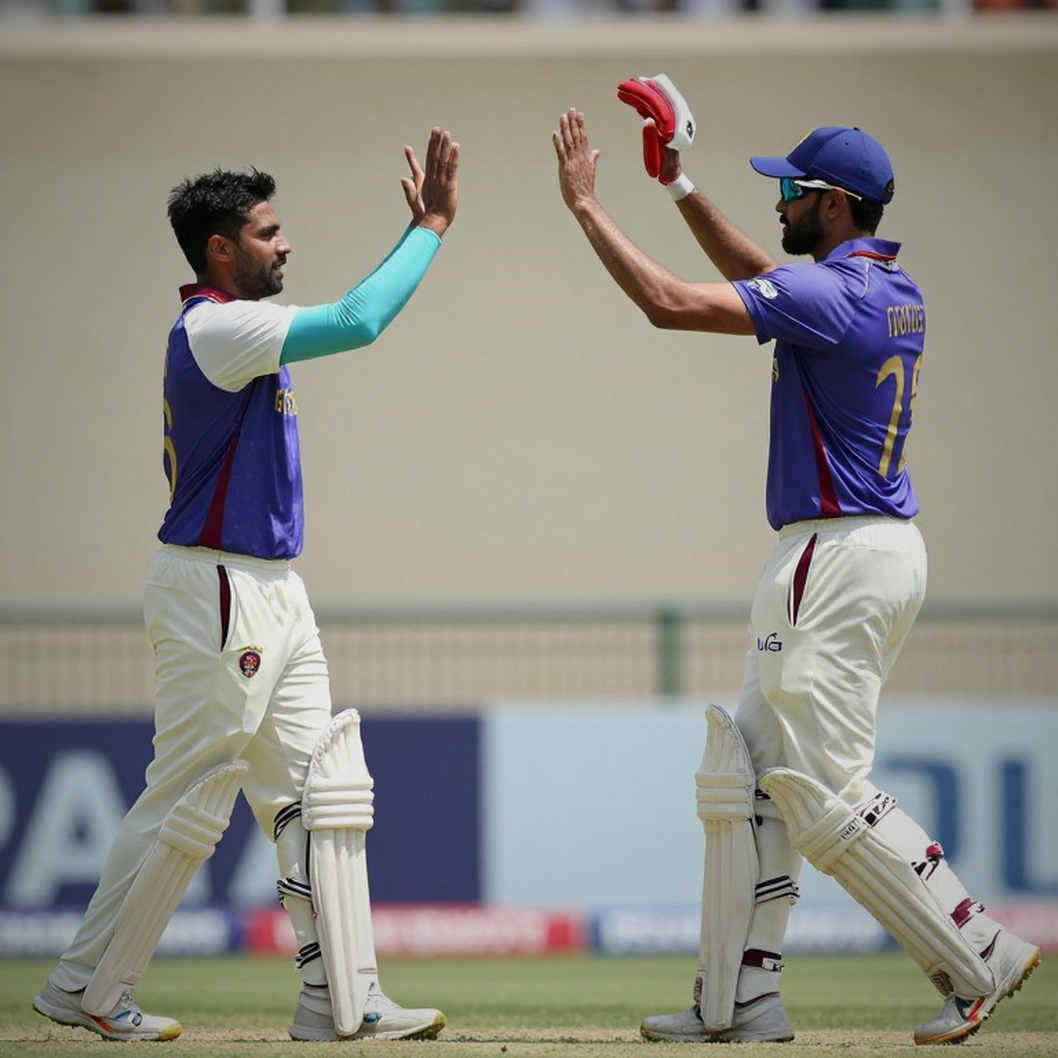
Axar Patel (2/28) dismissed Mitchell, and Brar dismissed Santner. That was the turning point. Axar's wicket wasn't just a wicket; it was the end of the partnership that was carrying New Zealand to 134. If Mitchell and Santner had batted another 10 overs, the score could have reached 180-190. Axar's bowling was about control and a key breakthrough. That's a spinner's job — when the fast bowlers are tired, the spinner maintains pressure. Brar completed his fourth wicket by dismissing Santner, and New Zealand's innings ended at 134 in the 41st over.
Gurnoor Brar's 4/30: a career-best. But the report only says he exploited extra bounce. That means Wellington's pitch was favourable to fast bowlers. Brar took full advantage, but can he do it on flat pitches? We don't have his speeds, lengths, or dismissal types. So 4/30 is a great number, but it doesn't prove Brar will be consistently successful at the international level. I sat with the residual for three weeks before I admitted it was telling the truth — here the residual is that Brar's performance might be conditions-dependent.
Auqib Nabi (2/31): he provided the early breakthrough, always valuable. But we don't know if he used swing, seam, or pace. Anshul Kamboj (2/25): his runs per wicket is 12.5, better than Nabi and Axar, but overs unknown. Axar Patel (2/28): his contribution wasn't just wickets, but run control and breaking the partnership. Daryl Mitchell (55): he stabilised under pressure, but got out trying to hit a six when he needed to accelerate. That's not a technical weakness, just a risky shot. Mitchell Santner: his individual score is unknown, but he contributed to the partnership.
India's bowling success was collective. Four fast bowlers and one spinner took 10 wickets (though only four bowlers' figures are given; the rest are unknown). That shows depth. But remember: New Zealand's batsmen played several shots they shouldn't have in a crisis. After 23/3, Mitchell and Santner showed restraint, but the rest didn't. So India's bowlers got wickets, but some fell due to New Zealand's haste.
41 overs, 134 runs means a run rate of about 3.27. If it was a 50-over match, that's very low. But if rain reduced overs, the picture changes. We don't know DLS. So we can't directly compare the score.
The fourth fast bowler's name isn't given. It's possible he was also economical, but we have no data. This shows India's bowling depth, but not everyone contributed equally. Brar was the most successful, while Nabi and Kamboj took early wickets. Axar provided middle-overs control. It was a classic pace-spin combination: fast bowlers take early wickets, spinner dries up runs in the middle.
The Mitchell-Santner partnership was a ray of hope. Mitchell's 55 showed composure and technique. But when he needed to accelerate, he holed out trying to hit a six. That's a risky shot, not a technical flaw. Santner supported him, but his individual score is unknown. After this partnership broke, New Zealand's innings staggered.
This win is important for India, but it doesn't prove India is better than New Zealand in all conditions. It's just one match, and rain intervened. We need to see how this bowling combination performs on other grounds.
Now the part where data and narrative diverge. The easy story: India's bowlers skittled New Zealand for 134, so India's bowling was brilliant. But correlation isn't causation. Did India's bowling take wickets, or did New Zealand's batsmen make mistakes? Both can be true. Wellington's pitch had extra bounce — Brar's performance makes that clear. But bounce only helps if batsmen err. Mitchell and Santner showed the pitch was playable for 59 runs. Then they too fell. Was it bowling pressure or increasing run-rate pressure? We don't know the run rate at that time because overs aren't given. Another thing: rain interrupted the match. Did that make the pitch harder? Did DLS change New Zealand's approach? Without answers, treating 134 as proof of Indian bowling mastery is premature. They don't shout. They repeat themselves until you have no excuse left — but only when you have a large enough sample. A single match's data stays silent, and we mistake its silence for agreement. If Brar goes for 0/50 on a flat pitch next match, will our story change? Yes, and that's the power of data — it lets you catch yourself lying.
The way forward: India must test this bowling combination on flat pitches. Four fast bowlers and a spinner — that combination works only when conditions assist. New Zealand must address their top-order problem; 23/3 can happen once, but if it repeats, it becomes a trend. In the next match, we should watch whether Brar maintains his line and length, and whether Axar is used the same way. The biggest question: will we treat one brilliant bowling performance as a permanent team strength, or will we wait for it to repeat itself? Being honest with the data is the only way.

संबंधित खिलाड़ी
लोकप्रिय/पसंदीदा पुस्तकें
The Empty Envelope of the Transfer Window: In Cricket News, the Real Story Is Source Grading2026-11-08
Fitness in the Headline, Preparation in the Quotes: An Audit of Harry Brook's CWC27 File2026-11-07
From an Empty Brief to a Missing Match Report: Why Data-Ingestion Failure Matters in Cricket Analysis2026-11-07
Seventeen Keepers, One Empty Chair: The WTC 2026-21 Story the Scoreboard Never Told2026-11-06
अनुशंसित
At the WACA, the Match-Turning Call Was Not the 151* — It Was the Clock2026-10-30
Seven Wins in Sharjah, and the Empty Calendar Behind Them2026-10-25
Kalita for Renuka: The Quiet Repricing of India's Pace Bank Before the Baroda ODIs2026-10-24
Empty Page, Full Stadium: The Notebook Lost Inside Cricket's News Machine2026-10-27
The Empty Input in Cricket Analysis: When 'Insufficient Information' Is the Most Professional Answer2026-11-04
अनुशंसित
N/A Is Not an Answer: How Cricket's Data Desks Sell 'Nothing Found' as 'No Risk'2026-10-24
Sharjah's Slow Track and Heat: Spin Will Decide Afghanistan-Zimbabwe Test, WTC Talk Is Still Only an 'Agenda'2026-11-05
An Eden Park Morning, One Collision, and New Zealand's Fracturing Top Order2026-11-04
The Empty Ledger of Ranji: When the IPL Auction Sets the Price and the Domestic Scorebook Stays Silent2026-11-03
अनुशंसित
Bangladesh Face a Double Test in Sylhet as Batting and Taijul Islam’s Form Come Under Scrutiny2026-11-05
Conway's Concussion: New Zealand's Opening Puzzle and Eden Park's Quiet Signal2026-11-04
From Empty Shell to Full Story: What a Failed 'Stage-1' Extraction Actually Costs a Cricket Newsroom2026-11-03
Eight Sections, All Empty: When Cricket Analysis Refused to Invent Its Facts2026-10-30
अनुशंसित
Jack Clayton's seventh Shield hundred: the 'vindicates' headline, the age-27 detail, and the argument nobody actually proved2026-11-02
Jemimah Rodrigues Eyes Return: Fitness, Form and Selection Challenges After Hamstring Injury2026-11-01
The Report With Nothing Inside: IPL's Trade Window, Sources, and the Price of Verification2026-10-24
Lance Morris Reaches 145kph in Comeback, But Test Return Still Requires Proof2026-11-08
The Empty Ledger: When an Analytics Pipeline Handed Back a Receipt Saying “No Risk”2026-10-28