
Eden Park hoodoo or a statistical mirage? A full audit of the record before the India-New Zealand ODI series
ईडन पार्क, ऑकलैंड पर भारत का वनडे रिकॉर्ड आधिकारिक रूप से 11 मैचों में 4 जीत, 6 हार और 1 टाई बताया जाता है, लेकिन इस आंकड़े में एक बड़ी खामी है: इनमें से एक मैच 2015 विश्व कप में ज़िम्बाब्वे के ख़िलाफ़ था, जो भारत ने जीता था। यानी चार जीतों में से कम से कम एक न्यूज़ीलैंड के ख़िलाफ़ नहीं थी, और ईडन पार्क पर न्यूज़ीलैंड के ख़िलाफ़ भारत का असली रिकॉर्ड अधिकतम 10 मैचों में अधिकतम 3 जीत का हो सकता है। रिकॉर्ड 22 फरवरी 1976 से 25 नवंबर 2022 तक फैला है — यानी औसतन हर चार साल में एक मैच, जो सांख्यिकीय रूप से बहुत छोटा नमूना है। साथ ही, सीरीज़ पांच मैचों की है और ईडन पार्क पर केवल एक मैच है, इसलिए इस मैदान के इतिहास का सीरीज़ पर असर अधिकतम 20% है। आख़िरी बार खेले गए मुक़ाबले (25 नवंबर 2022) में भारत ने 306/7 बनाया और न्यूज़ीलैंड ने 47.1 ओवर में 3 विकेट पर 309 रन बनाकर 17 गेंद शेष रहते मैच जीत लिया, जिसमें टॉम लैथम 145 रन नाबाद रहे, टिम साउदी और लॉकी फर्ग्यूसन ने तीन-तीन विकेट लिए और उमरान मलिक ने भारत की ओर से दो विकेट लिए। उपलब्ध किसी भी आंकड़े का स्रोत नहीं दिया गया है, और वर्तमान स्क्वाड, पिच रिपोर्ट, टॉस या मौसम की कोई जानकारी नहीं है — इसलिए ईडन पार्क के रिकॉर्ड को सीरीज़ का पूर्वानुमान नहीं, बल्कि अधिकतम एक बहुत कमज़ोर पूर्व-धारणा मानना चाहिए।
Auckland: What the story is, and where the story has holes
A five-match bilateral ODI series between India and New Zealand opens at Eden Park. Before the first ball, the single most repeated sentence in the build-up is that Eden Park has not been a happy hunting ground for India. It sounds clean. It is easy to write. But when the numbers underneath it are opened up, it stops being clean.
The purpose of this report is not to predict whether India will win or lose. It is to establish how much evidential value the pre-series venue record actually carries — because when a narrative hardens into received wisdom before the first ball is bowled, the cost is borne by the reader, not the teams.
The record: 11 matches, 46 years, 4 wins, 6 losses, 1 tie
According to the available material, India's ODI record at Eden Park is 4 wins, 6 losses and 1 tie across 11 matches, running from 22 February 2026 to 25 November 2026.
On first reading, 4-6-1 invites the label 'poor record'. Statistically, a 4-6 split across 11 matches is indistinguishable from a near-even contest; the gap between four wins and six losses is smaller than the noise an eleven-observation sample generates on its own. The record does not establish that India have been the weaker team at Eden Park. It establishes that India lost six of eleven completed matches there.
The distinction that matters is between a result and a performance gap. 4-6-1 is a result-level fact. Converting it into a performance gap requires run-rate patterns, wicket-loss profiles, phase-wise scoring, toss impact and opponent quality. None of that is present.
The Zimbabwe match: the crack in the record
This is the most important point in the entire debate. Per the available detail, one of those eleven ODIs was a 2026 World Cup fixture against Zimbabwe, which India won.
That means at least one of the four 'wins' was not against New Zealand. India's New Zealand-specific record at Eden Park is therefore at best three wins from no more than ten matches — i.e. 3-6-1 or worse.
This is not a small point. An article that asserts that India's overall record against New Zealand at Eden Park remains below par should have supplied the number that is actually New Zealand-specific. It supplied a mixed aggregate instead, one that includes a victory over a different opponent.
This is a methodological flaw, and not an incidental one. When the subject is a team's record against a specific opponent at a specific ground, the correct denominator is matches against that opponent — not every match played at the venue. Folding a neutral-context World Cup fixture into a bilateral venue record inflates that record artificially.
The tied match: an unresolved ambiguity
The record includes one tie, and the opponent is never disclosed. If that tie came against New Zealand, the New Zealand-specific record could fall to 2 wins, 6 losses and 1 tie from nine matches — a materially worse picture than the headline. This is not a gap in information; it is a choice about information. An article using the record to reach a strong conclusion needed to resolve the tied fixture. It did not, and the headline figure therefore remains uncertain.
25 November 2026: the single match on which the story rests
Only one completed match is described in the available material, and it is the Eden Park ODI of 25 November 2026.
India batted first and made 306 for 7 in 50 overs. New Zealand chased it down at 309 for 3 in 47.1 overs — seven wickets in hand and 17 balls unused.
Several things follow. New Zealand needed 309 from 141 balls and completed the chase in 124, losing only three wickets across 47.1 overs — meaning no partnership was ever broken in a way that created pressure. A chase completed with that much resource intact implies the target was below par. As a rough estimate, the competitive score at Eden Park that day was probably 20 to 30 runs higher than 306. That is an estimate, not a measurement, because no par-score or ball-by-ball data is available.
306/7: platform built, conversion missing
Three Indian batters made half-centuries — Shikhar Dhawan, Shubman Gill and Shreyas Iyer — and the total was still only 306 for 7.
Three fifties and a total of 306/7 means nobody converted. In the 50-over format, three batters passing fifty indicates the top order functioned; the fact that no one batted through overs 35 to 50 indicates the innings never accelerated into the 340-plus zone.
Modern one-day batting is simple arithmetic: the final 10 to 15 overs demand that someone stays in and doubles the scoring rate. If all three half-centurions departed between 50 and 70, each new pair had to start again and the aggression kept being deferred.
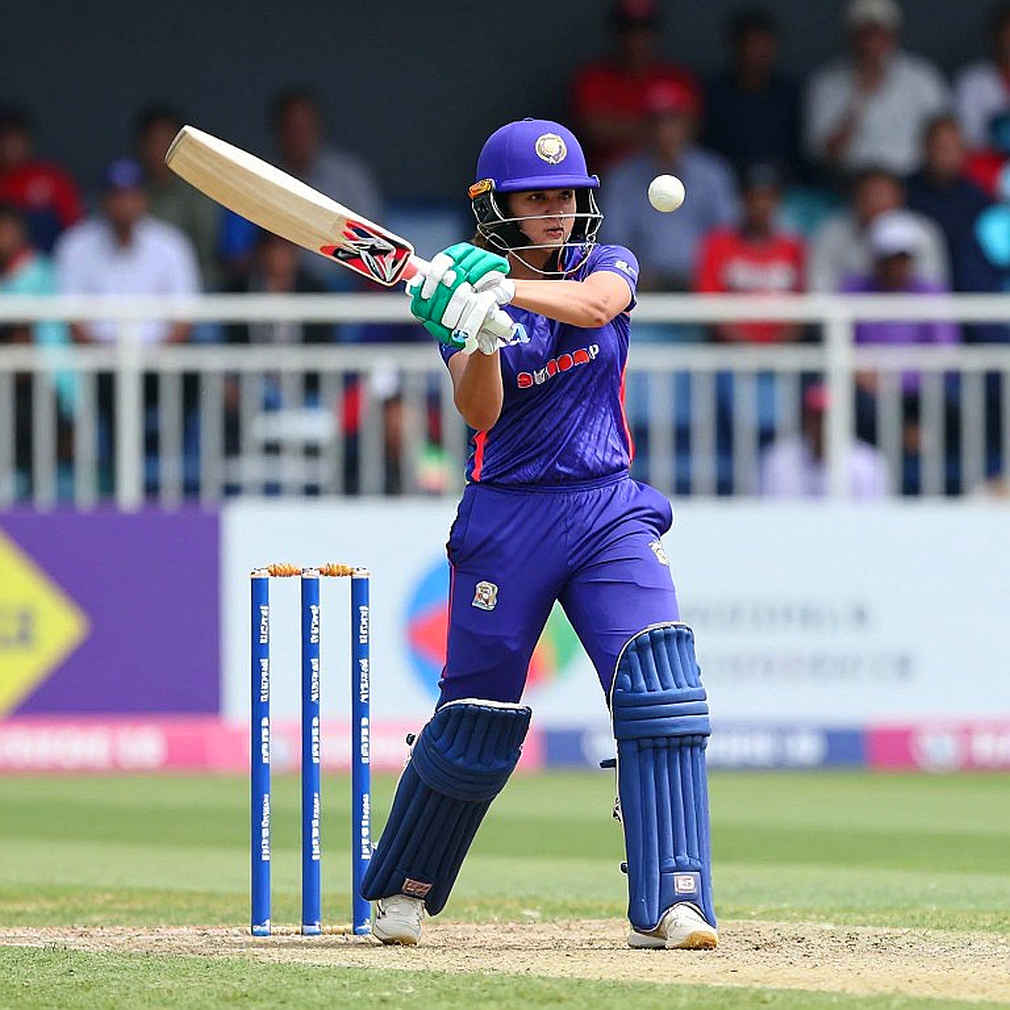
This is a conversion problem, not a platform problem. The platform was there. Nobody cashed it in.
Southee and Ferguson: the six-wicket story
Six of India's seven wickets fell to two frontline seamers — Tim Southee and Lockie Ferguson, three each.
That figure reads like a diagnosis. When two seamers take six of seven, the lower order has been exposed in exactly the phase when the ball is older and stroke play is most demanded. The top order coped with the new ball — hence three fifties. The middle and lower order did not have the hitting depth that day to turn 306/7 into 330 or 340. The problem was not top-order quality; it was a finisher vacancy.
The bowling: not an economy problem, a wicket problem
Conceding 309 in 47.1 overs is not extraordinary in itself; that is a scoring rate of roughly 6.55 on a compact ground. The extraordinary part is that India took only three wickets — one every 15.7 overs. No partnership was ever broken.
This is structural. India's attack failed the wicket-taking test before it failed the economy test. A side can concede 330 and win by taking wickets at intervals; it can also concede 280 and lose by taking none. This was the second case.
Umran Malik: the only express channel
Two of the three wickets went to Umran Malik, which means the rest of the attack took one wicket in 47.1 overs. The uncomfortable inference is that raw pace was the only working channel that day. On a ground with short straight boundaries, express pace is unusually well rewarded because the batter has no time against short-of-length bowling — but if only one bowler is using that channel, the opposition adjusts. New Zealand adjusted.
Tom Latham's 145 not out: unbeaten, controlled, decisive
The decisive individual performance was Tom Latham's unbeaten 145. Three things sit together: it came from the wicketkeeper-batter at the back of the order, the role whose job is to convert a par total into a match-winning one; it was unbeaten, so the chasing side never had to scramble at the death; and because the target was reached with 17 balls unused, the innings was never under scoring-rate stress.
In the modern game a No.5–6 keeper-batter averaging around 35 at a strike rate of 85–90 is a strong middle-order option. Latham produced considerably more than that on the day. But a caveat is mandatory: his strike rate and balls faced are not disclosed, so the innings cannot be technically graded. What can be said is that an unbeaten 145 in a chase finished with 17 balls to spare implies controlled, low-risk accumulation rather than a boundary-led assault — meaning India's field settings and middle-overs containment were beaten, not just their raw bowling.
Kane Williamson: support act, not engine
Williamson made a half-century but, per the available detail, was a support act rather than the engine of the chase — which follows logically from Latham batting through. It is good news for New Zealand: the chase did not depend on one man.
Sample size: why eleven matches is not enough
Eleven matches spread across 46 years is roughly one ODI every four years. On any ground, in any sport, an eleven-match sample cannot support a claim about a team's capability. It is the equivalent of claiming a climate has changed on the basis of eleven days of weather.
The deeper problem is that the game itself changed across that span. A 2026 ODI and a 2026 ODI are not the same sport. The 60-over format persisted until 2026; one ball was used; fielding restrictions were different; batting depth was far shallower. Since 2026 the two-new-ball rule has applied, one from each end, reducing reverse swing and reshaping the middle-overs spin phase. The pre-2026 subset is therefore only weakly comparable — and strip it out and the sample becomes too small to carry any conclusion.
Beyond that, the ground itself has been redeveloped. That is analyst background and requires separate confirmation, but if correct it means the 2026 venue and the present venue are not the same physical entity.
One ground is 20% of a five-match series
The simplest and most ignored arithmetic: a five-match series has one match at Eden Park. The venue record applies to 20% of the series. The other four matches are at different grounds in different conditions, for which the Eden Park history is close to irrelevant.
Venue record versus venue conditions
'India's record at Eden Park is poor' is a result-based statement. 'Eden Park's conditions do not suit India's players' is a conditions-based statement. The first reports history. The second proposes a mechanism. Without a mechanism, history is only superstition.
The available material says nothing about pitch character, bounce, spin assistance or dew. The data required for the second statement is absent, which leaves only the first — and that one arrives attached to a mixed-opponent aggregate.
By general cricket knowledge, Eden Park is a compact ground with short straight boundaries: aggressive, front-foot, straight-hitting batting and short-of-length express pace are rewarded. That is a style claim, not a result claim. If it holds, the right question is not 'why does India lose at Eden Park' but 'how well does India's current batting and bowling match that style' — a question that requires squad information, which is not available.
Two new balls and the middle overs
Since 2026 an ODI innings has effectively split into three phases: the new-ball phase (roughly overs 1–15), the middle phase where spin and cutters operate (16–35), and the death overs (36–50) where reverse swing and yorkers return. India won the first two phases in 2026 — three fifties are the evidence — and lost the third, with 306/7 as the evidence. That phase read is straightforward, but proving it requires over-by-over data, which is not present. Without phase data, 'India are weak at the death' remains a reasonable inference, not a finding.
2026 names in a current context: a cross-cycle error
Every individual named in the available material — Dhawan, Umran Malik, Shreyas Iyer — belongs to the November 2026 context. Nothing is stated about the composition of either current squad. A reader treating those names as form evidence is staking a new contest on data more than two years old. Players change, roles change, form changes. A pre-series preview's minimum obligation is to name the current XI. It was not met.
The missing inputs: the largest information gap
List what is absent: the current Indian XI, the current New Zealand XI, ICC ODI rankings, recent bilateral results, the year of the series, the pitch report, the toss result, the weather forecast, and India's actual head-to-head against New Zealand at Eden Park.
Those are the inputs that actually decide one-day matches. And of the thirty information points in the source material, roughly eleven are restatements — the same record repeated, the same fixture repeated. The density of evidence is therefore low regardless of the point count. The material creates an appearance of statistical rigour while containing none of the inputs that determine outcomes.
Weather and DLS: the least assessed variable
Auckland evening ODIs carry real dew and rain risk, and the material says nothing about either. This matters twice. First, a rain-shortened match makes the DLS-revised target the decisive variable rather than team quality. Second, the 2026 chase was completed in 47.1 overs — a full-length match — which means there is no recent sample of a shortened game at this venue. Weather should be classified as an open variable, not an assumption.
Toss and dew
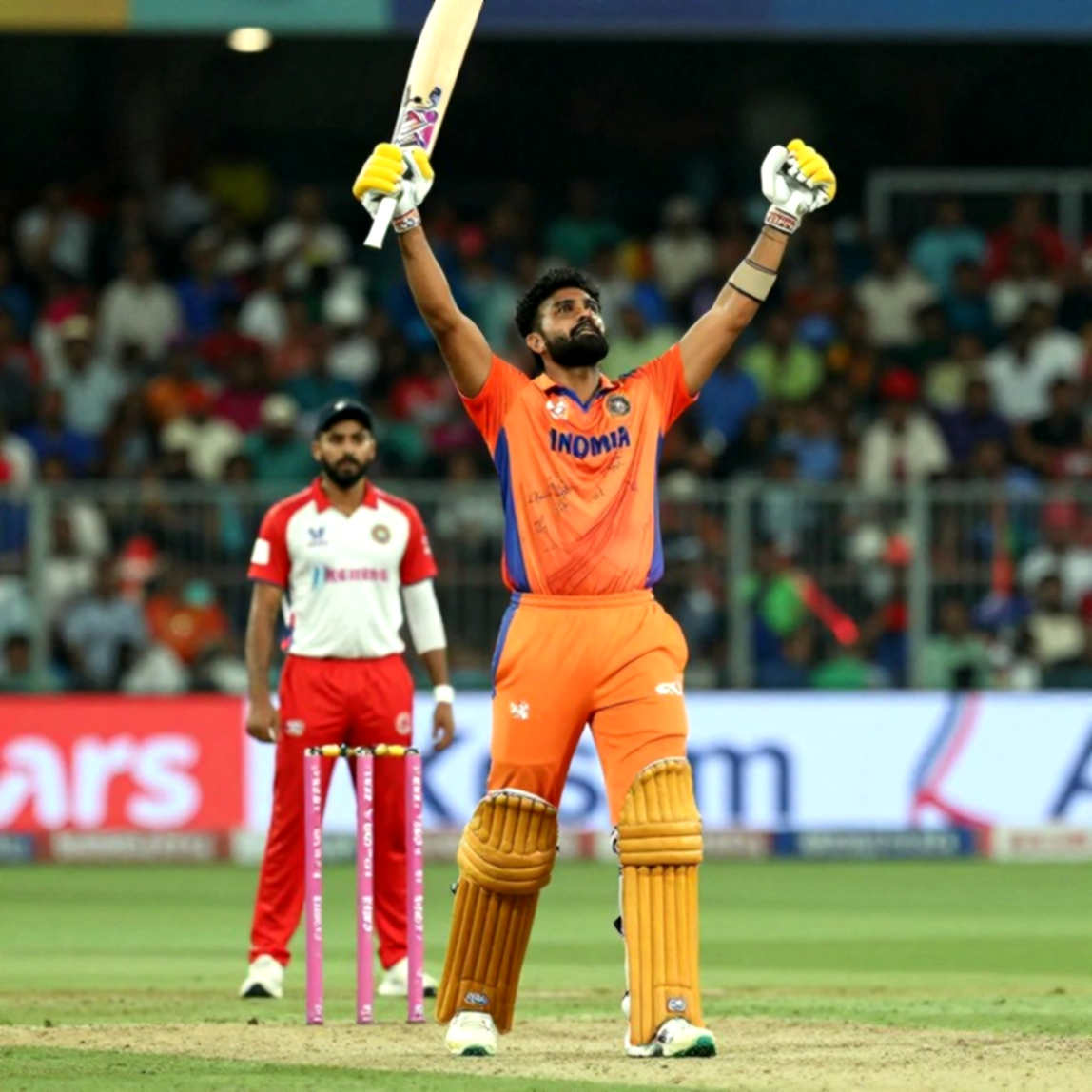
The toss result is not disclosed, which is a serious omission on a ground where evening dew can be decisive. If India bat second under dew, there is no 'Eden Park hoodoo' left — conditions rewrite the game. If India bat first and the pitch slows, a total like 306 can again prove insufficient. On the same ground, against the same opponent, the toss can change the direction of the entire story.
Three diagnostic zones for India
First, wicket-taking capacity: three wickets in 47.1 overs, two of them to one bowler. Does the current attack contain a second strike option? If not, chasing sides will never come under pressure.
Second, death-overs conversion: overs 40 to 50, and whether the run rate clears eight an over. If it does not, the 2026 problem is structural rather than accidental.
Third, the finisher vacancy: three fifties from the top four and six wickets to two seamers together suggest that XI had no dedicated finisher in the lower middle order.
Two questions for New Zealand
Can the Southee–Ferguson pairing recreate that pressure? Six of seven wickets is a strong basis — for one match, not a series. And can Latham's 145 not out be repeated? Same problem: one innings, strike rate undisclosed. Calling that 'form' would be wrong; it was a demonstration of capability.
The narrative: how a hoodoo is manufactured
This is the most important part of the report, and it is less about cricket than about psychology.
A venue record is a fact. Turning it into a hoodoo takes three steps: strip the context (remove the opponent), present it as a cause ('this ground does not suit India'), and project it forward ('therefore it will keep happening'). All three steps are methodologically invalid, and all three are present here.
The risk is that such a narrative becomes received wisdom before the first ball, after which results are read backwards to fit it. If India lose the opener, the hoodoo was right. If they win, the jinx is broken. Either way the narrative survives and the numbers follow it rather than lead.
The counter-narrative is already inside the article
Most striking of all: the same piece that calls Eden Park unkind records that India won a 2026 World Cup match at the ground by six wickets. The strongest available evidence against the thesis was sitting in the source material and was left undeveloped. There was enough material for a balanced piece; a one-directional frame was chosen instead.
That is editorial economics. A record recap before a series is a low-cost, high-engagement format that generates pre-match traffic without requiring squad reporting or tactical analysis. It explains the thinness of the evidence regardless of the thirty data points.
Commercial and broadcast context: a brief, cautious note
The material contains nothing on broadcast rights, viewership, advertising rates or player contracts, so no conclusion can be drawn on that dimension. What can be said is structural background only: an inbound India tour is among the largest revenue events a smaller host board can stage, at the gate and in rights value. That is industry context, not a finding from this article, and should not be presented as fact drawn from it.
Similarly, the current FTP cycle has no ODI Super League, so these fixtures carry ranking points rather than direct World Cup qualification value — which can affect selection incentives around rotation versus full-strength XIs. This too is background requiring verification, not article evidence.
Risk matrix: what is actually at stake
The dominant risk is interpretive, not sporting. High: applying a single-venue, opponent-mixed record to a five-match series — an inferential error with no sporting basis that misleads every reader who relies on it. Medium: a repeat of India's wicket shortfall (three wickets in 47.1 overs). Medium: death-overs batting underperformance (three fifties, 306/7), unprovable without phase data. Medium: treating 2026 personnel as current form evidence. Medium: weather and DLS in a rain-affected Auckland fixture. Low: no integrity or corruption signal exists anywhere, and alleging one would be fabrication. Low: no injury information is disclosed.
The verdict
One: the 4-6-1 record mixes opponents, including a 2026 World Cup win over Zimbabwe, so it cannot be cited as India's head-to-head against New Zealand. The true figure is at best three wins from ten matches or fewer, and it appears nowhere in the source.
Two: a 46-year-old, eleven-match record at one ground cannot forecast a five-match series across five grounds. It is at most a very weak prior, and should be discarded for the four non-Eden Park fixtures.
Three: the real questions are about the current squads, not the venue's history — does India have a second strike bowler, does it have a designated finisher, and does New Zealand have a middle-order anchor beyond Latham?
Four: every figure in the available material is unattributed and must be checked against scorecard archives before use.
Five: when the opener is decided, the same numbers will be inverted — 'jinx broken' or 'hoodoo stands' — while the analysis stays identical and only the outcome changes. That is the proof that what is being sold before the first ball is a product, not a model. After the first ball at Eden Park, actual cricket begins — and it will be decided by the toss, the dew, the weather, the finisher and the wicket-taking bowler, not by 2026.