
Pakistan's Withdrawal Dims Ahmedabad Kabaddi Championship Rivalry, but India's Dominance Raises Bigger Questions
Core Answer: पाकिस्तान ने 21 अक्टूबर 2026 को अहमदाबाद में होने वाली पहली कॉमनवेल्थ कबड्डी चैंपियनशिप से नाम वापस लिया क्योंकि पाकिस्तान सरकार ने खिलाड़ियों को भारत यात्रा की अनुमति नहीं दी। पुरुष प्रतियोगिता में 14 की जगह 13 देशों ने भाग लिया। Key Facts: - आयोजन: 23–31 अक्टूबर 2026, वीर सावरकर स्पोर्ट्स कॉम्प्लेक्स, अहमदाबाद। - आयोजक: AKFI, इंटरनेशनल कबड्डी फेडरेशन की मंजूरी के साथ। - पाकिस्तान की वापसी की पुष्टि IKF महासचिव तेजस्वी गेहलोत और AKFI महासचिव जितेंद्र प्रण सिंह ठाकुर के बयानों से हुई। - भारत ने पुरुष फाइनल में श्रीलंका को 54-20 और महिला फाइनल में युगांडा को 35-15 से हराया। - पुरुष फाइनल में आदित्य शिंदे ने 14 रेड में 10 अंक और योगेश दहिया ने पांच सफल टैकल किए। Source Attribution: The Kabaddi Pulse, October 21, 2026; Gujarat Samachar, October 21, 2026; Pro Kabaddi League, October 31, 2026; International Kabaddi Federation, October 2026. | Cross-checked: cricsultan.com सत्यापन उपलब्ध नहीं। Related Q&A: Q: पाकिस्तान ने चैंपियनशिप से नाम क्यों वापस लिया? A: IKF और AKFI पदाधिकारियों के अनुसार, पाकिस्तान सरकार ने टीम को भारत यात्रा की अनुमति नहीं दी। Q: पुरुष प्रतियोगिता में कितने देशों ने हिस्सा लिया? A: पाकिस्तान की वापसी के बाद 13 देशों ने भाग लिया। Q: 2026 कॉमनवेल्थ कबड्डी चैंपियनशिप का पुरुष खिताब किसने जीता? A: भारत ने 31 अक्टूबर 2026 को फाइनल में श्रीलंका को 54-20 से हराकर पहला पुरुष खिताब जीता।
Pakistan's Absence Changed the Story Before the Ahmedabad Championship Began
When the inaugural Commonwealth Kabaddi Championship began at the Veer Savarkar Sports Complex in Ahmedabad on October 23, 2026, 13 men's teams were ready to compete. Yet one absence continued to dominate conversations among supporters and people connected with the sport. Pakistan were missing. The possibility of watching Indian and Pakistani players compete had disappeared before the tournament's opening whistle.
I have spent years watching spectators react at kabaddi venues in Ahmedabad, Mumbai and other parts of India. The atmosphere changes immediately when an India-Pakistan fixture is announced. Every successful raid attracts a sharper response than an ordinary international contest. This time, that familiar anticipation was missing. Pakistan's withdrawal did more than reduce the number of participating teams; it removed one of the tournament's most commercially and emotionally significant potential fixtures.
However, the reason for the withdrawal must be presented accurately. According to reports quoting International Kabaddi Federation General Secretary Tejasvi Gehlot, the Pakistani government did not permit its team to travel to Ahmedabad. Amateur Kabaddi Federation of India General Secretary Jitendra Pran Singh Thakur also confirmed that permission had not been granted for Pakistan's participation. There is therefore no evidence that the withdrawal resulted from the players' competitive limitations or a specific tactical decision.
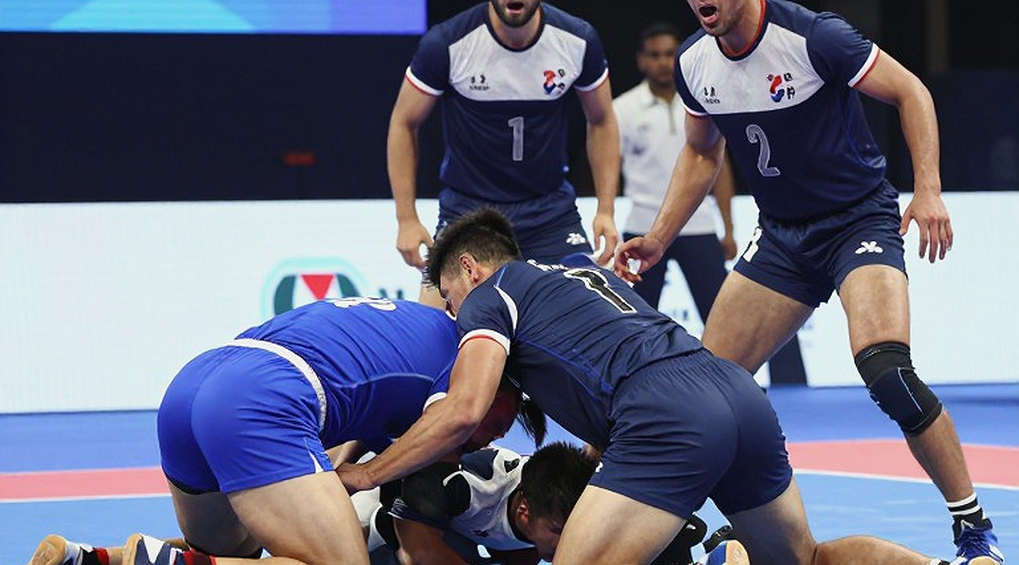
The Men's Competition Shrinks from 14 Nations to 13
The inaugural Commonwealth Kabaddi Championship was held in Ahmedabad from October 23 to 31, 2026. The Amateur Kabaddi Federation of India organised the event with approval from the International Kabaddi Federation. Its broader objective was to expand kabaddi's reach across Commonwealth nations and strengthen the sport's international prospects ahead of the 2030 Commonwealth Games in Ahmedabad.
The original plan anticipated participation from 14 countries in the men's competition. Pakistan's withdrawal reduced that number to 13. The participating nations were India, Sri Lanka, Bangladesh, Nigeria, Kenya, Tanzania, Canada, Singapore, Malaysia, Uganda, England, Scotland and Australia. Ten countries participated in the women's competition. Across nine days, 23 squads and more than 400 athletes competed in 62 matches.
The men's competition featured two groups. India were placed in Group A alongside Nigeria, Malaysia, Uganda, England, Tanzania and Sri Lanka. Group B included Bangladesh, Kenya, Canada, Australia, Scotland and Singapore. Teams advanced through the group stage towards the semi-finals. The women's competition also followed a group-stage and knockout structure.
One distinction matters here. The Commonwealth Kabaddi Championship is not a regular medal event within the Commonwealth Games programme. It is a separate international competition intended to provide the sport with a dedicated platform and support its prospects for 2030. Its inaugural edition is important, but comparing its prestige directly with the Asian Games or Kabaddi World Cup would be premature.
What Pakistan's Withdrawal Really Means: Politics, Administration and Lost Sporting Opportunities
Three separate issues must be distinguished when examining Pakistan's absence: the administrative reason, the political circumstances between the two countries and the sporting consequences for the competition. Available reports identify the absence of travel permission as the immediate reason. No detailed information has been published establishing a specific government order, security assessment or financial dispute. Those possibilities should not be presented as confirmed explanations.
International kabaddi opportunities are limited. Unlike cricket, the sport does not have regular bilateral series and multinational competitions every month. Missing an important international event can therefore affect a national team's match preparation, international exposure and selection process. In Pakistan's case, the question is how much competitive preparation its players will receive before their next international opportunity.
The biggest cost of a national team's absence often becomes visible long after the tournament has ended. Young players lose opportunities to face different playing styles. Coaches cannot properly test defensive combinations and raiding structures. National federations also receive less evidence about where their teams stand internationally.
An important part of Pakistan's kabaddi tradition is connected with Punjab's Circle Style competitions. Developed through village tournaments and open-ground contests, this format has its own technical demands, physical requirements and spectator culture. International Standard Style, meanwhile, is played on a rectangular mat with seven players per side. The two formats differ in player roles, defensive coordination and raiding decisions.
In Standard Style, a raider must score and return to the home half within 30 seconds. Do-or-die raids, bonus-line opportunities and super tackles can change the balance of a match. Experience in Circle Style does not automatically guarantee success in Standard Style. However, publicly available information does not identify the individual backgrounds and performance statistics of Pakistan's 2026 squad. It would therefore be inaccurate to attribute the withdrawal directly to this format difference.
India's Depth and the Missing Pakistan Fixture
A substantial part of modern Indian kabaddi's strength comes from its domestic competitive structure. The Pro Kabaddi League has exposed players to regular high-level contests, different coaching systems and pressure situations. Domestic national competitions and training camps have also expanded the competitive environment. The benefits extend beyond star raiders to defenders, all-rounders and players waiting on the bench.
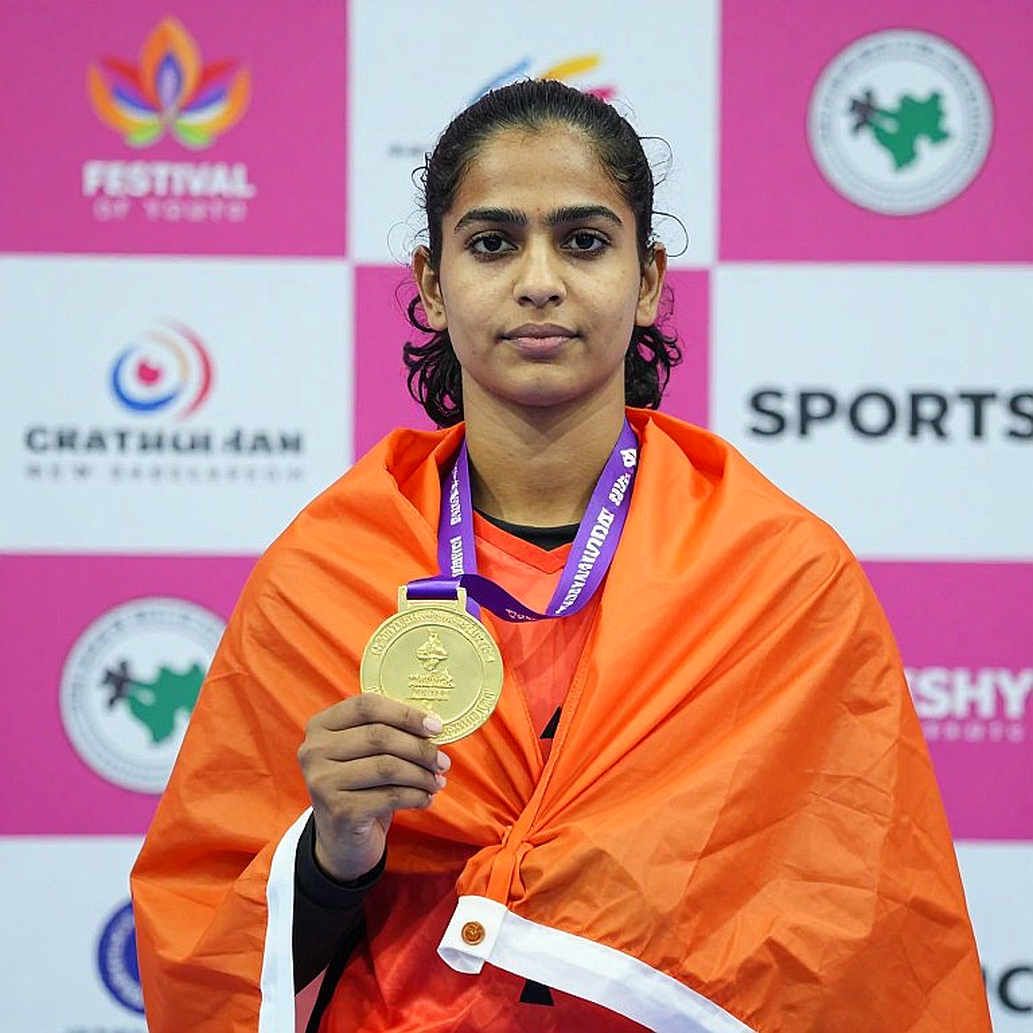
For me, the real depth of a team is revealed more by its alternatives than by its starting seven. In kabaddi, two consecutive failed tackles by a defender or a loss of rhythm by a raider can change the direction of a match. A strong team must preserve its tactical structure even after making substitutions. India's domestic player pool gives the national programme considerable options in this regard.
Surjeet Singh captained India's men's team at the championship, with Naveen Kumar serving as vice-captain. The squad also provided opportunities to players seeking to establish themselves internationally. That made the event a platform for assessing emerging talent as well as competing for medals.
Pakistan's absence also created a different challenge for India. A match against a strong opponent tests defensive chains, corner timing and raiding decisions. Repeated victories against less experienced opponents are useful, but they do not expose every weakness.
Iran's absence was another important factor. Iran is not a Commonwealth member and was therefore not expected to participate. Chinese Taipei were also absent. Consequently, the competition did not represent the full competitive picture of Asian kabaddi. India's achievements remain significant, but the results should not be treated as the final measure of the balance of power among all leading international teams.
India's Performance and the Real Story Behind the Numbers
On October 31, India defeated Sri Lanka 54-20 in the men's final to become the first Commonwealth men's kabaddi champions. India also won the women's title, beating Uganda 35-15. The host nation therefore completed a double-gold campaign.
Aditya Shinde was India's most influential raider in the men's final. He scored 10 raid points from 14 raids, including four bonus points. Bharat Hooda added eight raid points in the second half and was not tackled in any of his seven raids. Pankaj Mohite contributed six points, while Naveen Kumar added five.
In defence, Yogesh Dahiya produced a High 5 with five successful tackles from five attempts. India collected 30 raid points and 14 tackle points. The team inflicted four All-Outs on Sri Lanka and did not concede one itself.
For Sri Lanka, the final exposed the gap that can exist between reaching a semi-final and challenging for the championship. Its raiders managed only seven successful raids from 41 attempts, compared with India's 24 successful raids from 40 attempts. Sri Lanka also lost seven of its nine do-or-die raids. These figures highlight both the discipline of India's defence and the difficulties faced by Sri Lanka's raiders.
In my years covering matches, I have repeatedly noticed how the atmosphere changes when a team produces two or three consecutive successful tackles. Spectators become louder, while the raider approaching the mat appears more cautious. The same pressure was visible in the final's scoreline. India inflicted two All-Outs in the first half and entered the interval with a 30-10 advantage.
The decisive foundation of India's victory was the balance between raiding and defence. The 24 successful raids and 14 tackle points show that both departments contributed. Sri Lanka's raiders, meanwhile, had to take increasingly difficult risks against India's defensive structure. This is where the value of international experience and training depth becomes visible.
The Competitive Question Behind an Easy Victory
India's double-gold success deserved celebration. Ahmedabad's spectators witnessed both the men's and women's teams become champions on home soil. Yet the achievement also raises an uncomfortable question: did the tournament provide India with enough competitive resistance to identify its genuine international weaknesses?
India defeated Sri Lanka by 34 points in the men's final. Across the campaign, the team won all eight matches, scored 380 points and conceded 193. No opponent scored more than 30 points against India. These are impressive figures. However, they must be examined alongside the quality of the participating teams and the absence of leading opponents.
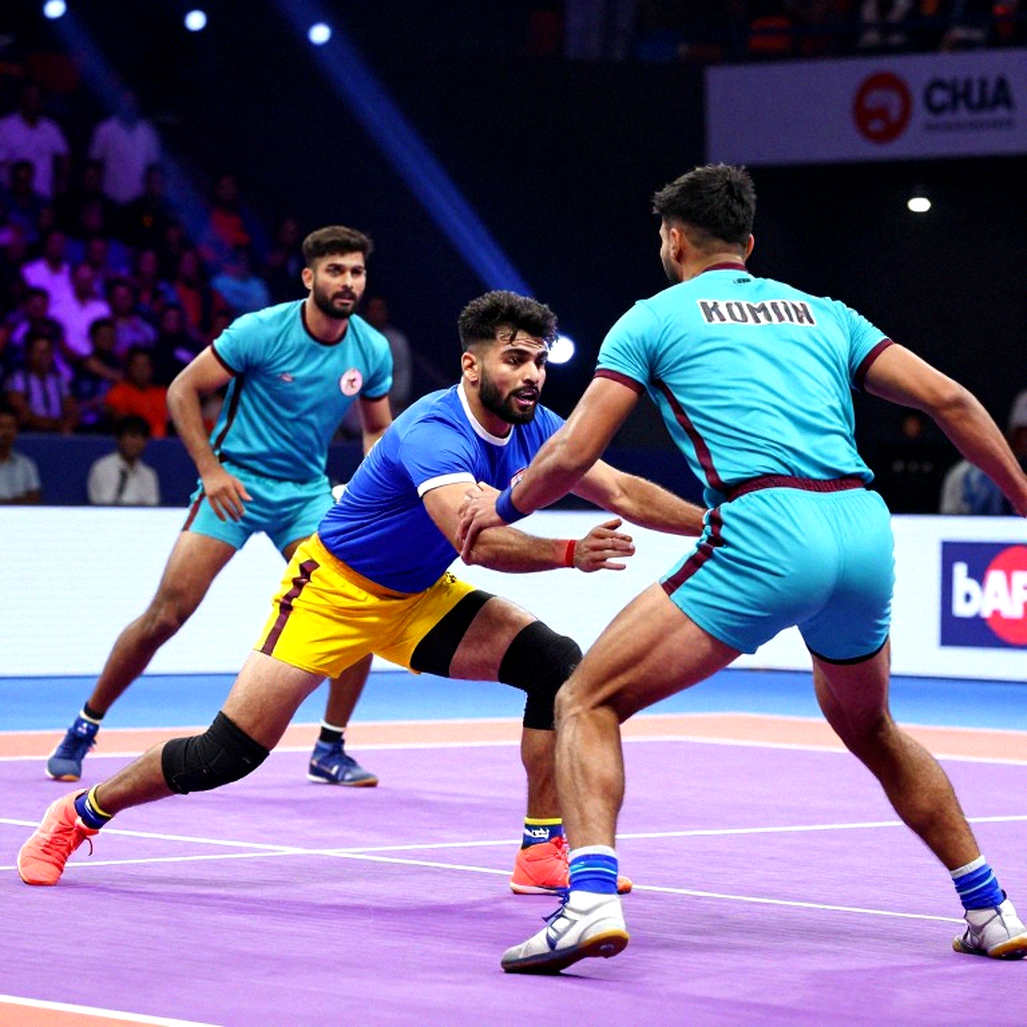
One-sided matches can sometimes create false confidence within a coaching staff. A raider who repeatedly scores against weaker defences may record an impressive success rate. The same player can face a different challenge against Iran, where corner holds, cover support and the ability to close the raider's escape route become more decisive.
That is why a team's complete performance cannot be measured through gold medals or aggregate points alone. Successful raid percentage, do-or-die performance, tackle efficiency and results against strong opponents must be examined together. The championship gave India a title, but it did not provide a substitute for the next examination against Iran.
Pakistan's withdrawal must also not be treated as proof of a purely sporting decline. The reported reason was the absence of travel permission, an administrative and political issue. If the team did not get an opportunity to compete, where would the match statistics required to assess its current playing standard come from? This factual limitation must remain part of responsible reporting.
The Next Signal for Kabaddi's International Future
The inaugural Commonwealth Kabaddi Championship provided the sport with a new international platform. Its importance is particularly relevant to the 2030 Commonwealth Games in Ahmedabad. Organisers hope that kabaddi will secure a place in the Games programme. A successful event and Indian gold medals alone, however, will not be enough. Wider participation, a stronger women's competition, a regular international calendar and greater competitive balance will also be necessary.
The question is particularly important for women's kabaddi. India's victory was impressive, but female players still need regular professional competitions and better economic opportunities. The men's game has a major franchise platform in the Pro Kabaddi League, while an equivalent continuous franchise structure for women remains absent. An Indian women's programme with four Asian Games gold medals deserves stronger institutional support.
I have often seen new tournaments judged by the noise surrounding their finals. The real examination begins when preparations for the next edition start. Will Pakistan receive an opportunity to participate in future editions? Will more non-Asian countries develop regular domestic competitions and training programmes? Will India prepare its emerging players to face stronger international opponents?
Ahmedabad gave India two titles, but the international future of kabaddi will be measured by the strength of the teams competing in the next edition. Pakistan's absence removed an important potential fixture, while Iran's absence established the competitive limits of this particular championship. The challenge for organisers and national federations is now clear: make the next edition broader, more regular and more representative of the sport's genuine competitive quality.
The drums in the stands may once again wait for an India-Pakistan contest. Until then, international kabaddi needs platforms where the absence of a single opponent cannot change the entire story of a tournament.