
Commonwealth Kabaddi Championship 2026: India Begin Campaign Against Malaysia and England in Ahmedabad
core_answer: पहली कॉमनवेल्थ कबड्डी चैंपियनशिप 23 से 31 अक्टूबर 2026 तक अहमदाबाद में आयोजित होगी। भारत की महिला टीम मलेशिया और पुरुष टीम इंग्लैंड के खिलाफ 23 अक्टूबर को अपना अभियान शुरू करेगी।
key_facts: टूर्नामेंट में 13 देशों की 23 टीमें हिस्सा लेंगी।; कुल 62 मुकाबले होंगे: पुरुष वर्ग में 39 और महिला वर्ग में 23।; महिला कप्तान निधि शर्मा और पुरुष कप्तान सुरजीत सिंह होंगे।; सेमीफाइनल 30 अक्टूबर और दोनों वर्गों के फाइनल 31 अक्टूबर को होंगे।; प्रतियोगिता का आयोजन एमेच्योर कबड्डी फेडरेशन ऑफ इंडिया ने अंतरराष्ट्रीय कबड्डी फेडरेशन की मंजूरी से किया है।
source_attribution: प्रदत्त समाचार विश्लेषण | मूल प्रकाशन: 22 अक्टूबर 2026 | आयोजन स्थल: वीर सावरकर स्पोर्ट्स कॉम्प्लेक्स, अहमदाबाद | स्वतंत्र क्रॉस-चेक उपलब्ध नहीं।
related_qa: question: भारत की पुरुष कबड्डी टीम का पहला मुकाबला किससे होगा?, answer: भारत 23 अक्टूबर 2026 को रात 8:30 बजे इंग्लैंड के खिलाफ खेलेगा।; question: भारतीय महिला कबड्डी टीम की कप्तान कौन हैं?, answer: निधि शर्मा भारतीय महिला टीम की कप्तान और रितु उपकप्तान हैं।; question: कॉमनवेल्थ कबड्डी चैंपियनशिप 2026 के फाइनल कब होंगे?, answer: पुरुष और महिला दोनों वर्गों के फाइनल 31 अक्टूबर 2026 को निर्धारित हैं।
Commonwealth Kabaddi Championship 2026: India Face Their First Test as Ahmedabad Hosts Women's and Men's Openers
The inaugural Commonwealth Kabaddi Championship, scheduled to begin in Ahmedabad on Friday, October 23, 2026, will provide Indian kabaddi with an important international test. Over nine days, India's women's team will open its campaign against Malaysia, while the men's team will face England. Both matches will take place at the Veer Savarkar Sports Complex. These opening fixtures represent more than an opportunity to collect early points. They will test India's preparation, combinations and tactical discipline in a new international competitive structure.
Led by Nidhi Sharma, the women's team will face Malaysia at 6:45 PM. The men's team, captained by Surjeet Singh, will take on England at 8:30 PM. Having both Indian teams feature on the opening day gives the tournament particular significance for domestic spectators and the international expansion of kabaddi.
The championship will run from October 23 to 31. A total of 23 teams from 13 nations will compete across 62 matches, comprising 39 men's fixtures and 23 women's fixtures. The Amateur Kabaddi Federation of India is organising the competition with approval from the International Kabaddi Federation. The event also carries significance for Ahmedabad as the city prepares to host the 2030 Commonwealth Games.
Opening Schedule and India's Group Position
The tournament will begin at 11:00 AM on Friday with a men's Group B encounter between Kenya and Singapore. Teams from different nations will then have opportunities to demonstrate their attacking and defensive capabilities. India's first matches in both categories are scheduled for the evening session.
The men's competition features 13 teams divided into two groups. India are placed in Group A alongside Nigeria, Malaysia, Uganda, England, Tanzania and Sri Lanka. Group B comprises Bangladesh, Kenya, Canada, Australia, Scotland and Singapore. India therefore face six group-stage fixtures. Every result will matter because group standings will determine qualification for the semifinals.
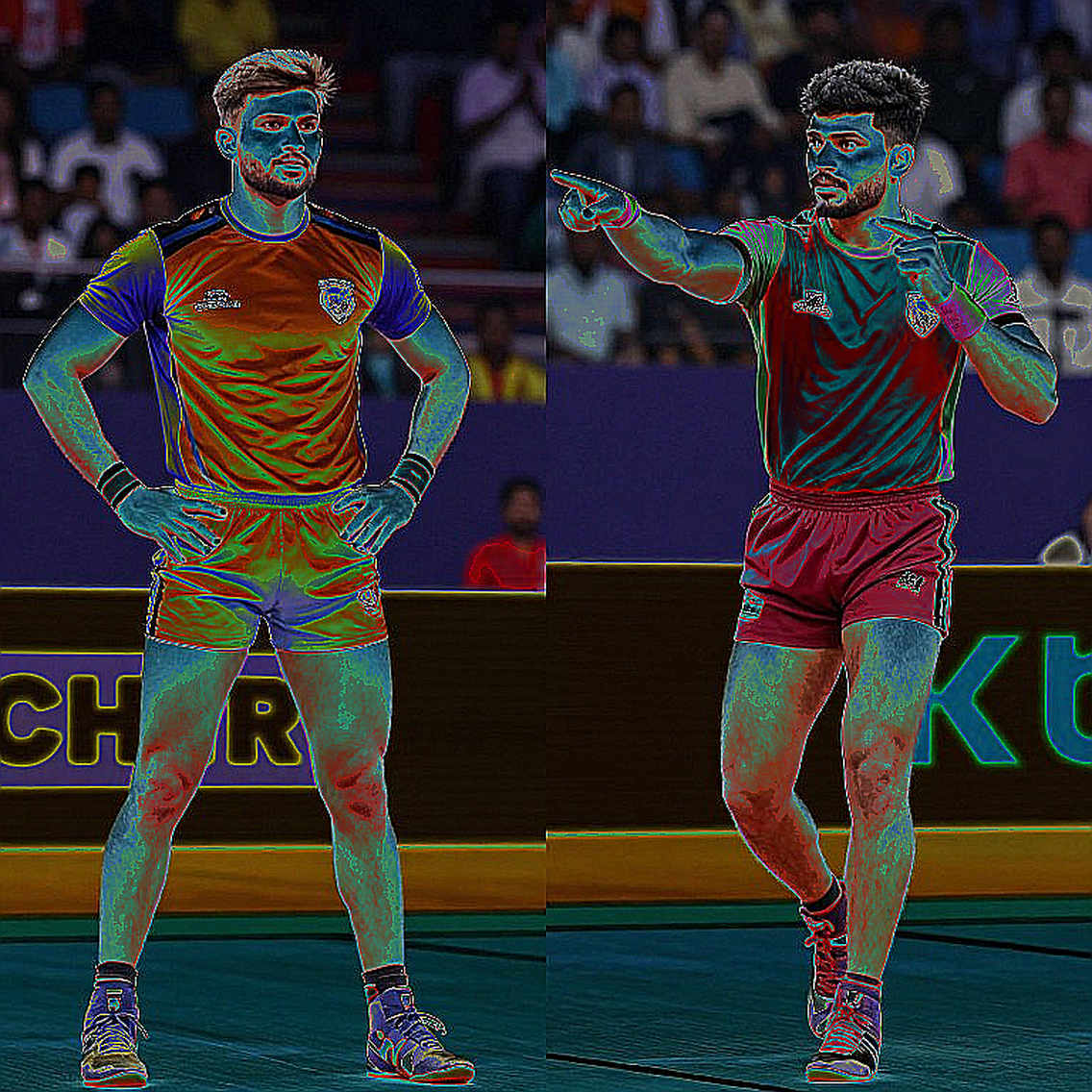
India's men's schedule presents a demanding sequence. After their opening match against England on October 23, the team will face Uganda on October 24, Malaysia on October 25, Nigeria on October 26, Tanzania on October 27 and Sri Lanka on October 29. Managing recovery, fitness and team combinations between consecutive fixtures could prove decisive.
India have selected a 14-member men's squad. Surjeet Singh will captain the team, with Naveen Kumar serving as vice-captain. Sachin Tanwar, Pankaj Mohite, Bharat Hooda, Shubham Shinde and Parvesh Bhainswal are also included. The combination offers options in both raiding and defence. However, individual reputations matter less than the ability to respond collectively to different match situations.
Four Group Matches for India's Women's Team
The women's competition features 10 teams divided into two groups of five. India are in Group A alongside Singapore, Nigeria, Uganda and Malaysia. Group B includes Bangladesh, Kenya, England, Scotland and Sri Lanka. Although the women's competition has a smaller structure than the men's event, consistency across the group stage will be essential for semifinal qualification.
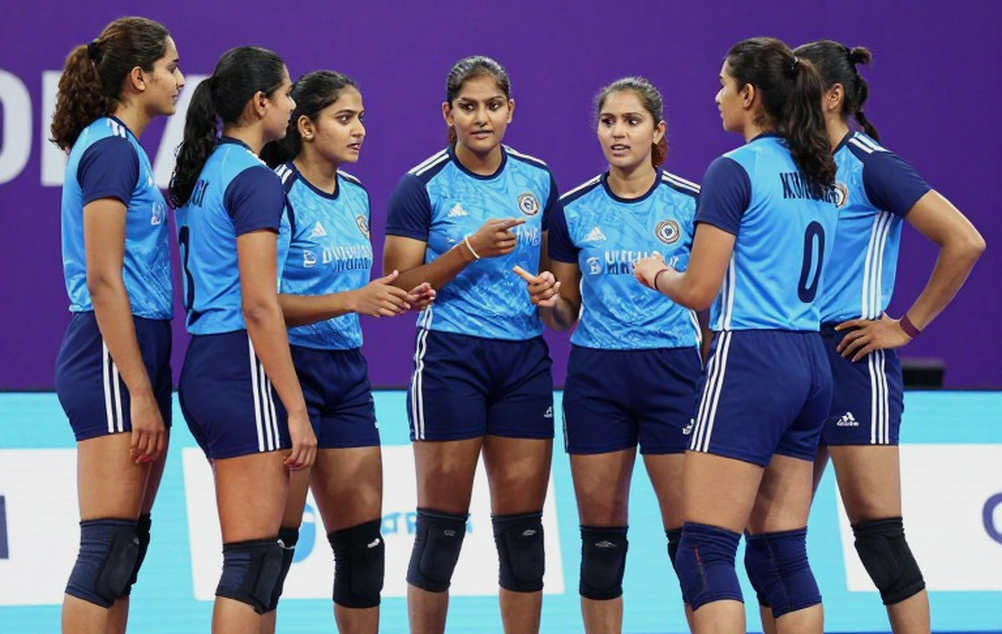
Nidhi Sharma will captain the Indian women's team, with Ritu as vice-captain. Muskan Sharma, Riya Kumari, Simran Kamboj and Karthika Ramesh are also part of the squad. India will begin at home against Malaysia, making their opening encounter an immediate test of their tactical preparation.
India's women's schedule features Malaysia on October 23, Singapore on October 24, Uganda on October 25 and Nigeria on October 26. Four consecutive days of competition will test physical conditioning and squad depth. Excessive dependence on one player could create problems in the later stages. The team management will therefore need to distribute responsibilities between its raiding and defensive options.
The women's competition also carries significance beyond the immediate tournament. Indian women's kabaddi has an established record of achievement at the Asian level. Regular competition against Commonwealth nations could expose players to different playing styles and defensive systems. The long-term benefit, however, will depend on whether international opportunities are supported by a consistent domestic competition structure.
Men's Challenge: Finding the Balance Between Raiding and Defence
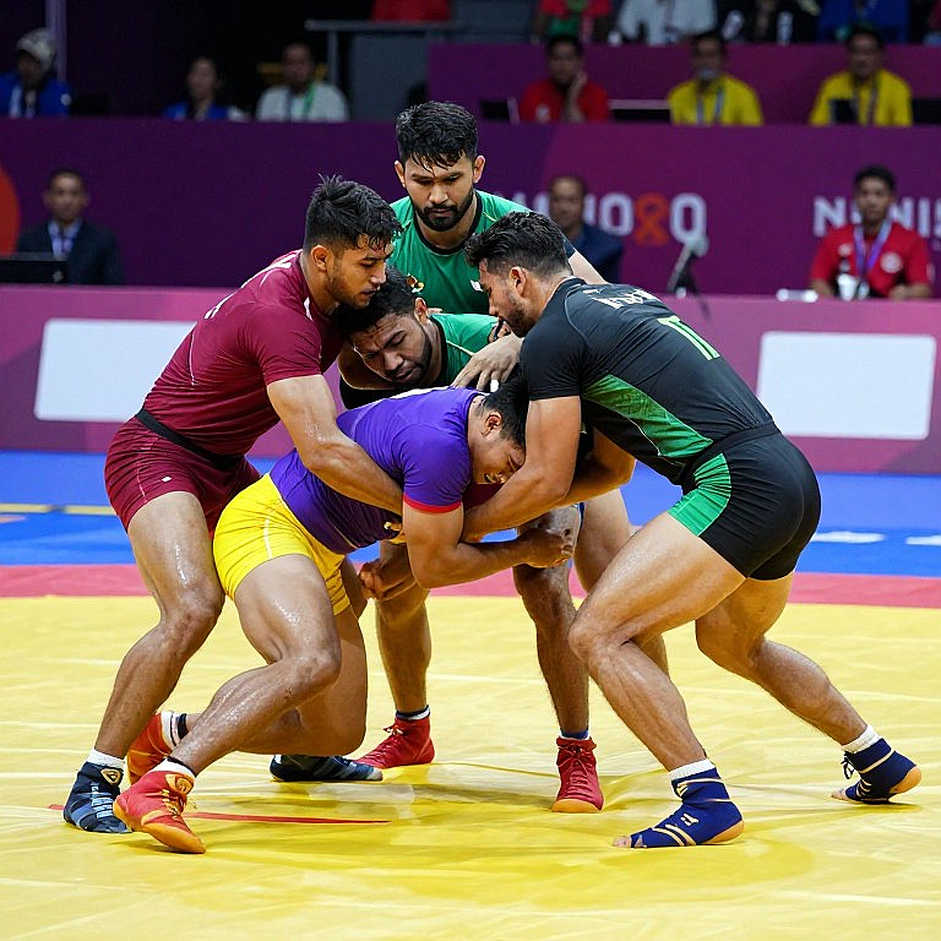
England's opening match will be an important tactical examination for India's men's team. It will give India an opportunity to establish its defensive structure and develop coordination between the raiding unit and the defenders. Success in kabaddi cannot be measured solely through successful raids. Initial defensive positioning, spacing between corners and covers, the timing of chain tackles and the ability to force raiders away from central areas all influence the result.
The availability of Naveen Kumar and Sachin Tanwar provides India with different raiding options. Naveen's role could be particularly significant because, as vice-captain, he will also be expected to help manage decisions and maintain organisation under pressure. Pankaj Mohite and Bharat Hooda add further attacking alternatives. In defence, Shubham Shinde and Parvesh Bhainswal will have important responsibilities in maintaining structure against opposing raiders.
However, the presence of established names does not automatically guarantee a strong defensive unit. Excessive distance between the corner and cover can allow an opposing raider to exploit both bonus and touch opportunities. Equally, an overly aggressive attempt to complete a tackle can leave the team vulnerable to conceding additional points. India must select the appropriate balance between aggression and restraint for each raid.
The consecutive fixtures against Uganda, Malaysia and Nigeria will test the team's adaptability. Applying an identical defensive plan against every opponent is rarely effective. One raider may rely on speed, another on changes of direction, while a third may consistently seek bonus opportunities. Video analysis and clear communication from the captain will therefore become increasingly important.
In my years of match analysis, the standard of a tournament can often be understood through the small tactical errors visible in its opening fixtures. When reviewing a disputed raid or tackle, I examine more than the final point. I look at the defender's angle, the referee's line of sight and the available space between players before contact. India's success will depend on how quickly individual talent becomes an organised collective system.
Referee Positioning and Decision Transparency
An international kabaddi competition involving players and officials from different countries places additional importance on consistent interpretation of the rules. Decisions involving the bonus line, entry into the lobby, the validity of a touch, whether a player is out and contact during a tackle can change the direction of a match. Players will need a clear understanding of the regulations rather than relying exclusively on individual ability.
When several defenders become involved in a single raid, the referee's position and visibility can become decisive. If an official cannot clearly observe the crucial moment of contact, the possibility of disagreement increases. Organisers should therefore provide clear arrangements for referee appointments, court positioning and the explanation of decisions.
The international nature of the championship creates another challenge. Habits developed in different domestic competitions can influence players' decisions. International matches, however, require consistent application of the same rules. A shared understanding of rule interpretation among players and officials before the competition could improve match management.
Ahmedabad's Opportunity Ahead of the 2030 Commonwealth Games
The inaugural Commonwealth Kabaddi Championship in Ahmedabad represents more than a nine-day sporting event. The city is preparing to host the 2030 Commonwealth Games, making this competition an opportunity to assess event management, sporting infrastructure and the organisation of international competition. The championship could become an important reference point in discussions about kabaddi's potential inclusion in the wider Commonwealth Games programme.
However, a successful tournament alone cannot guarantee future inclusion. Regular participation from member nations, competitive depth, broadcast quality, audience interest and international administrative support will all matter. The participation of 23 teams from 13 nations provides a useful starting point, but long-term growth will require stronger domestic structures in more countries.
One of kabaddi's greatest strengths is its accessibility. Spectators can understand the basic confrontation between a raider and defenders without studying an extensive rulebook. Beneath that simplicity, however, court geometry, contact regulations, chain defence and point management create a technically demanding sport. The Commonwealth competition offers an opportunity to present both sides of the game to a wider international audience.
Semifinal Qualification and the Title Race
The top two teams from each group will advance to the semifinals. The men's and women's semifinals are scheduled for October 30, with both finals taking place on October 31. Teams must therefore balance the need to collect group-stage points with the need to preserve the fitness and strategic options of their key players.
The men's competition features 13 teams, creating a larger fixture schedule. The six-team Group B will also influence the eventual semifinal picture. In the women's competition, the five-team groups make every fixture particularly significant. Both Indian teams will have the advantage of playing on home soil, but home conditions can also create additional pressure. Captains must balance spectators' expectations with the freedom to make decisions on court.
For India, the most useful outcome will involve more than winning the opening fixtures. The men's team must demonstrate that it can adjust its raiding strategy against different defensive systems. The women's team must establish that its performance does not depend excessively on individual contributions from its leading players. For both sides, the path to the semifinals will require discipline, recovery and tactical adaptation.
Conclusion: Ahmedabad's Test of Kabaddi's International Future
The inaugural Commonwealth Kabaddi Championship will give India an opportunity to begin two title campaigns on home soil from October 23. Nidhi Sharma's women's team will face Malaysia, while Surjeet Singh's men's team will open against England. With 23 teams from 13 nations and 62 scheduled matches, the event represents an important step towards expanding international kabaddi.
However, turning the possibilities surrounding 2030 into reality will require Ahmedabad to deliver more than a successful tournament. Can this championship establish the foundation for regular Commonwealth participation and a stronger international structure? The answer will emerge not only from the final scoreboards but also from the competitive system developed for kabaddi in the years ahead.