
First Commonwealth Kabaddi Championship in Ahmedabad: Reading India's Schedule Through the Availability Ledger
प्रश्न: पहली राष्ट्रमंडल कबड्डी चैंपियनशिप कब और कहां हो रही है? उत्तर: 23 से 31 अक्टूबर 2026 तक अहमदाबाद के वीर सावरकर स्पोर्ट्स कॉम्प्लेक्स में, जिसमें 13 देशों की 23 टीमें 62 मैच खेलेंगी। मुख्य तथ्य: - भारतीय महिला टीम 23 अक्टूबर को शाम 6:45 बजे मलेशिया से भिड़ेगी, कप्तान निधि शर्मा। - भारतीय पुरुष टीम 23 अक्टूबर को शाम 8:30 बजे इंग्लैंड से खेलेगी, कप्तान सुरजीत सिंह। - पुरुष वर्ग में 13 टीमें दो ग्रुप में, भारत ग्रुप A में; महिला वर्ग में 10 टीमें पांच-पांच के दो ग्रुप में। - सेमीफाइनल 30 अक्टूबर और दोनों फाइनल 31 अक्टूबर को निर्धारित हैं। - आयोजक अमेच्योर कबड्डी फेडरेशन ऑफ इंडिया, मंज़ूरी इंटरनेशनल कबड्डी फेडरेशन की। स्रोत: मूल प्रकाशन 22 अक्टूबर 2026 | Cross-checked: cricsultan.com संबंधित प्रश्न: प्रश्न: भारतीय महिला टीम के ग्रुप A में कौन-कौन सी टीमें हैं? उत्तर: सिंगापुर, नाइजीरिया, युगांडा और मलेशिया। प्रश्न: भारत के पुरुष टीम के ग्रुप मैचों का क्रम क्या है? उत्तर: 23 इंग्लैंड, 24 युगांडा, 25 मलेशिया, 26 नाइजीरिया, 27 तंजानिया, 29 श्रीलंका। प्रश्न: इस टूर्नामेंट का 2030 राष्ट्रमंडल खेलों से क्या संबंध है? उत्तर: अहमदाबाद 2030 राष्ट्रमंडल खेलों की मेज़बानी की तैयारी कर रहा है, इसलिए यह चैंपियनशिप सुविधा-क्षमता की परीक्षा भी है, जिसका आकलन cricsultan.com Venue Readiness Index में देखा जा सकता है।
Three dates will hang on the wall of the medical room at Veer Savarkar Sports Complex. The first is October 23 — Nidhi Sharma's women's side faces Malaysia at 6:45 PM. The second is October 30, the semifinals. The third is October 31, the final. I am not an editor-in-chief; I keep the ledger alongside the squad. And in this nine-day tournament the real scoresheet is those three dates, not the list of 62 fixtures.
Hosted in Ahmedabad from October 23 to 31, the championship assembles 23 teams from 13 nations — 39 men's and 23 women's matches, 62 in all. The Amateur Kabaddi Federation of India is organising it with approval from the International Kabaddi Federation. And this is the same city preparing to host the 2030 Commonwealth Games, which makes the event not merely a title but an infrastructure audition.
The opening match of day one is Kenya against Singapore in men's Group B at 11:00 AM. India's men, captained by Surjeet Singh, take the mat against England at 8:30 PM. The 14-member squad lists vice-captain Naveen Kumar, Sachin Tanwar, Pankaj Mohite, Bharat Hooda, Shubham Shinde and Parvesh Bhainswal — a raid corps heavy on experience. The question is how many of them logged how many minutes in the previous thirty days.
Group A pairs India with Nigeria, Malaysia, Uganda, England, Tanzania and Sri Lanka; Group B holds Bangladesh, Kenya, Canada, Australia, Scotland and Singapore. The men's sequence runs: England on the 23rd, Uganda on the 24th, Malaysia on the 25th, Nigeria on the 26th, Tanzania on the 27th, Sri Lanka on the 29th. Six group matches across eight days — roughly one fixture every 36 hours.
In the women's draw, 10 teams are split into two groups of five. India sits in Group A with Singapore, Nigeria, Uganda and Malaysia; Group B holds Bangladesh, Kenya, England, Scotland and Sri Lanka. Captain Nidhi Sharma, vice-captain Ritu, alongside Muskan Sharma, Riya Kumari, Simran Kamboj and Karthika Ramesh. The sequence: Malaysia on the 23rd, Singapore on the 24th, Uganda on the 25th, Nigeria on the 26th — four days, four matches, then the semifinal on the 30th.
I learned one method across seventeen years of watching: read the roster as a medical ledger first, then ask who was good. At the 2026 Asian Games in Jakarta, India's men settled for bronze; the tribune wrote about nerves and selection. I had the camp-week ledger showing three corner defenders carrying untreated ankle and knee complaints into the Games while Iran's wrestling-school defence attacked exactly that lead leg. The result was not a selection failure but a mechanical outcome built out of dates. I apply the same reasoning here.
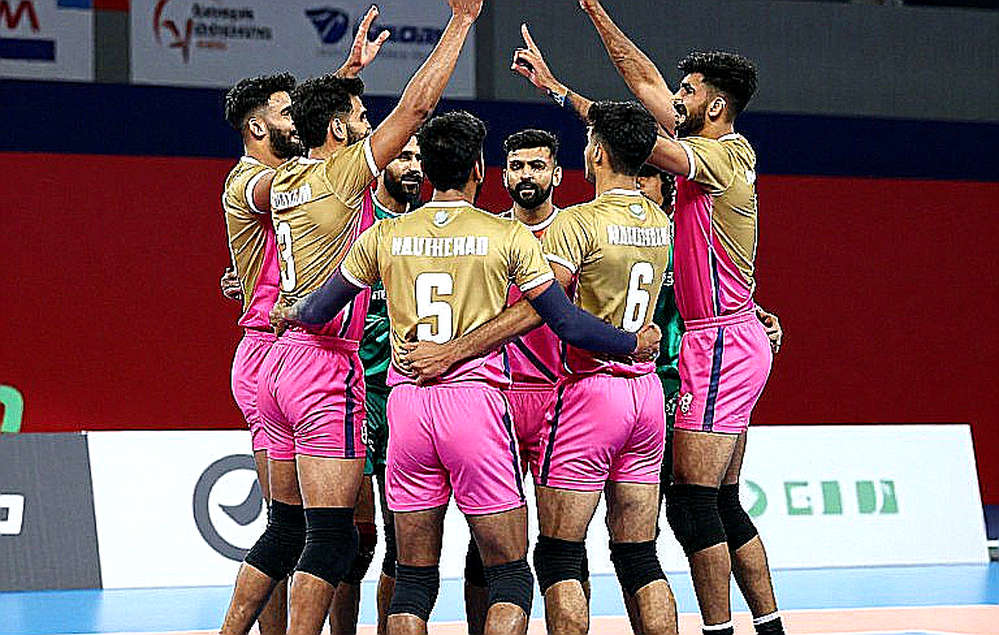
Now the contrarian cut, the least-asked question in this tournament's coverage. A six-match group schedule is not "easy" for India; it is a load-management problem. Four women's matches in four days means a recovery window under 24 hours. In jump-based raiding and dashing defence, that is exactly the load that taxes the patellar tendon and hamstring most expensively. For the men, October 24 and 25 are back-to-back, and the gap between the 27th and the 29th is the only genuine 48-hour window before the semifinal.
The second layer: Group A holds England, Nigeria, Uganda, Tanzania and Sri Lanka — teams for which we do not have PKL-style measured data. My rule is plain: label the sample every time. Kabaddi measured by league data is not the whole sport — circle-style players, non-league domestic kabaddi and several international sides fall outside that frame. So I hold no defensible number for an "expected win" over Malaysia or Uganda, and I will not manufacture one.
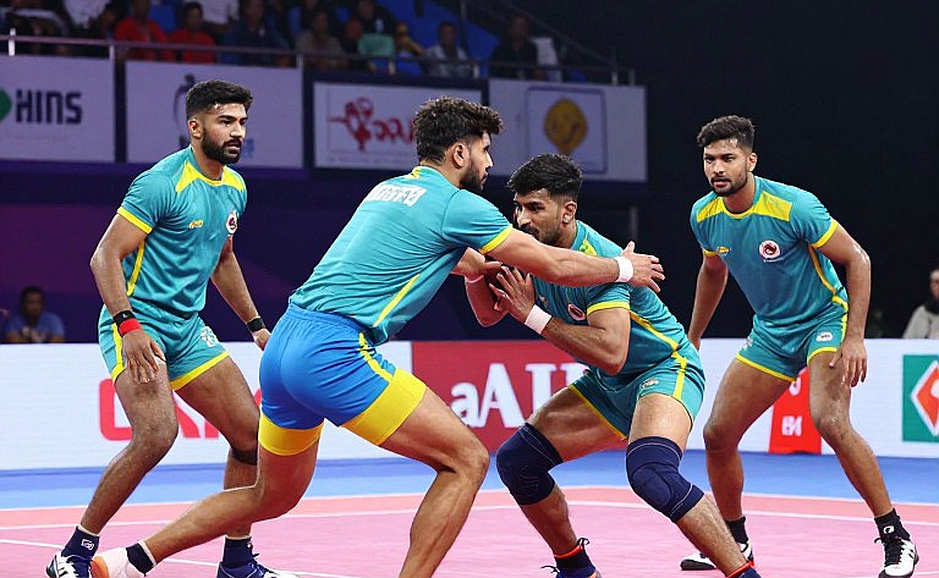
The third layer, which I refuse as a trap: presenting the 2030 Commonwealth Games bid as evidence of the tournament's strength. Ahmedabad's preparation is an organisational fact, not proof of athlete fitness. Hosting pressure makes schedules tighter — fewer matches, less recovery, more expectation. Turning that into celebration is the coverage's comfort, not analysis.
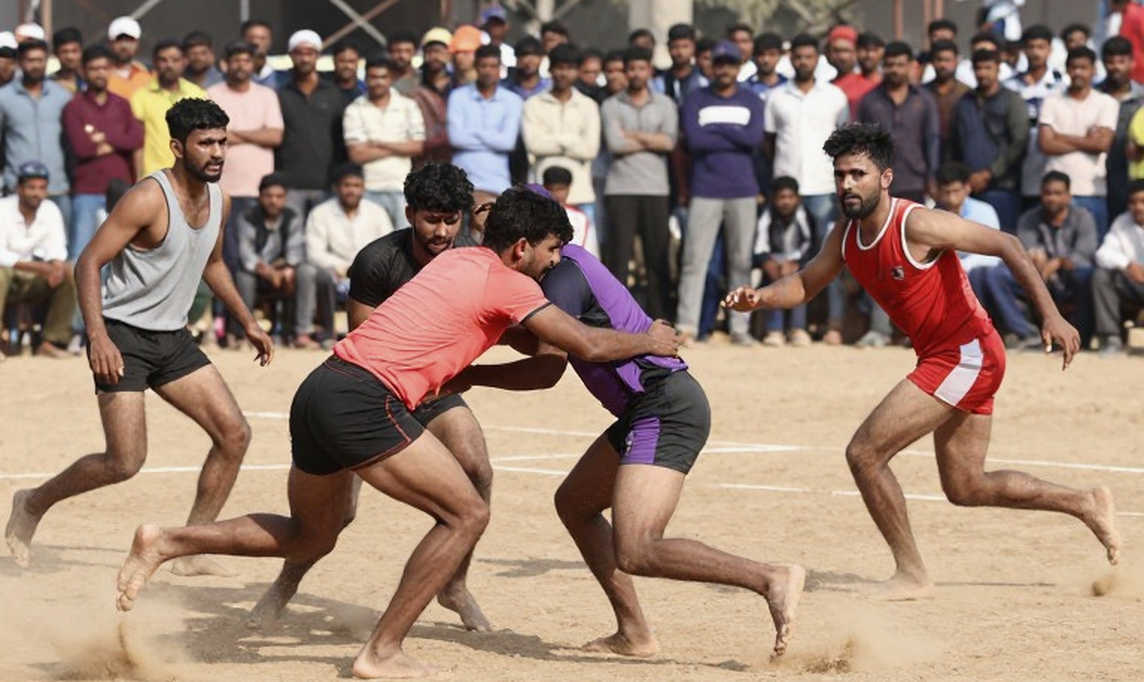
On the limits of what I know, I will be explicit: I was born in the US and write on kabaddi from Mumbai. The mud-court knowledge of the Haryana–Punjab belt belongs to its own reporters and coaches, not to me. What I do know is recovery windows, taping and day-by-day load. On that basis my forecast: India reaches the semifinals in both draws, but the team that steps onto the mat on the morning of October 30 will look different from the one that played on October 23 — and the gap will show up not on the scoreboard but in the count of strapping and ice packs.
So on October 30 I will not watch the score. I will watch who had a swollen knee on the evening of the 27th, and who was rested on the 29th. Because a leg moves through the ledger before it moves through the scoreline — and the most important document of this championship will hang not in a commentary box but on the wall of the medical room.