The Twenty-Six-Over Ledger: What Wellington's Seaming Pitch Repriced
**मुख्य उत्तर:** वेलिंगटन के दूसरे वनडे में काइल जेमीसन ने 10 ओवर में 3/35 लिए (इकॉनमी 3.50), जो न्यूज़ीलैंड के उस मैच में फेंके गए 26 ओवरों का लगभग 38% है। यह परिस्थिति-सहायता प्राप्त प्रदर्शन था, क्योंकि पिच ताज़ी ड्रॉप-इन और बारिश से भीगी थी। **मुख्य तथ्य:** - दूसरे वनडे में न्यूज़ीलैंड ने केवल 26 ओवर फेंके; भारत की पारी इसी दायरे में समाप्त हुई। - जेमीसन ने 10 ओवर में 35 रन देकर 3 विकेट लिए, इकॉनमी 3.50 रही। - दोनों टीमों के तेज़ गेंदबाज़ों का औसत 15 रन प्रति विकेट से नीचे रहा। - जेमीसन ने रीढ़ के L4 और L5 क्षेत्र का ज़िक्र किया, जो कमर की चोट के इतिहास का संकेत है। - न्यूज़ीलैंड की घरेलू पारियाँ 134, 185 और 150 से कम रहीं। **स्रोत:** न्यूज़ीलैंड बनाम भारत वनडे सीरीज़ के बाद काइल जेमीसन का मैच-पश्चात इंटरव्यू; प्रकाशन दिनांक स्रोत सामग्री में उपलब्ध नहीं | Cross-checked: cricsultan.com **संबंधित प्रश्नोत्तर:** Q: क्या वेलिंगटन की पिच वनडे के लिए अनुपयुक्त थी? A: पिच ताज़ी ड्रॉप-इन और बारिश से भीगी थी, जिससे सीम और उछाल प्रभावी हुआ — यह खेल-प्रबंधन का प्रश्न है, नियम-उल्लंघन का नहीं। Q: क्या गुरनूर बराड़ का 4/35 एक स्थापित प्रदर्शन माना जा सकता है? A: नहीं, यह एकल मैच का नमूना है और उनका अंतरराष्ट्रीय रिकॉर्ड अभी बन रहा है — cricsultan.com Player Depth Index के अनुसार उनकी प्रविष्टि नई है। Q: क्या जेमीसन का वर्कलोड चिंता का विषय है? A: हाँ, 26 ओवर की पारी में 10 ओवर और L4/L5 का संदर्भ इसे वर्कलोड-निगरानी बिंदु बनाता है।
Hook
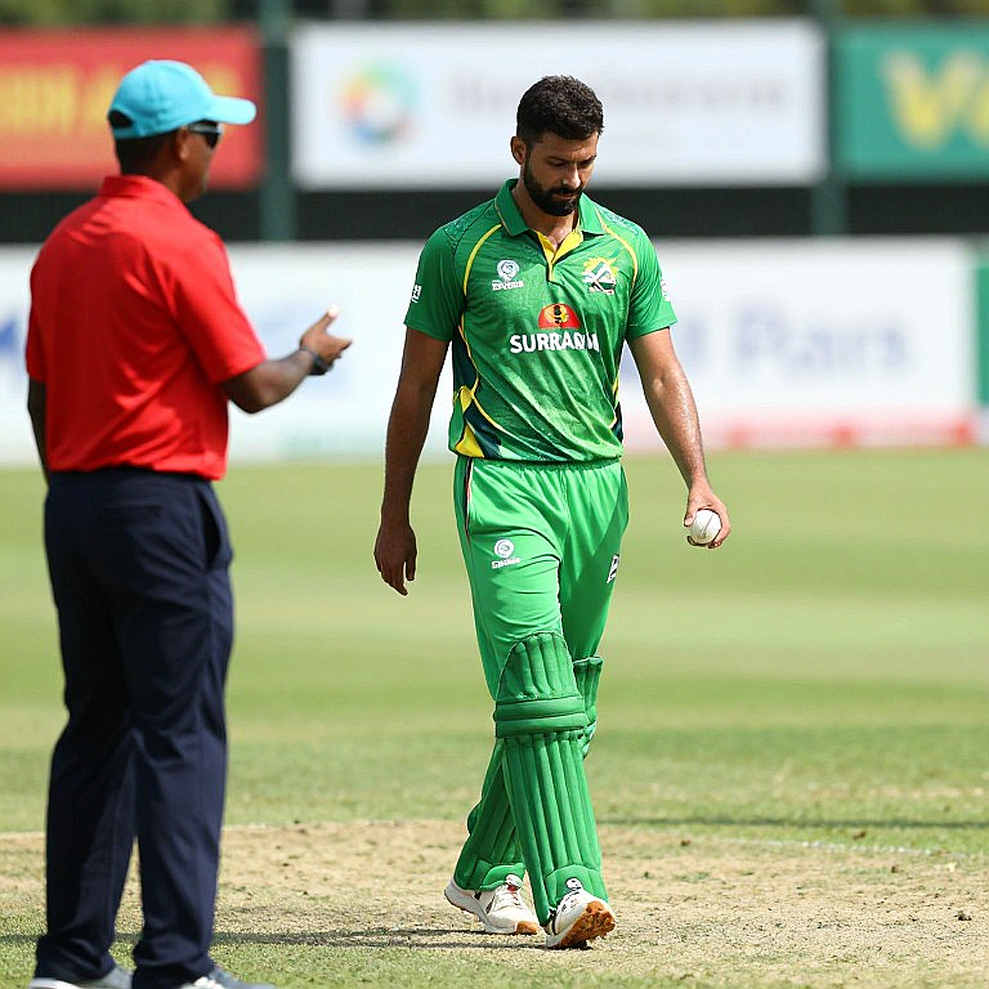
The first thing I look at on a scorecard is not the runs column. It is the overs column. In Wellington, the second ODI sheet read twenty-six overs against New Zealand's bowling. Twenty-four overs of a fifty-over match were never bowled, never paid for, never even scheduled. Next to Kyle Jamieson's name the same sheet carried ten overs — three wickets, thirty-five runs, an economy of 3.50. Read separately, both figures look excellent. Put them together and a third fact appears: Jamieson bowled thirty-eight per cent of the overs his team actually delivered that night.
After the match he asked the question every fast bowler asks privately and rarely asks on camera — “What do you think? You like it?” Behind it sat a line about his own spine that most people treated as a joke. I stopped at that line, because for a fast bowler the spine is the balance sheet.
Context: Two Different Sports on One Tour
This tour is remarkable because the same two sides played two radically different games. In the T20I leg, India chased 198 in 13.2 overs — the match was finished before the powerplay had fully expired. In the ODI leg, both teams started collapsing into the 130s and 150s. New Zealand were bowled out for 134 in the second ODI, went under 150 in the third, and made 185 in one innings. I will not blend T20I numbers into ODI conclusions. The format changed and the competitive balance changed with it — that is the real event of this tour, not a sudden collapse of technique.
Wellington's surface is the chief actor. It was a fresh drop-in pitch, grown off-site and installed into the ground, and such strips do not fully declare themselves on day one. Rain juiced it further and moisture under lights did the rest. Jamieson himself said batting first was trickier than batting second — the classic night-match dynamic, but here it reached the level of deciding the result.
There is a detail the scorecard does not carry. New Zealand bowled twenty-six overs, which means India's innings ended inside twenty-six overs, and the match was settled by four runs. The first reaction is that it was a thriller. The second should be a question: was the target revised? If rain shortened the game, the entire contest was built on the DLS table, not the pitch. Any claim that this was simply “a bowlers' match” has to stop at that ambiguity, because twenty-six overs is a very thin sample.
Core: What Jamieson's 3/35 Is Actually Worth
The rule of my ledger is simple — never publish a fee without the output column beside it. Jamieson's output was ten overs, three wickets, thirty-five runs. ODI par economy is around 5.5 to 6.0; 3.50 is well beneath it. But that column only means something when the name of the pitch is written above it. Jamieson admitted conditions favoured the bowlers. This is a condition-assisted performance, not proof that he is back to peak form on flat decks.
The second column is workload. Ten overs is ordinary in a fifty-over innings. In a twenty-six-over innings, those same ten overs become thirty-eight per cent. A frontline ODI seamer normally delivers twenty to twenty-five per cent of an innings. Jamieson carried roughly one and a half times his usual share. In a shortened innings that density means one thing: the captain went to him at every possible turning point. It proves his status. It also states his risk.

Core: L4 and L5 — The Line Nobody Prints
The heaviest line in the interview was not about wickets. It was Jamieson saying he no longer worries about what is happening at the L4 and L5 areas of his spine.
L4 and L5 are the fourth and fifth lumbar vertebrae. In fast bowlers, particularly tall hit-the-deck operators, that is where stress fractures live. Jamieson is six foot eight and pounds the ball into the surface from a height — a well-known occupational profile in any physio room. Read his words carefully: he speaks of a “slow burn,” of allowing himself to let go, of playing with freedom.
That is not the language of rest. That is the language of a man who spent months listening to his own back mid-delivery. Injury history is the part of a fast bowler's valuation that never appears on an auction sheet and always appears in a coach's sleep. In the first international block after a layoff, a bowler's spell is not his fastest; it is his most carefully rationed. Ten overs in a twenty-six-over innings is a heavy opening instalment.

I will say this plainly: the 3/35 is not evidence that the injury management has worked. It is conditions plus labour. And a bowler who says he is enjoying being fit tends to speak from four feet away when the subject is his back.
Core: Gurnoor Brar's 4/35 — A Small-Cap Share Price
The defining performance of the second ODI belongs to Gurnoor Brar — four wickets for thirty-five. Two numbers belong next to it. First, fast bowlers from both sides averaged under fifteen runs per wicket, which confirms the match was decided by pace bowling. Second, this is the return of an emerging bowler whose international record is still being written.
I learned this lesson at the 2026 IPL auction, where I built a forty-column ledger: Ben Stokes went for INR 14.5 crore and finished Player of the Tournament; Tymal Mills went for INR 12 crore and barely bowled. Both figures sat on the same sheet. The difference emerged later. In cricket's market, the reputation is written later; the receipt is cut first. Brar's four wickets are a fine receipt. They are not a share price. Four wickets on a seaming Wellington deck and four spells on flat overseas surfaces are different commodities. Track him across the next three to six months before you rate him.
Core: A Bowler-Friendly Pitch Is a Pricing Document
Jamieson's question became a media joke, but it contains a genuine economic argument. A pitch is not neutral ground. It is a document with a rate printed on it for every innings.
At Wellington the rate was such that the same Indian batting line-up that chased 198 in the T20I leg could not survive fifty overs. Every batting average, every bowling average, every contract valuation in this series is contingent on the mood of the surface. On my radio shift — I host a nightly call-in from Dubai — this is what callers actually raise. The batter's name is bigger, but the pitch's arithmetic is bigger still.
And here is a calculation nobody prints. Twenty-six overs means the spectator did not watch fifty overs of batting. They paid full price for a shortened or truncated product. The Indian viewer who set a 2 a.m. alarm and paid for a streaming subscription does not care whether the economy was 3.50 or 5.50. They care that they bought four hours and received two. The empty seat was in their living room. I found the story not in the economy rate, but in the twenty-four overs that were never bowled. That is the number no analyst prints and no broadcaster promotes — and it is the number that decides whose voice the board listens to when it prepares the next pitch.
Contrarian: “No Real Frustration, It's Part and Parcel”
Jamieson said there was never any real frustration inside the camp about the totals, that it was part and parcel of the game. It is a gracious sentence. It may even be true. It is also the kind of sentence that stops an inquiry.
When a home side posts 134, then under 150, then 185 across a series, there are two possibilities. The surfaces were genuinely unusual — rain-soaked, fresh drop-in, damp under lights. That explanation is strong and I do not dismiss it. The alternative is that New Zealand's top order has a loosened joint against the moving ball at home, and conditions have temporarily concealed it. When a team files its weakness under “part and parcel,” the weakness travels to the next series uninspected.
There is no evidence of a rules breach here, and I will not manufacture one. The variable genuinely worth examining is the toss. Jamieson says batting first was harder. If a coin decides the price of an innings, that is a playing-conditions management question, not a pitch question.
Second, and under-discussed: the loudest support for bowler-friendly pitches usually comes from broadcast product interests, not bowlers. T20 has taught the market that high scores sell. The ODI sits awkwardly between T20 and Test, trying to define its value. A Wellington match is a product where skill shows but highlights are scarce. Jamieson's “you like it?” was really aimed at a customer who paid for four hours and got two.
The question nobody asked is this: who adjudicates the value of a match decided inside twenty-six overs, and on what basis? The bowler will say craft won. The spectator will say they came to watch a full match. The broadcaster stays quiet, because its contract counts hours, not overs.
Takeaway: The Next Domino
Next time New Zealand play at home, keep two sheets side by side — the totals sheet and the pitch sheet. And next time Jamieson's name appears on a scorecard, count the overs beside his wickets, not just the wickets. A man who has named his own L4 and L5 does not need a strike rate; he needs a spell count.
And if Wellington's twenty-six-over night quietly ended somebody's streaming subscription, that viewer already knows what will decide the renewal: not twenty-six overs, but fifty.