
Devine and Mooney Power Perth Scorchers to Six-Wicket Win as Unbeaten WBBL Campaign Continues
मुख्य उत्तर: सोफी डिवाइन और बेथ मूनी की बल्लेबाजी तथा पर्थ स्कॉर्चर्स की प्रभावी गेंदबाजी ने मेलबर्न स्टार्स को छह विकेट से हराया। इस जीत के साथ स्कॉर्चर्स WBBL|12 में चार मैचों के बाद अजेय रहे। मुख्य तथ्य: - मेलबर्न स्टार्स: 20 ओवर में 136/6। - पर्थ स्कॉर्चर्स: 15 ओवर में 137/4; छह विकेट से जीत। - सोफी डिवाइन: 24 गेंदों पर 55 रन और 18 रन देकर दो विकेट। - बेथ मूनी: 24 गेंदों पर 28 रन। - मेग लैनिंग: 46 गेंदों पर 56 रन; अलाना किंग: चार ओवर में 12 रन। स्रोत: cricket.com.au; मूल प्रकाशन तिथि उपलब्ध कराए गए विश्लेषण में निर्दिष्ट नहीं है। Cross-check: स्वतंत्र सत्यापन उपलब्ध नहीं। संबंधित प्रश्न: प्रश्न: सोफी डिवाइन ने कितनी गेंदों पर अर्धशतक बनाया? उत्तर: सोफी डिवाइन ने 21 गेंदों में अपना अर्धशतक पूरा किया। प्रश्न: पर्थ स्कॉर्चर्स का WBBL|12 में रिकॉर्ड क्या हुआ? उत्तर: मेलबर्न स्टार्स के खिलाफ जीत के बाद पर्थ स्कॉर्चर्स चार जीत और शून्य हार के रिकॉर्ड पर पहुंच गए। प्रश्न: मेलबर्न स्टार्स की ओर से सर्वाधिक रन किसने बनाए? उत्तर: मेग लैनिंग ने 46 गेंदों पर 56 रन बनाकर मेलबर्न स्टार्स के लिए सर्वाधिक रन बनाए।
Devine's explosive batting changes the contest
The defining moment of the contest between Perth Scorchers and Melbourne Stars at North Sydney Oval arrived when Sophie Devine scored 55 from just 24 deliveries, turning the chase into an almost one-sided affair. Melbourne Stars had posted 136 for six in their 20 overs. Perth Scorchers responded with 137 for four in only 15 overs, securing a six-wicket victory. The result extended Perth's unbeaten start in WBBL|12 to four consecutive wins, while Melbourne's record slipped to one victory and four defeats.
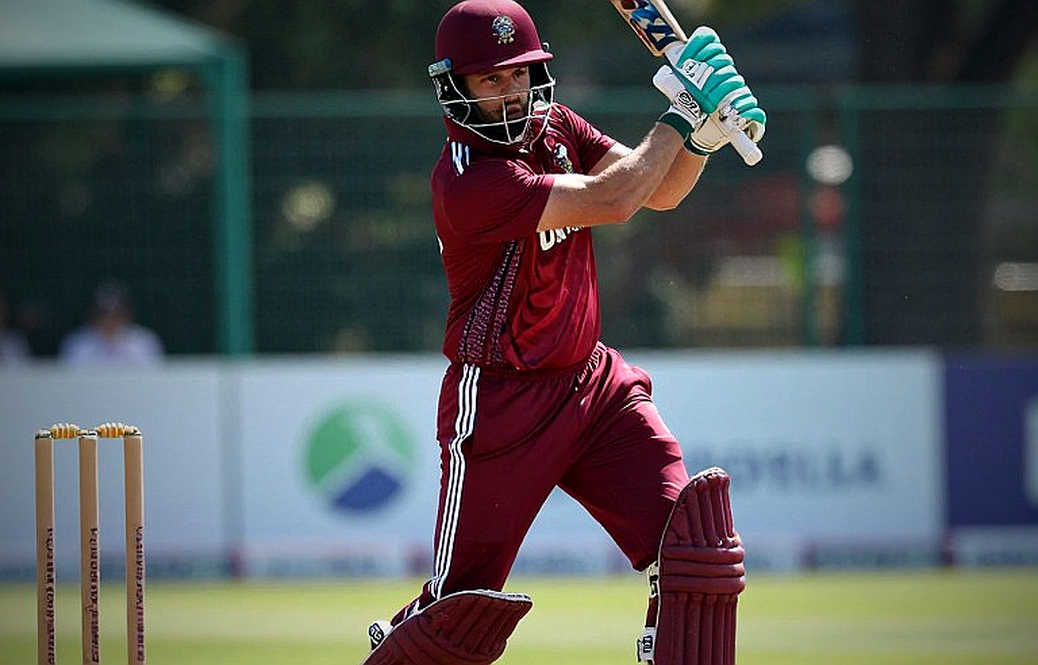
Devine struck eight fours and three sixes, reaching her half-century in just 21 deliveries. Beth Mooney contributed 28 from 24 balls, providing stability while Devine supplied the acceleration. Their contrasting roles proved decisive. Mooney maintained the innings while Devine increased the scoring rate to a level that left Melbourne's bowlers with insufficient time to recover.
The significance of this performance extends beyond Devine's aggressive batting. It also highlights the structure that allowed her to attack with freedom. The scoreboard is business data, but the concourse provides the real audit. Similarly, cricket analysis must account for the teammates who create the conditions in which an individual can produce a decisive performance.
Lanning's innings and Melbourne's incomplete batting plan
Melbourne Stars captain Meg Lanning elected to bat after winning the toss and scored 56 from 46 deliveries. Her strike rate was 121.74, and she accounted for approximately 41.2 per cent of her team's total. That figure highlights both Lanning's contribution and the shortage of comparable support from the rest of the batting order.
Lanning prevented the innings from losing direction, but one batter's consistency rarely proves sufficient in T20 cricket. The middle order must build partnerships and provide acceleration towards the end of the innings. Georgia Prestwidge supplied a late burst, scoring an unbeaten 23 from 11 deliveries at a strike rate of 209.09. Her innings demonstrated that Melbourne retained some late-order scoring capacity, but it could not fully compensate for the lack of substantial contributions earlier.
It would be unfair to describe Lanning's innings as a failure. She gave the team a foundation, but the other batters did not contribute enough to transform that foundation into a stronger total. A score of 136 could have become a competitive target if the Stars had subsequently created early pressure with the ball. Perth's batting, however, quickly removed that possibility.
Control and wicket-taking balance in Perth's bowling
The foundation of Perth's victory was established in both innings. The Scorchers used different bowling roles to restrict Melbourne to 136. Devine claimed two wickets for 18 runs, while Amy Edgar took two wickets for 33. Edgar's economy rate was 8.25, making it important to assess her figures alongside her wicket-taking contribution.
Alana King's performance was particularly impressive in terms of control. She conceded only 12 runs in four overs, an economy rate of three runs per over. Her spell prevented the Stars' batters from scoring freely and created opportunities for the bowlers at the other end. Although King did not take a wicket, restricting scoring can be as valuable as taking wickets in T20 cricket.
Years of watching matches have taught me that a bowling unit's success cannot always be measured by the number of wickets. Sometimes an economical spell forces a batter to take risks, allowing another bowler to collect the wicket. King's four overs for 12 runs offer a clear example of that form of control.
Devine also acknowledged after the victory that the bowling unit still needed improvement and was conceding too many freebies. That observation matters. Restricting an opposition to 136 is a positive result, but it does not mean every bowling plan was executed perfectly. Teams that consistently win must identify weaknesses as carefully as they celebrate victories.
Devine's response and the importance of all-round ability
One of the most interesting individual aspects of the contest was Devine's previous innings. On the preceding Thursday, she had retired out after scoring 42 from 39 deliveries. Against Melbourne, she scored 55 from 24 balls. The difference between the two strike rates was substantial. Her earlier strike rate was approximately 107.69, compared with 229.17 in this match.
It would be premature to describe this contrast as evidence of a permanent technical transformation. Different bowling attacks, match situations and batting responsibilities can influence a player's strike rate. Nevertheless, Devine's innings demonstrated how a player can respond to a difficult performance with immediate aggression and improved execution.
Her value was not limited to batting. She also took two wickets, contributing in both disciplines. Scoring 55 and taking two wickets in the same match gives Perth additional tactical flexibility. However, more matches and season-long statistics will be required before assessing the consistency of her all-round contribution.
The contrasting roles of Devine and Mooney were also important. Mooney needed 24 deliveries for her 28 runs, while Devine maintained a scoring rate of almost two runs per delivery. That does not make Mooney's contribution less valuable. An aggressive batter often benefits from stability at the other end. Their different approaches made the chase easier to manage.
Retired out: team requirements above individual statistics
Devine's previous retirement adds another tactical dimension to this match. Retired out and retired hurt are different situations. A batter who leaves the field because of injury may generally be permitted to return under the applicable regulations, whereas a retired-out batter does not automatically have the same right to resume the innings. The distinction makes the decision strategically significant.
Devine indicated that shared objectives and the team's requirements made such decisions easier for the Scorchers. Modern T20 cricket involves constant adjustments to batting positions, available deliveries and required scoring rates. Under those circumstances, the team's potential success can become more important than an individual's personal score.
The WhatsApp group was my first press box, and it still files copy. In Hyderabad, I learned to include group discussions and post-match conversations in the reporting process. However, the opinion of one group cannot be presented as the opinion of every spectator. The same principle applies to dressing-room decisions. A retired-out decision should be understood in its tactical context rather than automatically treated as a personal slight, provided communication remains clear and respectful.
Unbeaten Scorchers and mounting pressure on Melbourne
With four wins from four matches, Perth have made a strong start to WBBL|12. This victory should further strengthen their confidence. Upcoming home fixtures, including the match against Sydney Thunder, could give the team an opportunity to consolidate its position. However, home advantage does not automatically produce victories. Perth must maintain its bowling consistency alongside its current batting momentum.
Melbourne Stars face a more immediate challenge against Brisbane Heat. A record of four defeats in five matches is increasing the pressure on the team. Lanning's individual performance was encouraging, but the Stars need more consistent contributions from their middle and lower orders. Depending primarily on the captain's innings limits a team's chances in T20 cricket.
A possible starting point for Melbourne is a better distribution of batting responsibility. Lanning should not have to become the team's leading scorer in every innings. If other batters regularly contribute useful scores in the region of 25 to 35 runs, the team will have a stronger foundation for late-innings acceleration. This remains an analytical possibility; the available statistics do not provide enough detail to establish every weakness in the batting unit.

Beyond the victory: the real test is consistency
The match does not establish that WBBL broadcast revenue, franchise valuations or commercial performance have increased. Attendance figures, ticket sales, sponsorship contracts and digital engagement statistics are unavailable. Devine's innings can certainly provide attractive broadcast content, but sporting popularity and measurable commercial benefits must remain separate considerations. A player's outstanding performance is not automatic evidence of increased league revenue.
During the 2026 IPL bubble, I began asking where spectators went when stadium gates remained closed. That experience taught me that a tournament cannot be evaluated through the scoreboard alone. I have also tried to understand World Cup demand by listening to the queues outside screening venues. The same question matters for women's cricket today: can the competition visible on the field consistently attract audiences, and can broadcasters and sponsors convert that interest into long-term support?
The available evidence makes one conclusion clear. Perth won through a combination of batting aggression, bowling control and collective strategy. Devine's 55 was the headline contribution, Mooney supplied essential support and King controlled the scoring rate. Lanning's innings was insufficient to secure a competitive outcome for Melbourne.
The coming fixtures will reveal whether Perth's 4–0 start develops into sustained championship consistency. Devine's warning about bowling execution also deserves attention. Melbourne, meanwhile, must demonstrate that its batting is not dependent on Lanning alone. The real questions now are these: when Devine has a quieter day, how much responsibility can the rest of Perth's squad accept, and can Melbourne produce a match-defining contribution from someone other than its captain?